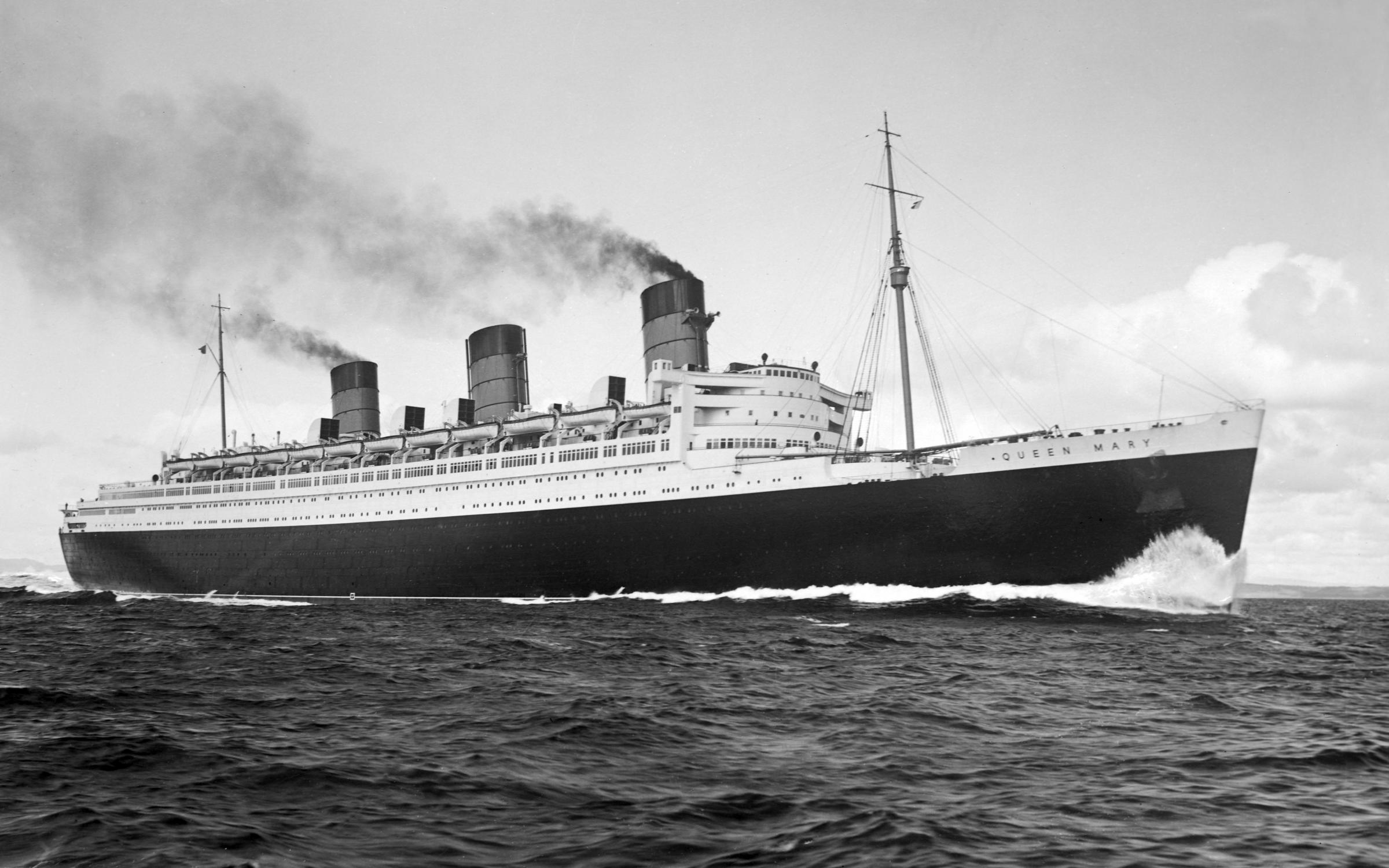
A curator-minded path through RMS Queen Mary’s transformation from Cunard express liner
into the wartime “Grey Ghost”: a fast, crowded, strategically vital troopship whose service linked
luxury, logistics, danger, and Allied mobility.
RMS Queen Mary is often remembered as a glamorous Cunard express liner: fast, immense,
elegant, and central to the great interwar rivalry of the North Atlantic. Yet her wartime career
is one of the most important chapters in her life. The same speed and scale that made her a prestige
passenger ship made her a strategic asset when war reshaped the Atlantic.
Painted grey, stripped of much of her peacetime softness, and adapted to carry thousands of troops
at a time, Queen Mary became the “Grey Ghost.” Her wartime story is not simply one of camouflage
and speed. It is a story of conversion: luxury spaces turned toward military necessity, public rooms
subordinated to transport capacity, and an ocean liner’s identity recast by the demands of global war.
Curator’s Note
Interpretive note: this collection is best read as a study in wartime adaptation.
Queen Mary did not stop being an ocean liner when she became a troopship; rather, the very qualities
that defined her as a liner — speed, size, range, machinery, and symbolic prestige — were redirected into
military service. Her wartime importance came from that overlap between luxury engineering and logistical power.
Collection Focus
From Express Liner to War Asset
Conversion
Queen Mary entered the war as one of the world’s most famous passenger liners.
Her transformation into a troopship shows how quickly prestige tonnage could be absorbed into
wartime planning.
The Grey Ghost
Identity
Her grey wartime paint, secrecy, speed, and zigzag routing helped create the “Grey Ghost” image:
a liner no longer advertised for comfort, but valued for the ability to move troops at remarkable scale.
Capacity as Strategy
Logistics
The ship’s wartime meaning rested on numbers as much as glamour. Thousands could be moved in a single voyage,
turning a passenger liner into a major instrument of Allied mobility.
Timeline
1936–1939
A Cunard Express Liner Before the War
Before the outbreak of World War II, RMS Queen Mary stood as one of Cunard’s great Atlantic liners:
large, fast, and central to the company’s express service. Her prewar reputation made her wartime transformation
all the more striking.
Sept. 1939
War Interrupts the Passenger Career
With the outbreak of war in Europe, normal transatlantic passenger operation became impossible.
The ship’s usefulness now depended less on ticketed crossings and more on what her size and speed
could contribute to the Allied war effort.
March 1940
Departure for Sydney and Troopship Conversion
Queen Mary departed New York for Sydney, Australia, where she was fitted for troopship service.
Her peacetime passenger capacity was overtaken by wartime needs, and accommodations were greatly increased
for military transport.
May 1940
First Troop Transport Voyage
Her first troop transport voyage carried thousands from Sydney toward Britain in convoy with other major liners.
The transition was now practical rather than theoretical: the great Cunarder had become a working troopship.
1940–1942
The Grey Ghost Takes Shape
Repainted in wartime grey and operated with secrecy, speed, and anti-submarine precautions,
Queen Mary acquired the nickname “Grey Ghost.” The name captured both her appearance and the way
she seemed to move through danger by speed rather than ordinary convoy protection.
March 1942
American Troops Enter the Story
As the United States became fully engaged in the war, Queen Mary carried American troops as part
of the wider Allied buildup. Her role increasingly centered on mass movement across ocean spaces that remained
dangerous and contested.
May 1942
More Than 10,000 People on One Voyage
In 1942, Queen Mary passed a symbolic threshold by carrying more than 10,000 people on a single voyage.
The number helps explain why the ship mattered: she could move in one crossing what smaller vessels could only
move with much greater effort and exposure.
Oct. 1942
The HMS Curacoa Tragedy
On 2 October 1942, while carrying troops near the British Isles, Queen Mary collided with the escorting
light cruiser HMS Curacoa, which sank with heavy loss of life. The episode is one of the darkest moments
in the ship’s wartime record and should be handled as tragedy rather than anecdote.
Dec. 1942
A Dangerous Winter Crossing
During a December 1942 crossing, Queen Mary encountered a severe wave event in heavy weather.
The incident has often been remembered for the ship’s extreme roll and for the reminder that wartime ocean risk
was not limited to enemy action.
July 1943
A Record Troopship Voyage
In July 1943, Queen Mary carried 15,740 troops and 943 crew — 16,683 people in all — a standing record
for the most people transported on one vessel at one time. The figure captures the extreme compression of wartime
transport aboard a ship built for a very different kind of travel.
1943–1945
Churchill and Allied Strategy
Queen Mary also carried Winston Churchill during wartime Atlantic crossings connected to Allied planning.
This gives the ship a dual wartime profile: she moved massed troops, but she also carried leadership and strategy
across the same dangerous ocean.
1945–1947
From War Service Back Toward Passenger Life
After the war, the problem became reconversion. The troopship had to become a liner again, with interiors,
accommodations, and public identity restored for civilian service. The postwar Queen Mary carried the marks
of both glamour and wartime utility.
One useful way to read Queen Mary’s wartime career is to see speed as her shield,
scale as her weapon, and conversion as the bridge between luxury liner and military machine.
Why Queen Mary’s War Service Matters
The Liner Became Infrastructure
Scale
In peacetime, Queen Mary represented prestige travel. In wartime, she became moving infrastructure:
a fast, ocean-going system for transporting human force at a scale few ships could match.
Comfort Gave Way to Capacity
Conversion
The transformation from liner to troopship meant rethinking space. Cabins, public rooms, circulation, and routines
were subordinated to the urgent problem of moving as many people as possible across dangerous seas.
The Story Includes Triumph and Loss
Memory
The “Grey Ghost” story is often told in heroic terms, but it also includes exhaustion, risk, crowding,
and the HMS Curacoa disaster. A balanced reading keeps both achievement and cost in view.
Reading the Grey Ghost Carefully
Evidence note:Queen Mary’s wartime legend is strong, and some retellings lean heavily into drama.
The most useful approach is to separate well-supported milestones — conversion, troopship voyages, record capacities,
Churchill crossings, and postwar reconversion — from embellishments that may grow in later popular memory.
The ship’s real wartime record is already remarkable without needing exaggeration.
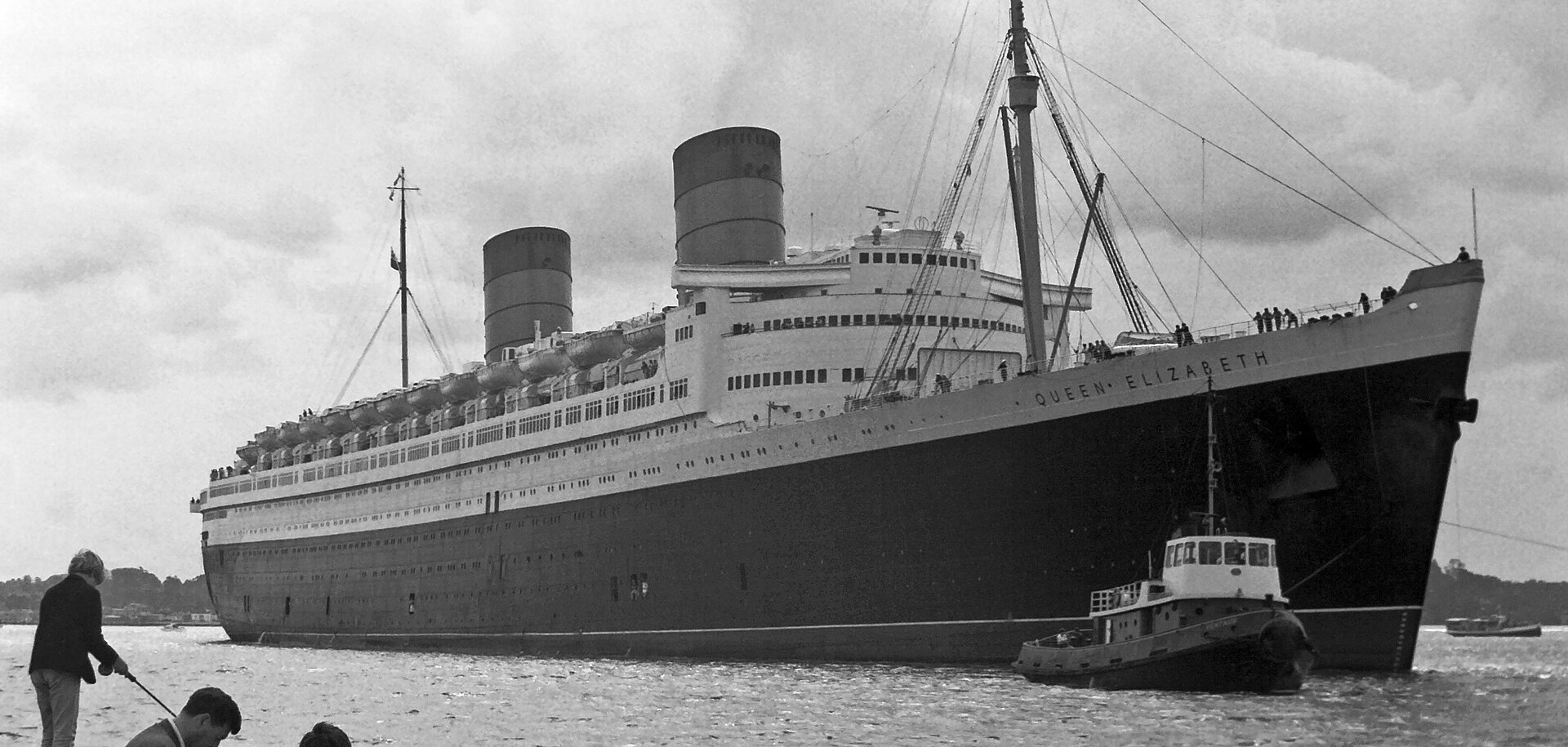
Queen Elizabeth provides essential sister-ship context: another Cunard giant whose wartime transport
role helps explain the strategic value of the two Queens.