Part of the Queen Mary topic collection
Queen Mary is often remembered for her scale, speed, wartime fame, and long afterlife, but passengers experienced the ship first through rooms. Her public interiors mattered because they translated status into atmosphere. Dining saloons, lounges, bars, writing rooms, smoking rooms, and more specialized spaces helped organize a very large liner into a coherent passenger environment. On Queen Mary, these interiors also reveal the particular tone of British interwar luxury: modern without being cold, formal without being lifeless, and grand without depending on a single room alone to carry the whole identity of the ship.
Sectional drawings: seeing Queen Mary from the inside
These two cut-away views place the public rooms within the ship’s larger architectural system. They show how passenger spaces, circulation routes, service areas, machinery, and deck levels were layered together inside Queen Mary’s hull.
Passenger spaces within the ship’s structure
This view helps relate Queen Mary’s celebrated interiors to the decks, passages, service spaces, and structural volume surrounding them. The rooms were not isolated decorative scenes, but working parts of a much larger passenger environment.
A layered interior world
The second drawing reinforces the scale and complexity of Queen Mary’s arrangement. Public rooms, accommodation, working zones, and machinery belonged to one coordinated system that shaped how passengers moved through and understood the ship.
Why this matters: Photographs show the appearance of individual rooms; sectional drawings show their relationships. Together, the two forms of evidence make Queen Mary’s public interiors easier to understand as part of a complete ship rather than as detached examples of decoration.
A major Cunard liner of the interwar and postwar Atlantic, remembered for prestige, scale, and one of the richest surviving public-room stories in ocean liner history.
Public rooms turned national prestige and commercial luxury into actual passenger experience through dining, leisure, sociability, and circulation.
Queen Mary is not defined by only one famous room. Her reputation rests on a broad ensemble of major spaces working together.
At a glance: the rooms most worth remembering
How to read Queen Mary’s public rooms
Queen Mary’s interiors are best understood as a choreography of social types. Some rooms were meant to impress immediately. Others were meant to sustain long hours of use without fatigue. Some emphasized prestige through scale, while others did so through selectiveness, mood, or finish. That variety mattered because a great liner could not rely on spectacle alone. It had to offer a world people could actually inhabit across several days at sea.
Modern but not stark
Queen Mary’s best rooms help show how interwar liner design could feel modern, orderly, and elegant without abandoning warmth or ceremonial richness.
Prestige through range
The ship’s interior success depended not only on major showrooms, but on the range of available atmospheres: formal, intimate, lively, restful, and socially differentiated.
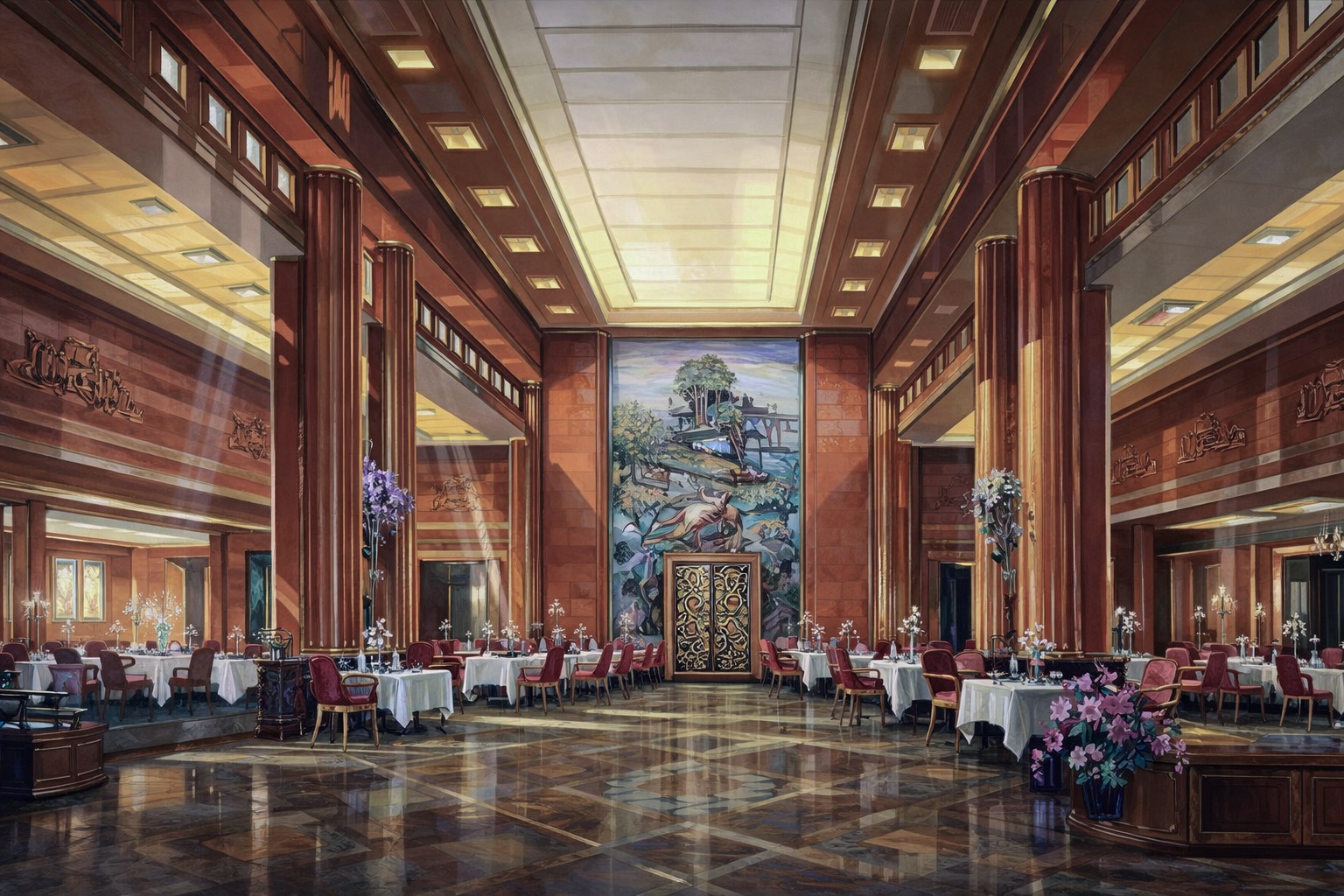
The Main Dining Saloon
Scale centerpieceThe main dining saloon is one of the clearest places to understand Queen Mary as a lived passenger machine rather than a famous silhouette. Dining on a ship of this stature was never merely functional. It was one of the voyage’s recurring rituals, and the room had to reconcile prestige with repetition: elegant enough to sustain the ship’s image, practical enough to serve large numbers of passengers smoothly.
That makes the room historically important even beyond its decoration. It expresses the disciplined side of luxury. On a great liner, grandeur had to work on schedule.
- Turns abstract prestige into visible, repeated passenger routine.
- Shows how service and atmosphere had to operate together.
- Helps explain Queen Mary as a complete luxury system rather than a collection of isolated set pieces.
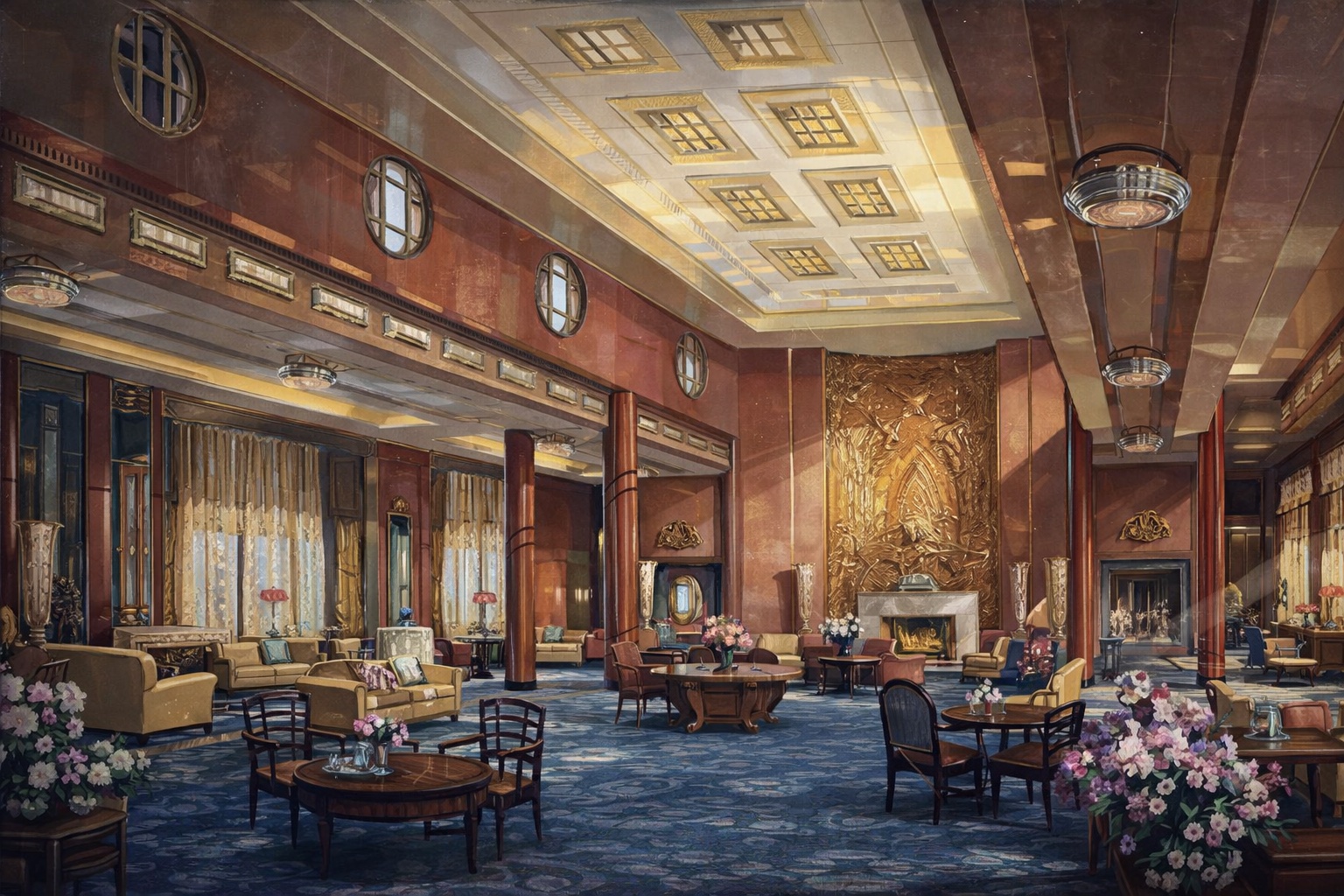
The Main Lounge
Cultivated leisureThe Main Lounge matters because it demonstrates that the most memorable liner interiors were not always the loudest. A room like this gave prestige a slower cadence. It was designed for occupancy rather than just passage: a place where one sat, observed, conversed, and felt the voyage unfolding at a dignified pace.
On Queen Mary, rooms of this type helped balance the ship’s scale. Without them, the liner might have felt merely monumental. With them, it felt socially habitable.
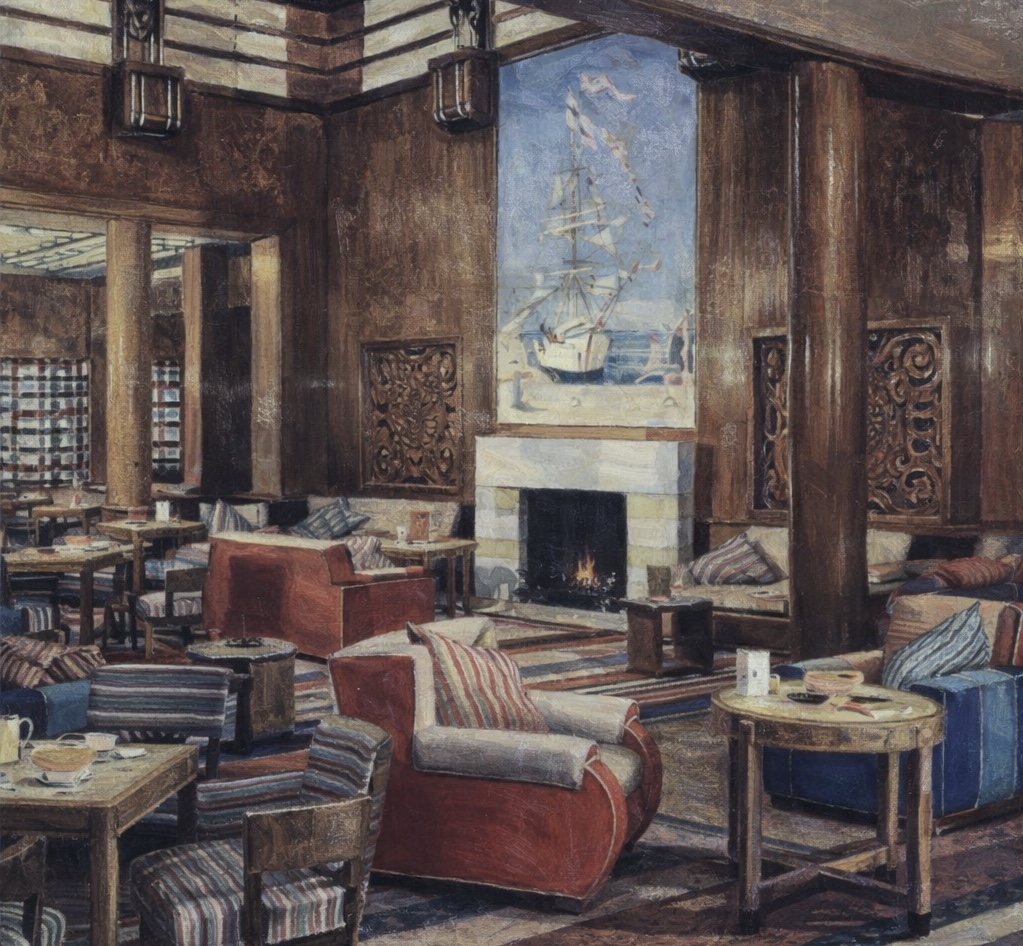
The Smoking Room
Atmospheric roomSmoking rooms on major liners are often memorable because they are socially specific. They tend to feel darker, more enclosed, and more ritualized than nearby lounges. Queen Mary’s smoking room belongs to that tradition, representing the world of after-dinner conversation, masculine etiquette, and elite shipboard leisure.
Its importance lies not only in decoration, but in the very fact that it helped stage a distinct social identity aboard the ship.
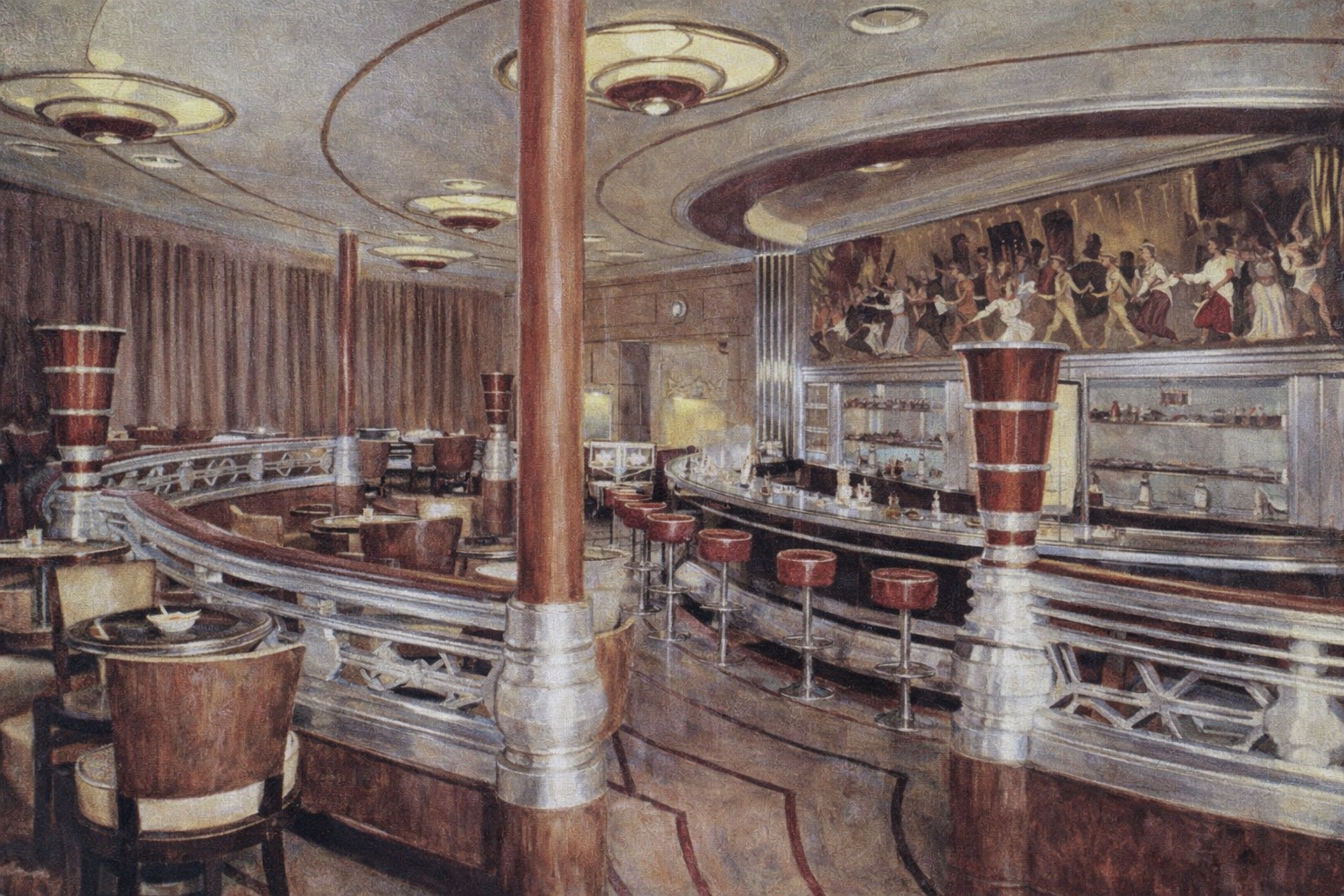
The Observation Bar
Modern glamourThe Observation Bar is especially useful because it helps show Queen Mary at her most modern in mood. Here the ship feels less like a transplanted country house and more like an interwar luxury world shaped by speed, elegance, and sophisticated metropolitan taste.
Spaces like this broadened the emotional range of the vessel. They helped the ship feel current rather than merely grand.
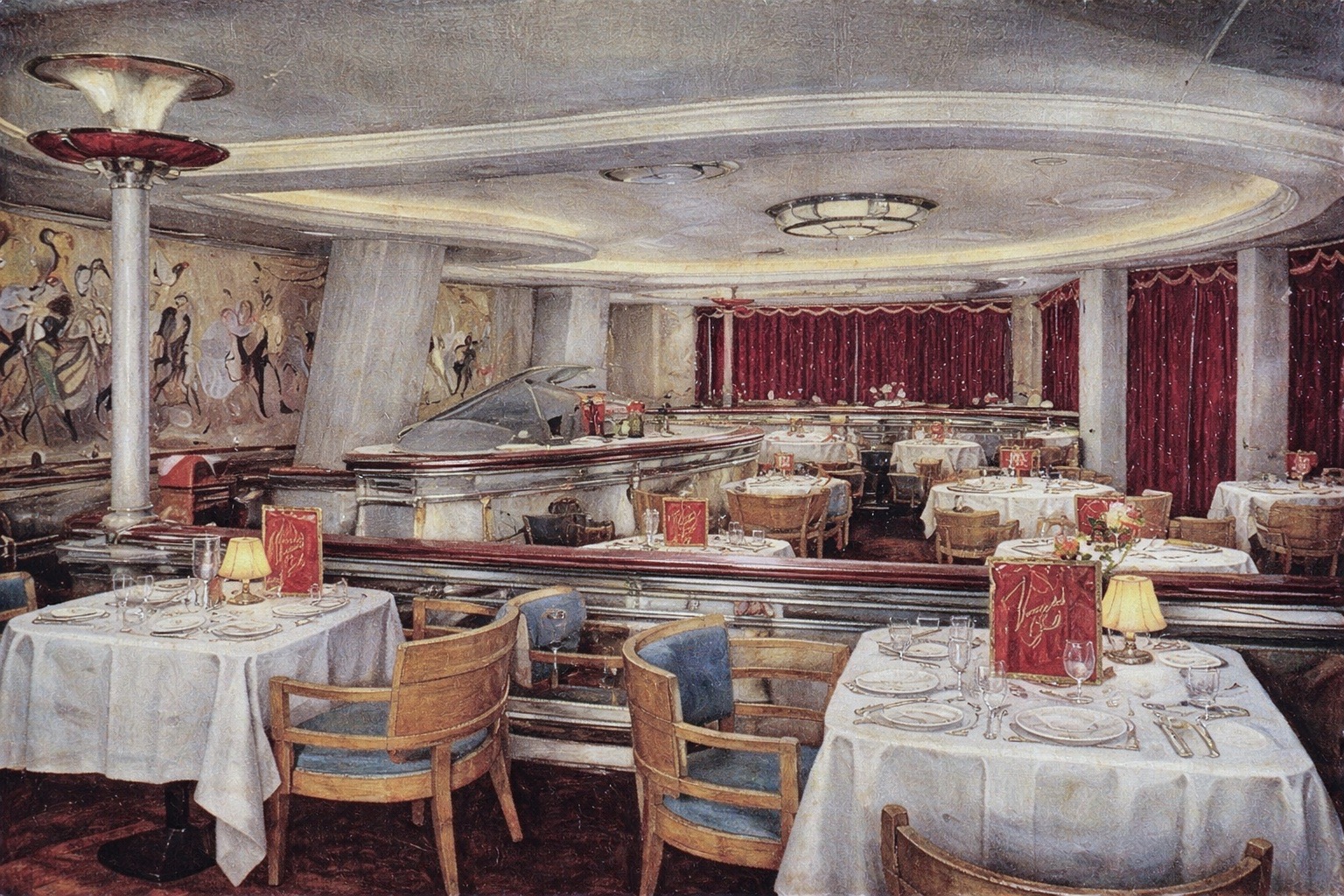
The Verandah Grill
Restaurant luxuryThe Verandah Grill matters because it expresses hierarchy through atmosphere rather than size. On a major liner, prestige did not depend only on the biggest room. It also depended on offering passengers distinctions within luxury itself: places that felt more intimate, more fashionable, and more selectively prestigious.
In that sense, the Verandah Grill helps connect Queen Mary to high-end hotel and restaurant culture ashore. It reflects a shipboard world of curated experience rather than undifferentiated grandeur.
- Shows that Queen Mary’s public life depended on social gradation as well as scale.
- Connects the liner to elite restaurant culture on land.
- Adds a more intimate register to the ship’s interior story.
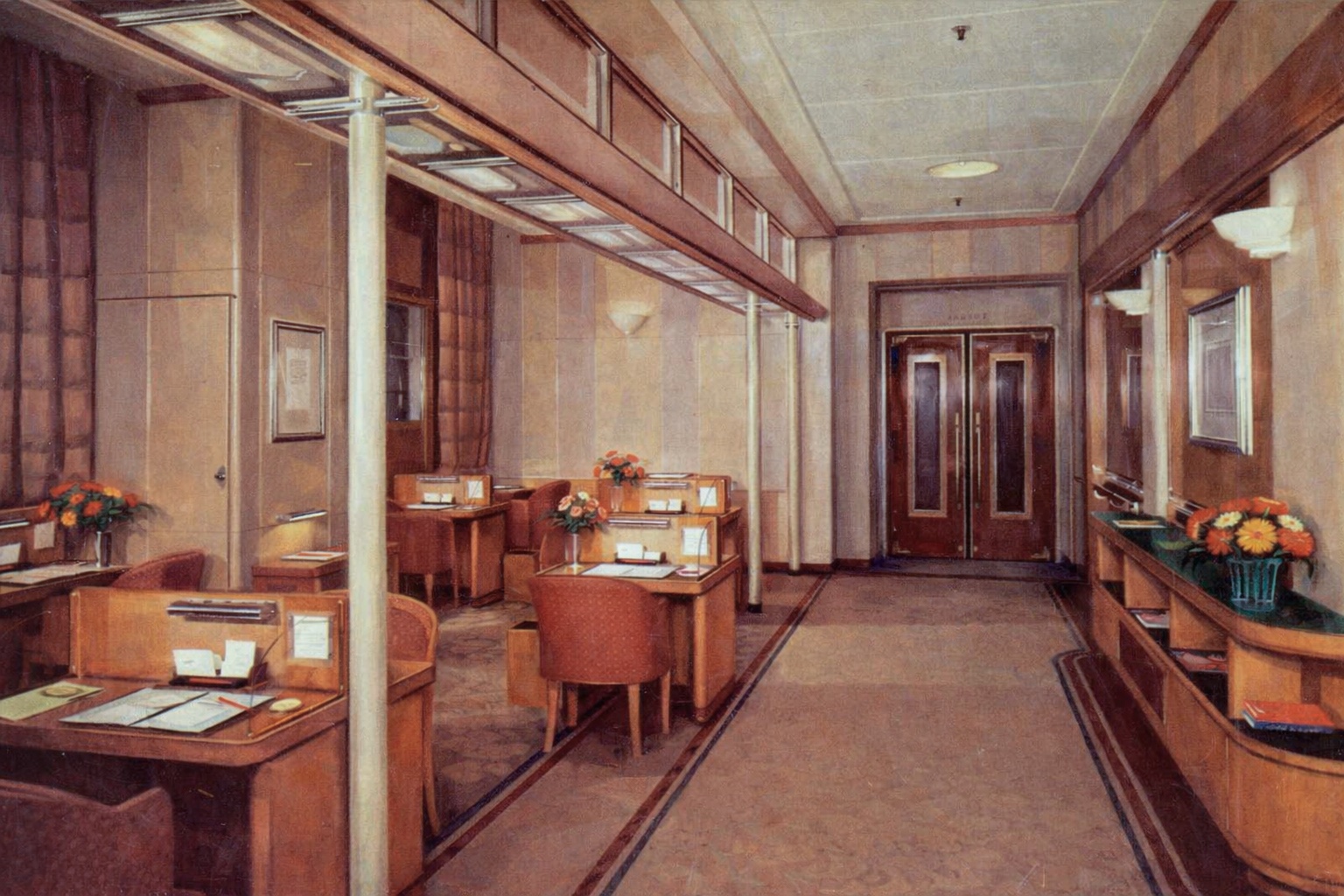
Writing Rooms and Library-Type Spaces
Quiet refinementPublic-room history can easily become dominated by the grandest interiors, but quieter rooms are often what make a ship feel complete. Writing rooms and library-like spaces offered privacy without isolation and usefulness without sacrificing elegance.
On Queen Mary, they helped turn prestige into routine. A liner of real status had to provide not just spectacle, but composure.
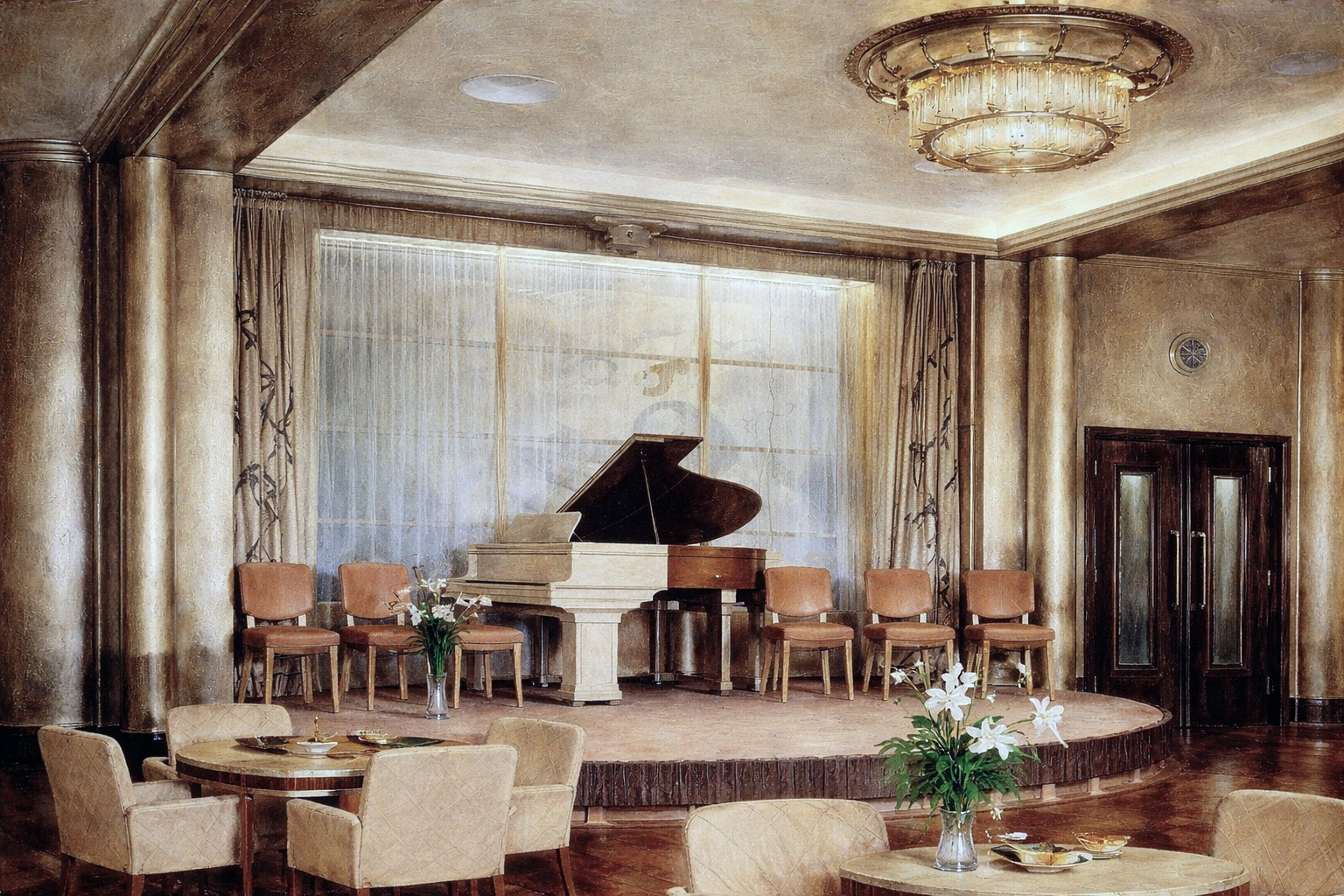
Ballroom and Major Entertainment Spaces
Evening ritualQueen Mary’s entertainment spaces matter because they remind us that a crossing was not simply endured. It was staged. Music, dancing, and evening gathering gave passengers a sense that the voyage itself was an event, and rooms devoted to those functions were central to the ship’s social identity.
Such spaces helped make the liner feel vivid rather than static. They turned travel time into a social performance.
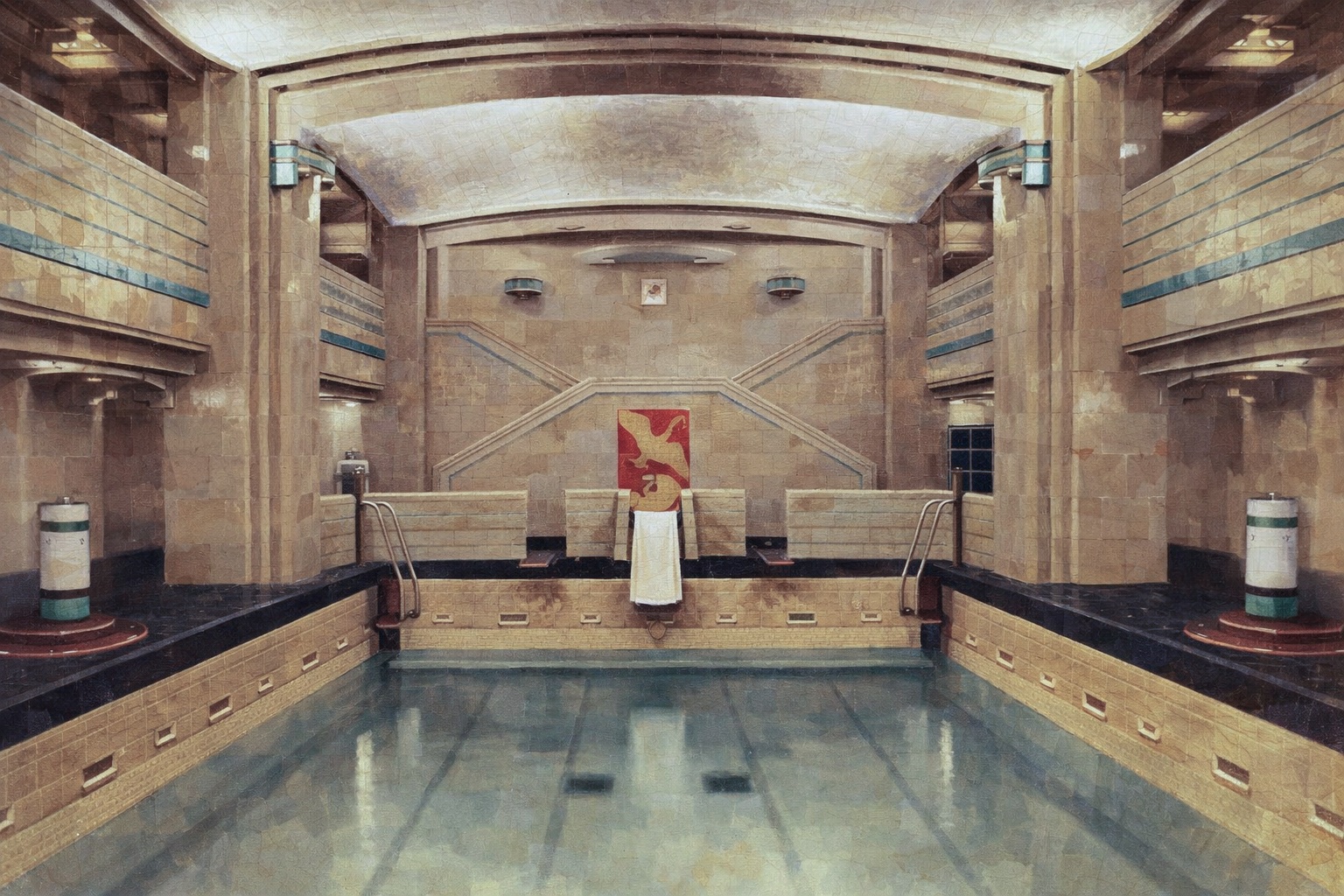
Swimming Pool and Bathing Spaces
Modern amenityThe swimming pool matters because it helps place Queen Mary within a fuller world of twentieth-century luxury expectations. Great liners increasingly competed not only through dining rooms and lounges, but through amenities associated with bodily comfort, health, recreation, and modern hotel culture.
A pool broadened the ship’s promise. It suggested that passengers were not merely traveling efficiently, but living well while in transit.
- Shows Queen Mary participating in a broader luxury-amenity culture.
- Adds recreation to the story of prestige at sea.
- Helps explain how liners sold a complete onboard lifestyle.
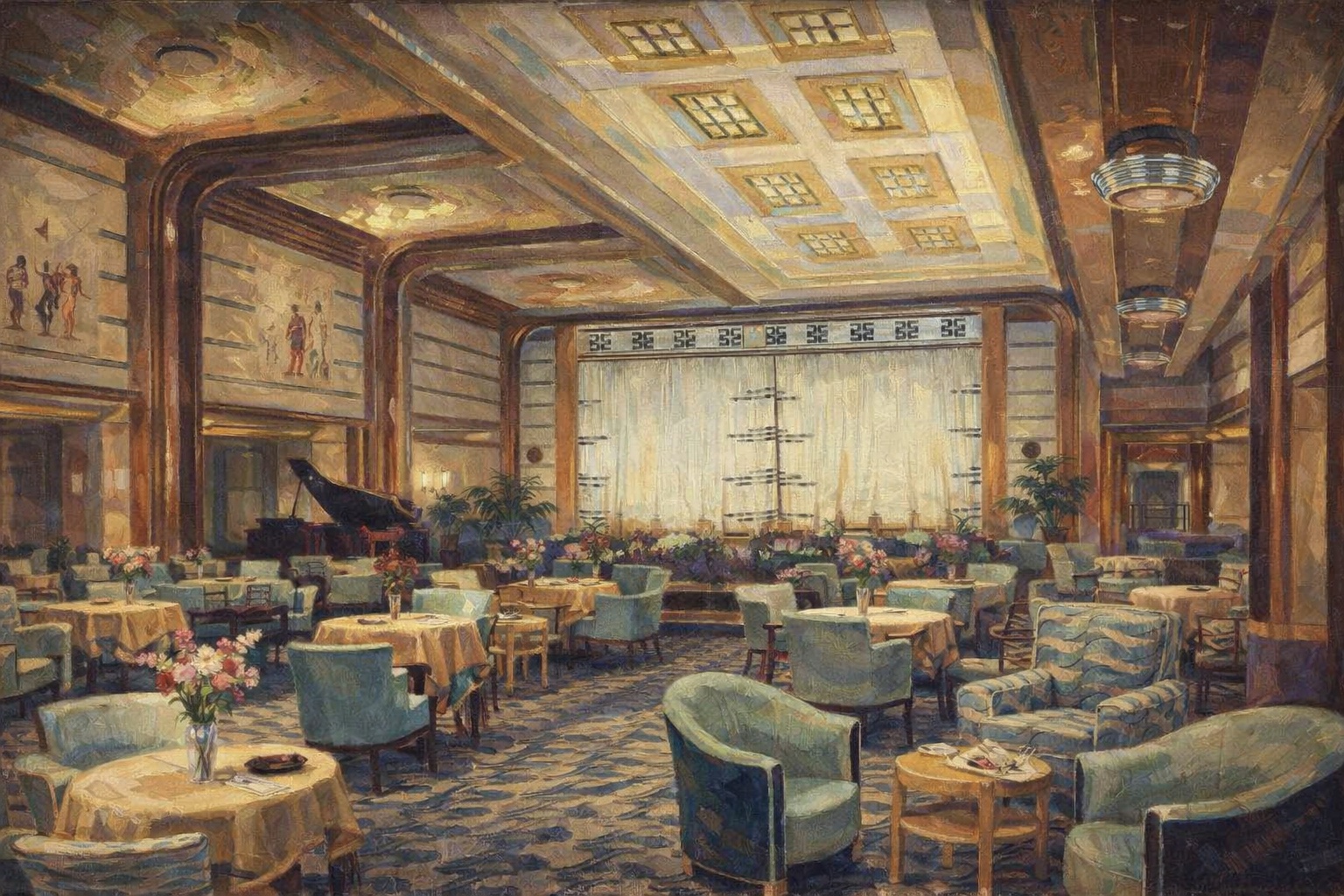
Cabin-Class and Tourist-Class Public Rooms
Wider passenger storyIt is easy to narrate liner interiors only through their most glamorous rooms, but that can flatten the actual social structure of the ship. Queen Mary served a wider passenger world, and her non-first-class public spaces mattered because they reveal the vessel as a layered commercial environment rather than only a floating elite enclave.
Including them gives the interior story more honesty and more breadth.
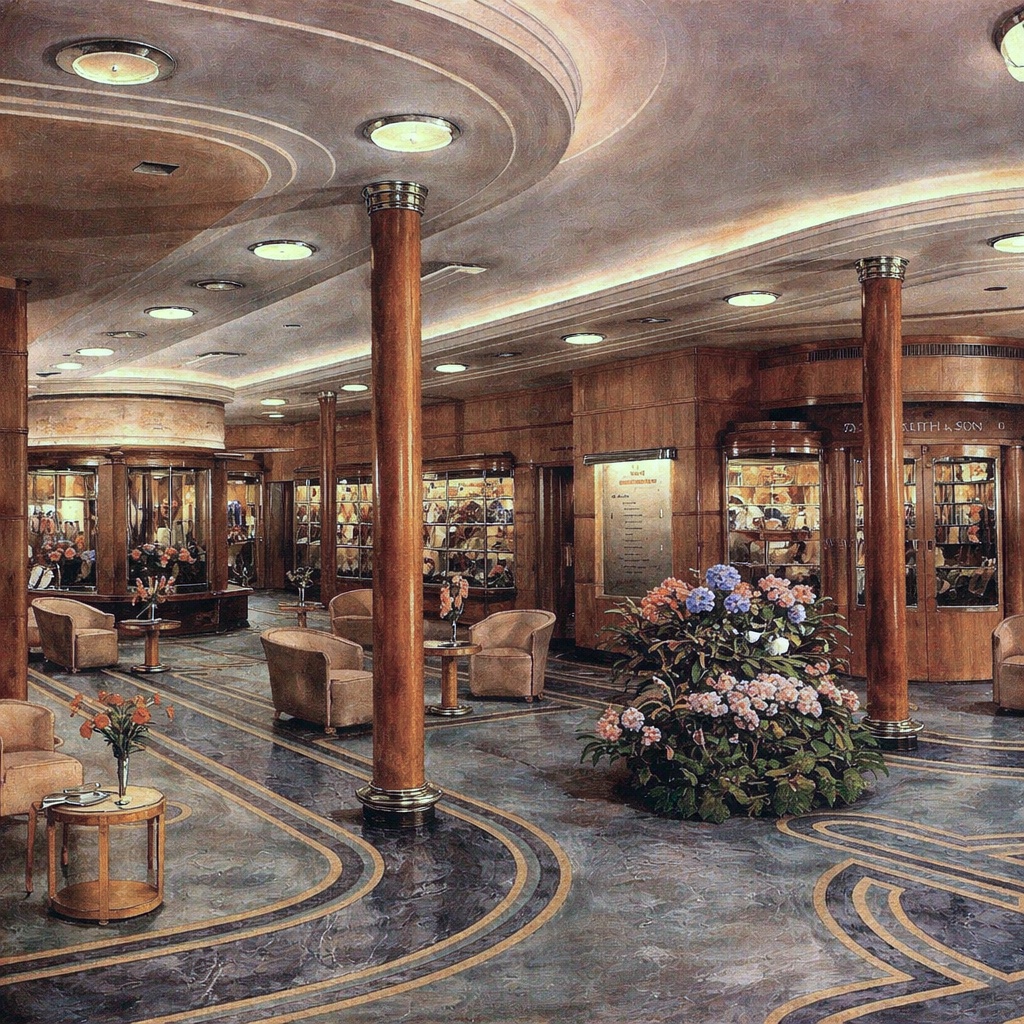
Entrance Halls and Major Circulation Spaces
First impressionOn a ship as large and carefully staged as Queen Mary, entrance areas and circulation zones were never trivial. They mattered because they translated embarkation into atmosphere. A passenger’s sense of the ship began here: not yet in the lounge or dining saloon, but in the threshold spaces that made movement feel ceremonial rather than merely functional.
These areas are historically useful because they connect architecture to emotion. They explain how a voyage began to feel real.
Comparison table: why these rooms matter
| Room | Best remembered for | Type of significance | Why it endures |
|---|---|---|---|
| Main Dining Saloon | Scale, ritual, and organized luxury | Operational and ceremonial | It shows how Queen Mary turned prestige into a repeated and functional passenger experience. |
| Main Lounge | Refined sociability | Atmospheric and social | It reveals luxury in a quieter, slower, and more inhabitable register. |
| Smoking Room | Club character and masculine ritual | Mood and social identity | It preserves one of the clearest social types in classic liner interiors. |
| Observation Bar | Fashionable modernity | Stylistic and experiential | It captures Queen Mary’s more streamlined and glamorous public face. |
| Verandah Grill | Selective dining and intimate prestige | Social differentiation | It shows that liner luxury depended on gradation and choice, not only size. |
| Writing Rooms / Library Spaces | Calm retreat and correspondence | Routine and refinement | They show that the ship’s prestige also depended on smaller, quieter rooms. |
| Ballroom / Event Spaces | Music, dancing, evening life | Entertainment and social performance | They helped make the voyage feel like an event rather than simply a crossing. |
| Swimming Pool | Modern recreation and amenity culture | Lifestyle and hospitality significance | It shows Queen Mary offering a fuller onboard environment beyond ceremonial rooms alone. |
| Cabin-Class / Tourist-Class Rooms | The wider passenger world | Interpretive balance | They prevent the story from becoming only one of first-class grandeur. |
| Entrance Halls / Circulation Spaces | Arrival and orientation | Architectural and emotional framing | They shaped how passengers first understood the ship’s interior ambition. |
Why Queen Mary’s interiors still matter
Queen Mary’s public rooms remain significant because they preserve a remarkably rich picture of how transatlantic prestige actually operated. They show how a major liner translated national image, commercial ambition, class hierarchy, and leisure culture into rooms that people used every day of a crossing. They also matter because Queen Mary survives as more than a name or silhouette. Her interiors help modern viewers recover the ship as an environment: one built not only to impress, but to be lived in.
Frequently asked questions
⟡ Was Queen Mary defined by one single overwhelmingly famous room?
⟡ Not really. Queen Mary is better understood through a group of major interiors working together rather than through one room alone.
⟡ Why does the main dining saloon matter so much?
⟡ Because it makes prestige visible in practical terms. It shows how large-scale luxury actually functioned aboard the ship.
⟡ Why include quieter rooms like writing rooms and libraries?
⟡ Because liner luxury depended on routine, calm, and usability as much as spectacle. Smaller rooms made the ship feel complete and inhabitable.
⟡ Was Queen Mary’s style simply Art Deco?
⟡ That label can be useful, but it should not flatten the ship into one easy category. Her interiors are better read as part of a broader interwar luxury language shaped by modern design, restrained grandeur, and social purpose.
⟡ Why mention cabin-class or tourist-class rooms at all?
⟡ Because Queen Mary’s interior history becomes more convincing when it reflects the broader passenger structure of the ship rather than only the most glamorous publicity spaces.
Continue Exploring Queen Mary
Queen Mary topic hub
Start from a central overview of pages, themes, and research paths tied to Queen Mary.
Ship guideRMS Queen Mary ship guide
Read a broader curator-minded overview of the ship’s career, significance, and afterlife.
ExploreMore ocean liner interiors
Continue into other ship guides, collections, and interior-history pages across the site.
CollectionsResearch collections
Browse wider thematic collections on design, prestige, migration, and life aboard major liners.
Sources & standards
This page emphasizes public rooms that help explain Queen Mary as a lived passenger environment rather than simply a famous preserved liner. The language stays strongest where the social significance of a room type is broadly secure, and more careful where interpretation depends on changing decoration, altered usage, or later memory.