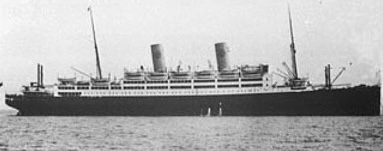
MS Kungsholm (1928)
Swedish American Line · launched 1928 · Ship Guide
Overview
MS Kungsholm (1928) was the Swedish American Line’s interwar flagship—an early “diesel-era” transatlantic liner designed to do two jobs well: steady North Atlantic service between Gothenburg and New York, and profitable winter cruising. Built at Blohm & Voss in Hamburg, she helped define the line’s white-hulled, modern Scandinavian identity at a time when cruising was becoming a strategic off-season business rather than a novelty.
Her later career adds a second collecting “layer”: wartime requisition and a series of renamings that place the same hull into entirely different documentary ecosystems. The ship’s long life—Kungsholm, then John Ericsson, then Italia—means artifacts can look dramatically different even when they refer to the same physical vessel.
Evidence-first note: collectors often say “SS Kungsholm,” but the 1928 ship is widely documented as a motorship (MS). For attribution, treat “SS/MS” as secondary—issuer line, route block, and date line are the fastest anchors.
Key Facts
Design & Construction (Context)
Kungsholm belongs to the moment when diesel propulsion and “cruise-first” interior planning began to reshape the liner business. Swedish American Line designed her with winter cruising in mind, and contemporary descriptions emphasize features aimed at leisure travel rather than solely point-to-point migration flows. This dual-purpose philosophy is visible in the ephemera: cruise brochures and onboard programs can look markedly different from transatlantic passenger-service paperwork.
Service History (Summary)
1928–1941: Gothenburg–New York liner service and cruising. Operated transatlantic crossings in season and cruises (often from New York) in the off-season, helping establish Swedish American Line’s interwar reputation.
1942–1947: Wartime requisition. Removed from commercial service and taken into U.S. government use, renamed John Ericsson in 1942—an identity shift that changes the “paper ecosystem” around the ship.
1948–1964: Postwar commercial life as Italia. Sold into passenger service under a new operator and name, sailing a variety of routes and cruises. This period generates a large volume of postwar Mediterranean-leaning ephemera.
1964–1965: Final use and scrapping. Briefly repurposed as a floating-hotel concept under the name Imperial Bahama, then sold for demolition and scrapped in 1965.
Interpretive Notes
Kungsholm is especially useful for collectors because “same hull, different identity” is not hypothetical here—it’s the core story. If you organize your collection records by ship name only, you can accidentally flatten three distinct contexts: Swedish American Line interwar materials; wartime government documentation; and postwar Italia ephemera.
Collector guidance: for attribution, prioritize (1) issuer line (SAL vs. government vs. Home Lines), (2) route block and port agents, and (3) visual identity cues (SAL’s Scandinavian modern style vs. utilitarian wartime formats vs. postwar tourist-cruise design). Then confirm the ship’s name printed on the piece.
Evidence-first ship guideSources (Selected)
Corroborate specifications across registers and builder/line histories; published tonnage and dimension figures can vary by rounding or measurement basis.