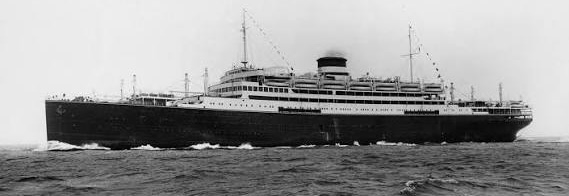
MS Vulcania
Cosulich Line · entered service 1928 · Ship Guide
Overview
MS Vulcania was one of the great Italian motor liners of the interwar period, built at Monfalcone for Cosulich Società Triestina di Navigazione and paired with Saturnia. She combined a modern diesel identity with a remarkably long working life that extended from prewar Trieste–New York service through wartime transport, postwar migration traffic, and a final career as Caribia.
Her biography is especially useful because it resists a simple “prestige liner” narrative. Vulcania moved through several corporate structures and service roles, and her machinery was altered early in life. Dates, operator names, passenger arrangements, and even accounts of her final disposal therefore need to be tied to a specific phase.
Key Facts
Diesel-Liner Context
Vulcania and Saturnia were prominent examples of the move toward large diesel-powered passenger ships. The machinery story is not static: early engines proved troublesome and were replaced, while later alterations changed both performance and accommodation. For technical claims, a dated register or shipyard source is preferable to a single “lifetime specification.”
Prewar Service
Her best-known prewar work connected Trieste and Mediterranean ports with New York. Corporate identity also changed around her. Cosulich interests were folded into the state-sponsored Italian shipping reorganizations of the 1930s, and by the later decade Vulcania was operating within the Italia Line framework.
Passenger material from this period can therefore legitimately carry different corporate branding for the same hull. That is a dating clue, not necessarily a contradiction.
War and Repatriation
The Italian government requisitioned Vulcania in 1941 for transport work. In 1942–43 she took part in special repatriation voyages around Africa for Italian civilians and wounded personnel from former East African territories under internationally negotiated arrangements. After the 1943 armistice, sources describe a complicated period involving German seizure and later Allied use.
By the closing phase of the war and immediate postwar period, the ship was being used to transport personnel, including American troops returning across the Atlantic. In 1946 she was chartered to American Export Lines for New York–Naples–Alexandria voyages before returning to Italian ownership.
Postwar Migration and Caribia
After reconditioning, Vulcania resumed passenger service in 1947 and became closely associated with postwar migration. From the mid-1950s her itineraries frequently linked Mediterranean and Atlantic ports with Halifax and New York, which explains the ship's strong presence in family migration records and passenger-list collections.
Sold in 1965 to SIOSA/Grimaldi interests and renamed Caribia, she continued in passenger and cruise work until withdrawal in the early 1970s.
1974: Preserve the Uncertainty
Published accounts do not agree on the precise end of the ship. Some Italian maritime references state that she reached Kaohsiung and was demolished there in 1974; other widely repeated accounts say the tow ended in loss before ordinary breaking could begin. Until a stronger primary disposal record resolves that conflict, this guide preserves the disagreement rather than selecting the more dramatic version.
Evidence-first ship guide