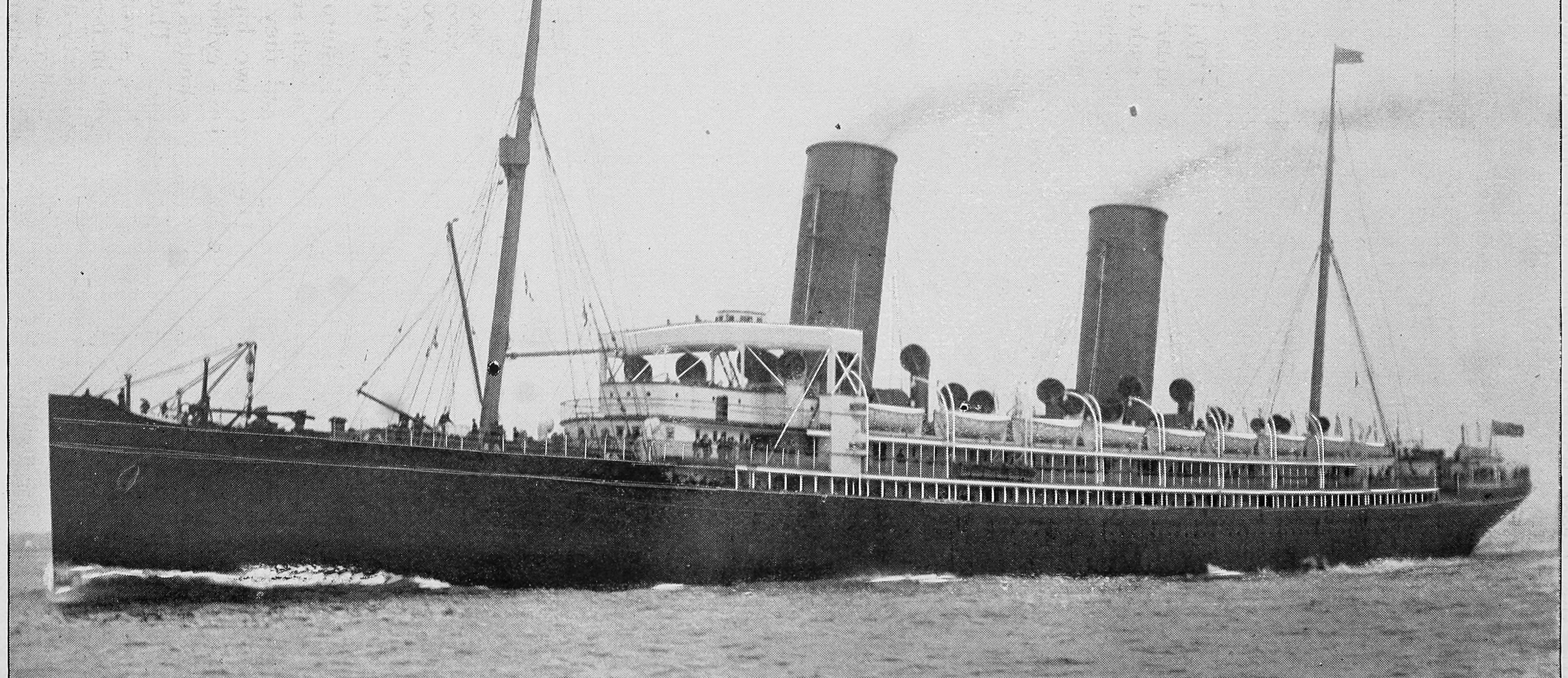
RMS Campania
Cunard Line · entered service 1893 · Ship Guide
Overview
RMS Campania was one of Cunard's defining express liners of the 1890s. Built by Fairfield at Govan, launched on 8 September 1892, and entering Liverpool–New York service on 22 April 1893, she and sister Lucania represented the mature peak of large reciprocating-engine express liners before the turbine era.
Her career has two very different halves. The first belongs to transatlantic speed, mail, and passenger prestige; the second belongs to the Royal Navy, which bought the ship in 1914 and transformed her into HMS Campania, an early aircraft-carrying vessel and later seaplane tender. Those identities should be treated separately rather than flattened into one biography.
Key Facts
Cunard's 1890s Express Strategy
Campania and Lucania were built as a matched express pair, not isolated prestige experiments. Their purpose was to sustain a fast regular schedule across the North Atlantic and to restore Cunard's competitive standing against rival lines.
That distinction matters. A single fast crossing might generate headlines, but the commercial advantage came from maintaining speed repeatedly within a dependable timetable. The sisters therefore represented a system of express service rather than one-off record chasing.
Speed, Records, and the Blue Riband Problem
Campania briefly held transatlantic record honors before Lucania improved on them. Popular accounts often compress these achievements into a simple “Blue Riband winner” label, but the historical reality is more specific: eastbound and westbound passage records were separate, timing methods varied, and the “Blue Riband” itself was a retrospective convention rather than one official trophy.
Curatorial language should therefore stay tied to direction, date, and source. “Held reported transatlantic records” is usually more precise than treating the honor as a permanent official title.
Passenger Spaces and Prestige
Like her sister, Campania was both an engineering machine and a social environment. First-class public rooms presented Cunard's late-Victorian idea of prestige, while second- and third-class accommodation reflected the broader passenger economy that made the service commercially viable.
Passenger lists, menus, stationery, deck plans, postcards, and company brochures survive in quantity because the ship operated within a mature corporate travel system. These objects can help reconstruct class divisions, route patterns, and onboard culture more effectively than generalized descriptions of “luxury.”
Wireless and a Changing Atlantic
The sisters were among the early major Cunard liners to adopt Marconi wireless. The technology gradually eroded the informational isolation of an ocean crossing by allowing operational messages and news to reach ships while at sea.
For historians, this creates a useful chronological divide. Early photographs and printed descriptions may predate visible wireless equipment, while later material can document a ship operating within a new communications environment.
Commercial Retirement and Naval Rebirth
By 1914, Campania had been sold for breaking after a long passenger career. The Admiralty intervened and purchased the ship, beginning a radically different second life. Conversion for naval aviation altered her appearance, internal arrangement, and function.
As HMS Campania, the vessel became part of the Royal Navy's early experimentation with aircraft at sea. Her configuration evolved during wartime service, so photographs should be dated by features such as flight decks, hangars, and armament rather than treated as one static naval appearance.
Loss in the Firth of Forth
On 5 November 1918, severe weather caused HMS Campania to drag anchor in the Firth of Forth. She collided with other vessels and sank. The end came only days before the Armistice, which has encouraged later romantic framing, but the loss itself is well documented as a weather-and-collision casualty.
Collecting and Provenance
Cunard-era passenger material and Royal Navy material belong to fundamentally different provenance phases. The printed name form—RMS versus HMS—can be a useful first clue, but date, context, and physical configuration remain essential.
Claims that an object came “from the wreck” deserve a much higher evidentiary burden than ordinary association with the ship. Without a traceable chain of custody, institutional documentation, or contemporary provenance, conservative labeling is preferable.
What Survives from the Passenger Era
The long commercial career generated a rich material record: company brochures, passenger lists, menu cards, stationery, postcards, deck plans, and photographic views. Many items are generic Cunard pieces rather than ship-specific objects, so the presence or absence of the ship's printed name matters when making attribution claims.
A practical cataloging method is to separate native evidence from later association. A name printed as part of the original design is stronger than a dealer label or later handwritten identification. Postmarks, voyage dates, and passenger ownership can strengthen the chain further.
Interpretive Notes
Campania's importance lies in both halves of the career: the express-liner world of the 1890s and the experimental naval-aviation world of the First World War. Neither should erase the other.
The sister relationship with Lucania is also essential for attribution. Their close visual similarity means photographs and ephemera should be cross-checked against date, name, route, and configuration wherever possible.
Evidence-first ship guide