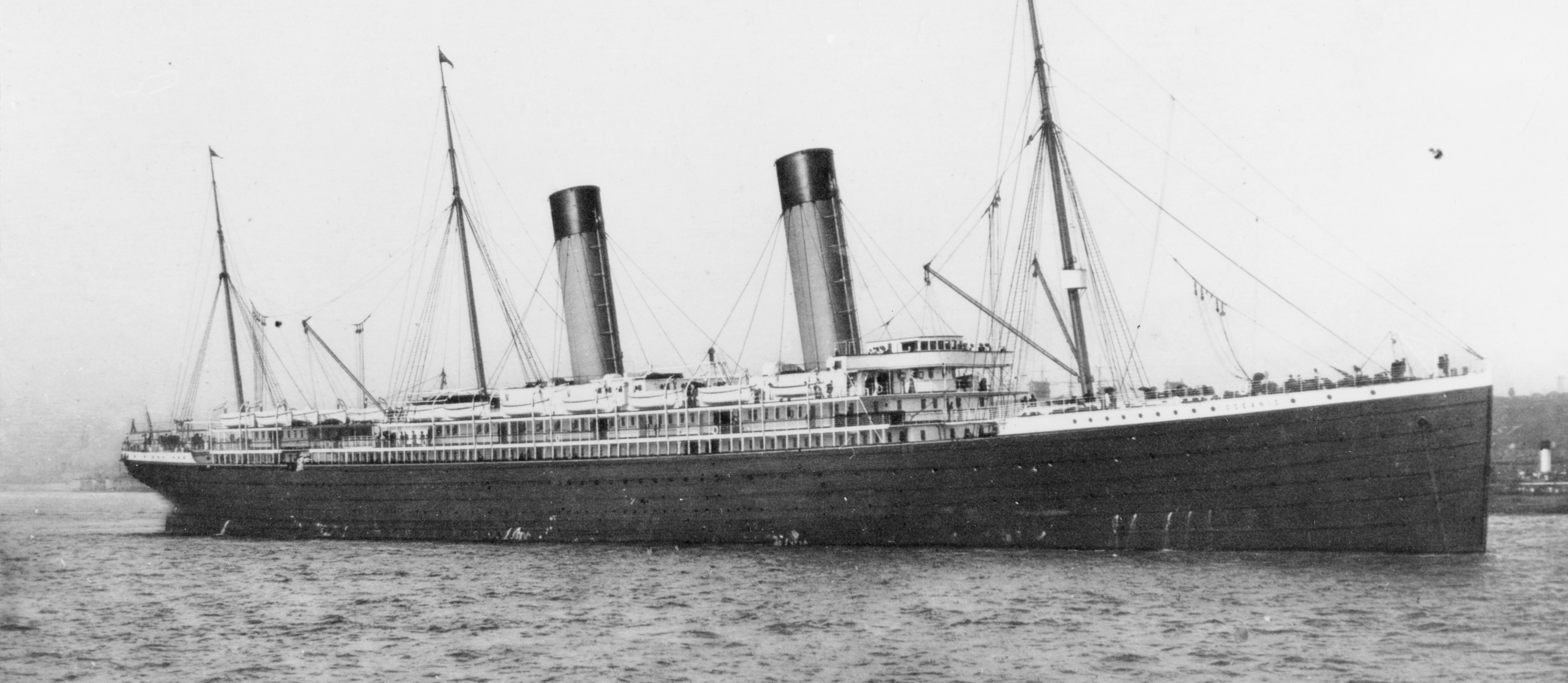
RMS Oceanic (1899)
White Star Line · 1899 · Ship Guide
Overview
RMS Oceanic (launched 1899) was White Star Line’s late-Victorian statement ship: long, modern in profile, and built to signal “size and comfort” rather than a pure speed contest. In contemporary terms, she was a flagship—large enough to be noted as the biggest ship afloat at the moment she entered service, and visually influential in the White Star design language that followed.
For collectors, Oceanic occupies a sweet spot: early-20th-century White Star material is often beautifully printed and survives in meaningful categories (passenger stationery, postcards, sailing ephemera, promotional pieces). The caution is attribution. A great deal of White Star ephemera is company-generic; ship-specific identification is strongest when the ship’s name is printed as part of the original design, when a voyage can be date-locked, or when the piece retains a credible chain of custody.
This page summarizes widely published reference facts and keeps interpretation clearly separate. Where figures vary by source or definition, wording is restrained.
Key Facts
Evidence note on “exact” numbers: tonnage, speed, and capacities are frequently repeated as single definitive figures, but they may shift across sources and definitions. When cataloging an object, cite the reference you used and keep measurements labeled (GRT, LOA, service speed, etc.).
Design & Construction (Why Oceanic Looked “New”)
Oceanic is often discussed as a bridge between Victorian liner practice and the emerging 20th-century “big ship” aesthetic. Her long hull, clean run of superstructure, and modern silhouette mattered as much as any single technical detail: a flagship is partly a ship, partly a public statement. White Star’s commercial philosophy in this period leaned toward comfort, space, and steadiness rather than chasing an unofficial speed trophy.
Collecting implication: this is where White Star’s printed culture becomes useful. A menu, letterhead, or brochure may communicate that “new” identity through typography and tone—without naming the ship at all. That’s still historically meaningful, but it is a different claim than “this item was used aboard RMS Oceanic.”
Service History (Summary)
Entering service in September 1899, Oceanic worked the North Atlantic in the heart of the great liner era—when passenger travel, mail, and publicity interlocked. In broad terms, her career reflects the rhythms of the route more than a single headline moment: scheduled crossings, seasonal patterns, and the steady production of survivable material culture (stationery, postcards, printed onboard programs, and agent-issued promotional pieces).
A practical curatorial method: when you find an “Oceanic” item, first decide whether the ship’s name is native to the object (printed as part of the design, not penciled in later), then date it (postmark, letter date, imprint codes), then classify it: shipboard-issued, passenger-kept correspondence, agent/promotional, or later commemorative.
1914 Conversion & Loss (Evidence-First Note)
With the outbreak of World War I, Oceanic’s commercial identity ended abruptly. She was taken into naval service and, within weeks, was lost after running aground off Foula in the Shetland Islands on September 8, 1914. The loss is well documented in reference literature, but the collecting market sometimes “over-dramatizes” it into implied battle damage or salvage romance.
Collector caution: treat “from the wreck” claims as high-burden. Ask for documentary anchors (dated letters, official paperwork, institutional deaccession records, or a traceable chain of custody). Without those, label conservatively: “White Star Line (period), associated with Oceanic” is not the same claim as “recovered from Oceanic.”
Collecting Profile (What Tends to Survive)
In the market, you’ll most often encounter: (1) postcards and photographic views (harbor scenes, publicity images, portrait-style ship postcards), (2) passenger stationery and lettercards (sometimes with dated content that anchors a voyage), (3) company ephemera that is White Star-branded but not ship-specific, and (4) modern reproductions and “upgraded” attributions.
The best low-friction authenticity anchors are mundane ones: postmarks, dated letters, period printing methods, and ship-name typography that matches known White Star formats. If the item cannot be anchored, that’s fine—just write the label honestly: “White Star Line, c. 1900–1914; ship attribution unverified.”
Evidence-first ship guideSources (Selected)
This list is intentionally conservative and meant to point to stable reference overviews.
- Ocean Liner Curator — Sources (master bibliography)
- White Star History — RMS Oceanic (II) (overview)
- Mark Chirnside — Oceanic (context articles / interpretive discussion)
- Wikipedia — RMS Oceanic (1899) (use as a pointer map; verify key claims)
- Great Ships — Oceanic (II) (summary overview; cross-check details)
- Royal Navy / Navy News — HMS Oceanic wreck and Foula diving context