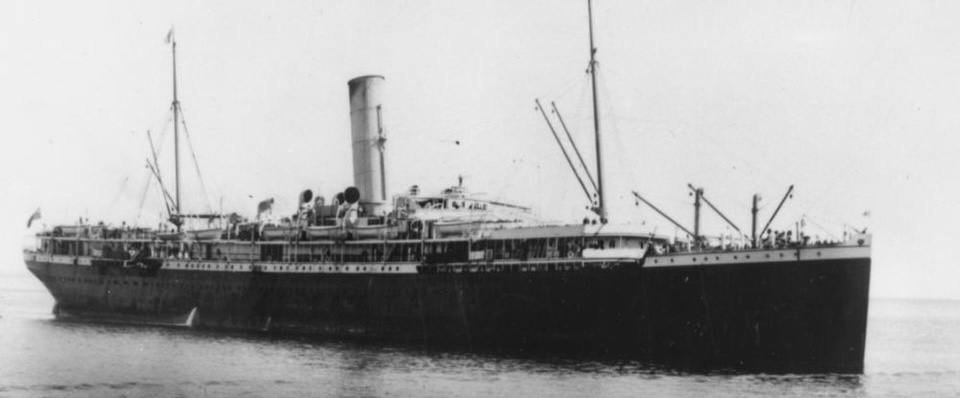
RMS Orontes
Orient Line · 1902 · Ship Guide
Overview
RMS Orontes was an Edwardian Orient Line passenger and cargo liner built for the long route from Britain to Australia through the Mediterranean and Suez Canal. Fairfield Shipbuilding & Engineering Company at Govan launched her on 10 May 1902 and completed her that September. Her maiden voyage began at London on 24 October 1902 for Suez, Melbourne, and Sydney.
The previous version of this guide incorrectly identified Vickers at Barrow as her builder and described triple-expansion machinery. Contemporary and shipbuilding references identify Fairfield, yard no. 418, and twin quadruple-expansion engines driving two screws. At roughly 9,000 gross tons, Orontes was a substantial working liner built for endurance, mail, passengers, refrigerated cargo, and reliable long-distance operation rather than North Atlantic record competition.
This is the 1902 Orontes. A second Orient Line ship of the name entered service in 1929 and should be treated separately in artifact attribution.
Key Facts
The scrapping year varies by secondary source. Rather than force false precision, this guide preserves that disagreement and identifies the range.
Design & Route Context
Orontes belonged to a liner system with very different demands from the Liverpool–New York express trade. The Australia route required sustained performance over a voyage measured in weeks, repeated calls, large stores, mixed passenger classes, mail and cargo handling, and the ability to work through the Suez route. Refrigerated capacity became particularly significant during wartime.
Her quadruple-expansion machinery also makes her useful in the story of steam-engine development. GG Archives describes her as the first Orient Line ship fitted with quadruple-expansion engines, a refinement aimed at extracting more useful work from steam through successive expansion stages.
Service History
1902–1916: Orontes maintained Orient Line service between London and Australia. The route linked British and Mediterranean ports with Suez and onward calls in the Indian Ocean and Australia.
First World War: she remained on her commercial route during the early war years and was taken up for troop work in 1916. Her refrigerated holds made her valuable for carrying Australian meat and dairy produce, and she was released from full troopship use before the war ended.
1919–1921: after the war she resumed Australian passenger service, with Brisbane added to the route pattern. She was laid up in the Thames in 1921 as the postwar fleet began to change.
1922 exhibition-ship episode: Orontes was sold to British World Trade Expeditions for conversion into an exhibition ship under the name British Trade. The venture failed to develop as intended; Orient Line repossessed the vessel and restored the name Orontes.
Final disposal: after only limited further use, she was sold for breaking in the mid-1920s.
Interpretive Notes
An imperial-route liner: Orontes is best understood through Britain–Australia communications rather than comparison with Atlantic greyhounds. Her importance lies in route infrastructure, mixed traffic, and long-distance reliability.
Wartime identity: troopship photographs and military documents should not be allowed to erase the much longer civilian career. The refrigerated-cargo role is a useful reminder that wartime liner service was often logistical as much as martial.
Name reuse: date, tonnage, funnel arrangement, and route are essential when distinguishing the 1902 ship from the much larger 1929 Orontes.
Evidence-first ship guide