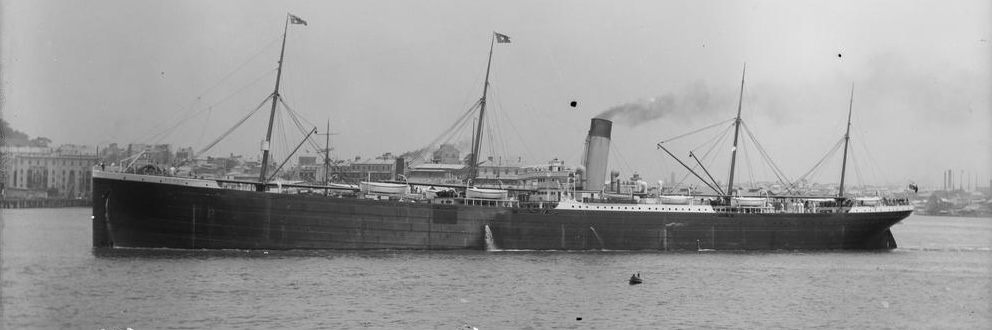
SS Afric
White Star Line · 1899 · Ship Guide
Overview
SS Afric was a cargo-passenger liner of the White Star Line built primarily for long-distance imperial trade routes rather than North Atlantic express service. Entering service at the end of the nineteenth century, she became part of White Star’s important Australian service network, combining refrigerated cargo capacity with limited passenger accommodation.
In collecting and interpretation, ships like Afric demonstrate the commercial breadth of major liner companies. While less celebrated than flagship Atlantic liners, cargo-passenger vessels formed a substantial part of operational fleets and generated distinctive categories of ephemera and documentary material.
Key Facts
Cargo capacity and passenger figures varied during refits and wartime service. Where precise accommodation details are required, consult voyage-specific documentation.
Design & Construction Context
Afric was part of White Star’s expansion into long-range imperial trade routes at a time when refrigerated cargo technology was transforming global shipping economics. Ships of this class were designed to transport meat, dairy products, and other perishables from Australia and New Zealand to European markets while also carrying smaller numbers of passengers.
Her practical design reflected commercial priorities: substantial cargo volume, dependable machinery, and moderate passenger comfort rather than high speed or express prestige. This balanced configuration made such vessels indispensable in maintaining regular global trade connections.
Service History (Summary)
1899: Entered White Star service on the company’s Australian route, linking British ports with Cape Town, Australian ports, and return refrigerated cargo trade.
Boer War period: Temporarily employed as a troop transport, illustrating how cargo-passenger liners were frequently requisitioned for imperial military logistics.
1900s–1914: Continued regular commercial service in the Australian trade. During this period ships like Afric formed a vital but comparatively understated component of White Star’s global operations.
First World War: Again requisitioned for transport duties, operating within convoy and military supply systems.
1917: While sailing in the English Channel, Afric was torpedoed by German submarine U-66 and sank with loss of life, ending her nearly two-decade career.
Interpretive Notes
Cargo-passenger liners produce different collecting signals: artifacts may include freight documentation, cargo manifests, refrigerated trade references, and colonial route imagery rather than purely passenger-focused promotional material.
Military employment can dominate surviving records: wartime service often generated more official documentation than peacetime commercial operation, potentially skewing perceptions of a ship’s primary role.
Imperial trade routes shaped fleet composition: ships like Afric demonstrate how major liner companies balanced prestige Atlantic services with practical global trade networks essential to financial stability.
Evidence-first ship guideSources (Selected)