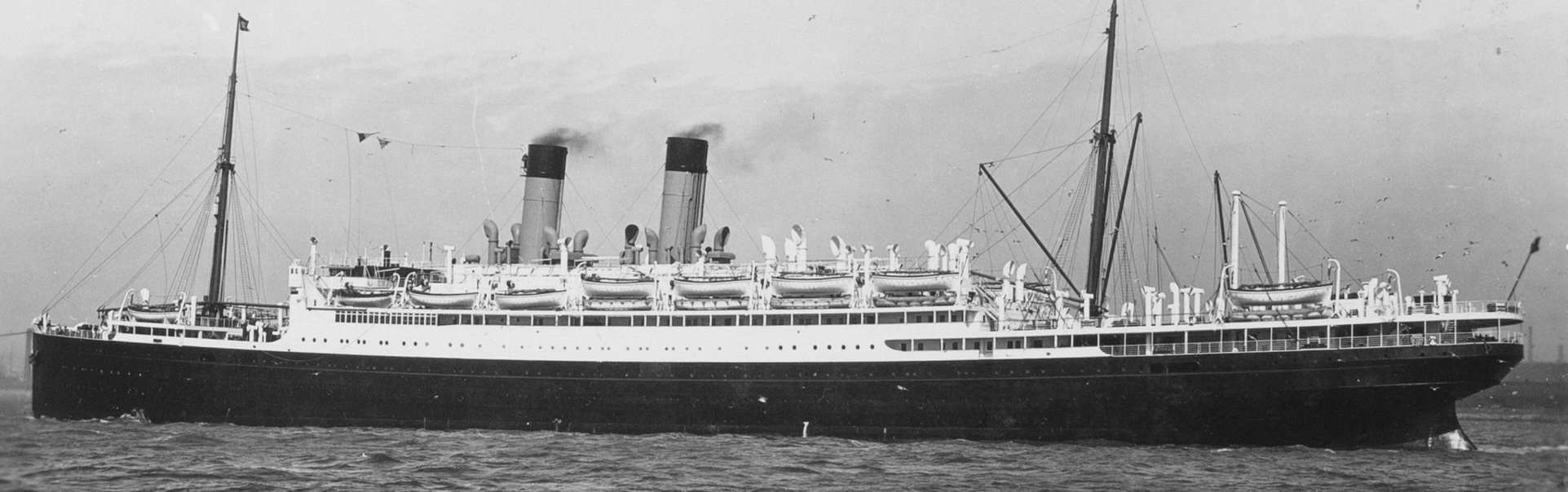
SS Albertic
White Star Line · 1927 · Ship Guide
Overview
SS Albertic was a White Star Line liner of the late 1920s whose significance lies less in long independent development under White Star than in her layered corporate and national history. Built in Germany before and after the First World War, transferred to Britain as reparations, and first operated under Royal Mail ownership as Ohio, she entered White Star service only in 1927. Her White Star career was comparatively brief, but she belongs to the late interwar period when the line was reshaping its Canadian and North Atlantic services under financial pressure and declining passenger demand.
In collecting and interpretation, Albertic is best divided into three phases: pre-White-Star construction and Royal Mail identity, White Star Line service, and laid-up / end-of-career status. Material from those phases should be cataloged carefully rather than treated as a single undifferentiated ship identity.
Key Facts
Published particulars can differ slightly because some references describe the ship in her Royal Mail phase while others summarize her White Star period. For cataloging purposes, preserve the exact wording and naming phase used by the source or artifact being cited.
Design & Construction Context
Albertic was not originally conceived as a White Star ship at all. She began life in the German prewar shipbuilding world, with construction interrupted by the First World War and only completed in the altered political and economic environment of the early 1920s. That fact alone makes her somewhat different from liners designed from the outset around a single company’s commercial vision.
By the time she entered White Star service, she represented not a new flagship concept but a transferred and adapted asset within a line already navigating financial and operational change. In curatorial terms, that makes her especially interesting as a ship of transition: geographically, politically, and corporately.
Service History (Summary)
1914–1920: The ship was laid down in 1914 at AG Weser in Bremen as München for Norddeutscher Lloyd, but the First World War interrupted her completion. She was finally launched in 1920 in a very different postwar world from the one in which she had been conceived.
Postwar transfer and Royal Mail phase: Before entering service for Norddeutscher Lloyd, she was handed over to Britain as part of war reparations and sold to the Royal Mail Steam Packet Company, which renamed her Ohio. In that identity she entered commercial service in 1923.
1927 transfer to White Star: In 1927 she passed to White Star Line ownership and was renamed Albertic, taking a name aligned with White Star’s Canadian route naming pattern. This is the starting point for her White Star identity proper.
White Star service: As Albertic she served on the company’s North Atlantic and Canada-associated routes during the late 1920s. This is the correct interpretive frame for White Star passenger lists, route brochures, onboard ephemera, and commercial photography tied specifically to the Albertic name.
Late 1920s route context: Her White Star career unfolded during a period when the company was relying on a mixed fleet of older and transferred tonnage for Canadian and secondary Atlantic service rather than building entirely new ships for every role. She belongs to that late operational landscape rather than the grander prewar White Star expansion era.
1930 lay-up: In August 1930 she was withdrawn from service and laid up on the River Clyde. This short White Star service life is central to the ship’s interpretive character.
1934 disposal: With the Depression and broader fleet rationalization reshaping liner economics, Albertic was sold for scrap and broken up in Osaka in 1934. Her end belongs to the wider contraction of interwar passenger shipping rather than to a dramatic casualty narrative.
München → Ohio → Albertic
The ship's identity is inseparable from the disruption of the First World War. Laid down in Germany for Norddeutscher Lloyd as München, construction stopped during the war; after the peace settlement the incomplete liner passed to Britain as reparations and was ultimately completed for Royal Mail as Ohio.
Royal Mail placed Ohio in service in 1923. When the Royal Mail group acquired control of White Star, the same hull was transferred again and renamed Albertic in 1927.
A Short White Star Career
Albertic's White Star service lasted only a few years. Her first White Star voyage began on 22 April 1927 for Québec and Montréal, but by 1930 declining traffic and the worsening economic climate had pushed her into lay-up.
This makes surviving material unusually phase-sensitive. An item marked Ohio belongs to Royal Mail's service world; an item marked Albertic belongs to late-1920s White Star. Neither name should be retroactively applied across the whole hull biography.
Why Albertic Matters
The liner is a compact example of how postwar reparations, corporate consolidation, and economic contraction reshaped the North Atlantic fleet. Her history is less about one company's design philosophy than about a ship repeatedly reassigned by forces larger than the vessel itself.
Interpretive Notes
This is a White Star ship with a pre-White-Star life: Albertic should not be interpreted solely within White Star history without recognizing her origins as München and Ohio.
The White Star phase is comparatively brief: because her service under White Star lasted only a few years, surviving White Star-specific material may be less abundant and should be dated with care.
Canadian-route context matters: the ship’s White Star identity is best understood through the line’s late 1920s Canada and secondary North Atlantic service framework rather than through the express-liner race.
Naming phase matters for cataloging: München, Ohio, and Albertic are not merely alternate labels but distinct operational identities tied to different companies and historical contexts.
This is a contraction-era ship as much as a liner: her short White Star life, lay-up, and early scrapping reflect the tightening economics of the late 1920s and early 1930s rather than an uninterrupted upward trajectory.
Evidence-first ship guideSources (Selected)
- Ocean Liner Curator — Sources (master bibliography)
- SS Albertic — overview chronology, ownership changes, dimensions, and White Star service
- Norway Heritage — SS Albertic summary and technical particulars
- GG Archives — passenger-list evidence for White Star route context
- White Star history context for the line’s late 1920s transferred ships
- White Star Line History — Albertic / Ohio chronology