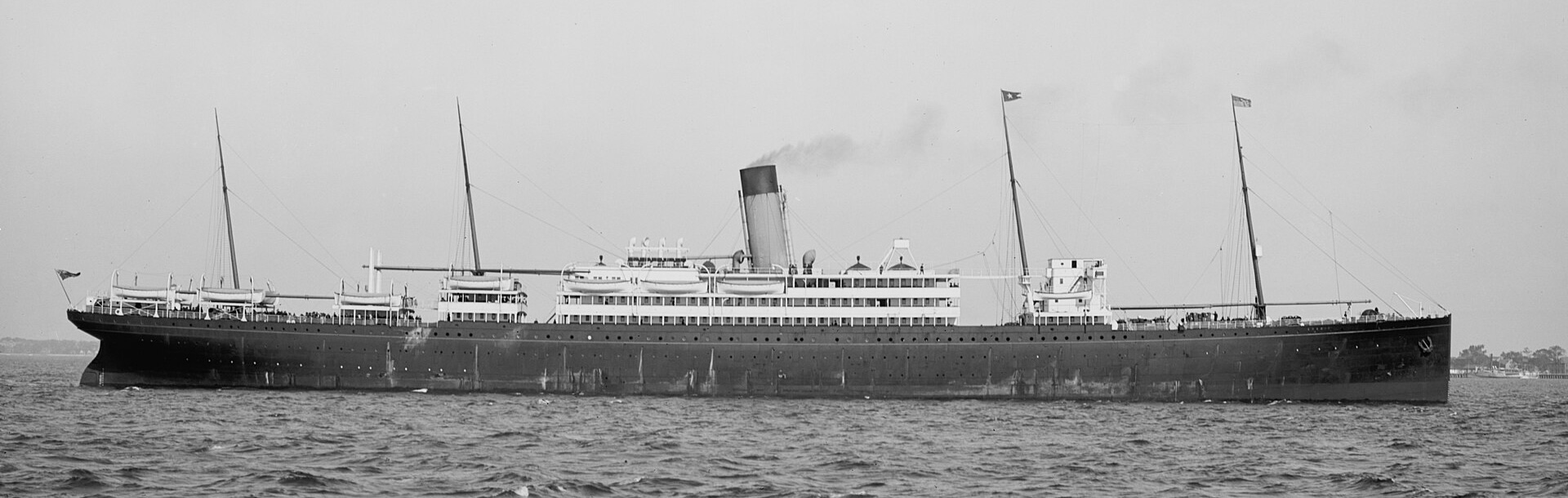
SS Arabic
White Star Line · 1903 · Ship Guide
Overview
SS Arabic was a White Star Line intermediate liner of the early twentieth century, built during the period when the company was rapidly expanding its North Atlantic passenger services beyond the largest express ships. Although she entered service under White Star colors, the ship had originally been intended for the Atlantic Transport Line under the name Minnewaska. That transfer of ownership before completion places her within the broader International Mercantile Marine environment rather than within a purely isolated White Star building program.
In collecting and interpretation, Arabic is especially useful because she belongs to the White Star “intermediate liner” world rather than the headline-making express-liner category. Material tied to her often reflects practical route service, multi-class passenger traffic, and wartime disruption rather than the more mythologized prestige image associated with the line’s largest ships.
Key Facts
Some references summarize the route as Liverpool–New York while others specify the regular Queenstown call. For cataloging purposes, preserve the exact wording used by the source or artifact being cited.
Design & Construction Context
Arabic belonged to the class of substantial intermediate liners built in the years when White Star was adding both giant prestige ships and more practical North Atlantic tonnage. In appearance she reflected the recognizable Harland & Wolff style of the period: one funnel, four masts, twin screws, and a large but not superliner-scale hull intended for dependable passenger service rather than outright speed competition.
Her transfer from Atlantic Transport Line plans to White Star before completion is interpretively important. It places the ship in the wider network of companies drawn together under the International Mercantile Marine combine, where shipbuilding programs and route needs could overlap in ways that complicate a simple one-line identity story.
Service History (Summary)
1902–1903: Launched at Belfast in December 1902 and completed in June 1903, then entered White Star service on the Liverpool–New York route later that month.
1903 onward: Served the North Atlantic as one of White Star’s intermediate liners, carrying a balanced mix of first-, second-, and third-class passengers rather than functioning as a top-tier express ship.
Route context: Her normal operating pattern is commonly summarized as Liverpool–Queenstown–New York, though some quick references shorten this to Liverpool–New York. For practical cataloging, either wording may appear in surviving material depending on the level of detail used.
First World War: Continued operating during wartime conditions, when passenger liners increasingly faced the risks of submarine warfare even while maintaining civilian route identities.
19 August 1915: Arabic was torpedoed and sunk by German submarine U-24. The sinking caused loss of life and became a significant diplomatic incident, especially because of American reactions and the wider controversy over unrestricted submarine warfare.
Interpretive Notes
This is an intermediate White Star liner, not an express flagship: Arabic should be interpreted in the same broader service world as ships like Cymric and other practical White Star Atlantic liners rather than through the lens of the company’s giant prestige ships.
The Atlantic Transport origin matters: because the ship was originally intended for another IMM-associated line, her identity is slightly more networked and corporate in origin than a simple one-line commissioning story might suggest.
The 1915 sinking changed the ship’s historical weight: while Arabic had already been a substantial North Atlantic liner, the wartime destruction and diplomatic consequences of her loss gave the ship a significance beyond ordinary service chronology.
Evidence-first ship guideSources (Selected)
- Ocean Liner Curator — Sources (master bibliography)
- Norway Heritage — SS Arabic particulars and service summary
- SS Arabic (1902) — overview chronology and sinking summary
- White Star Line — company background and IMM transfer context
- RMS Lusitania Resource — SS Arabic service and wartime-loss context