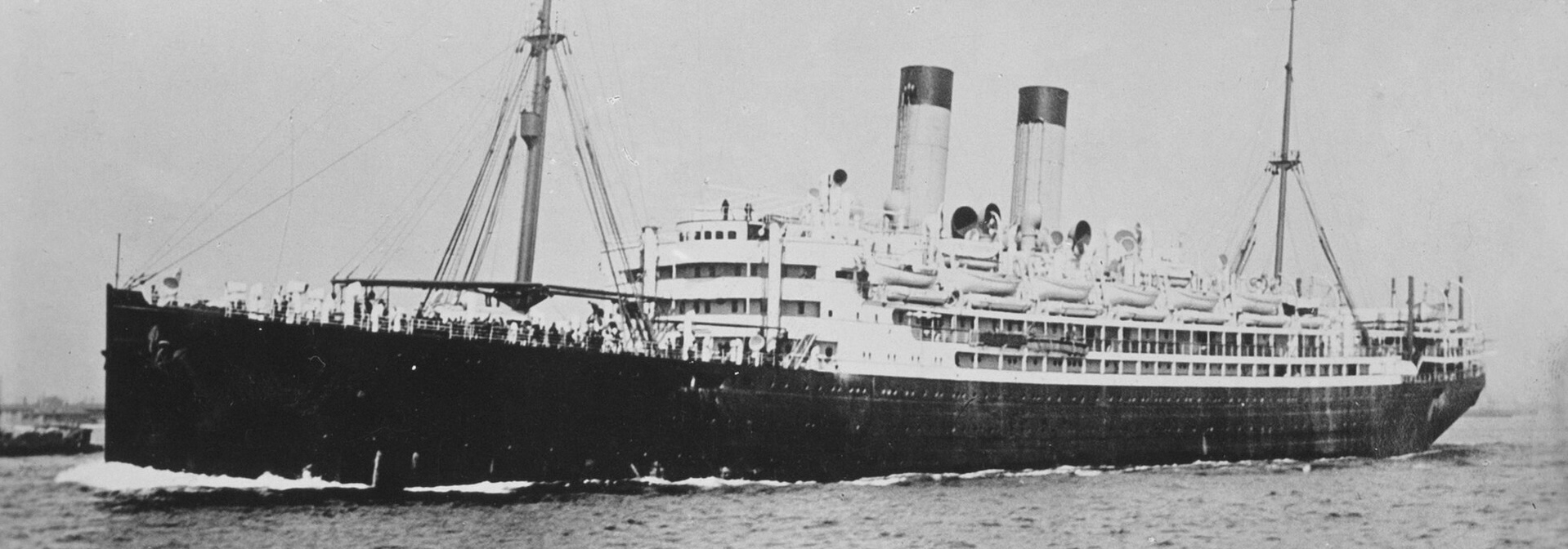
SS Arabic (1921)
White Star Line · entered White Star service 1921 · Ship Guide
Overview
White Star's second SS Arabic was the former Norddeutscher Lloyd liner Berlin, built by AG Weser and completed in 1909. After the First World War she was transferred out of German ownership, purchased by White Star in November 1920, refitted, and entered White Star service in September 1921.
Her career is a classic postwar redistribution story. A prewar German liner became a British fleet replacement, served White Star on Atlantic and Mediterranean routes, later operated under Red Star arrangements, and was finally scrapped in 1931.
Key Facts
Berlin Before Arabic
The ship began life in the prewar German North Atlantic fleet as Berlin. That origin matters because the White Star identity was not a continuation of one company's original plan; it was a postwar reassignment created by the redistribution of German merchant tonnage.
German photographs, passenger lists, and builder material belong to the Berlin phase and should not be retroactively labeled Arabic.
War and Postwar Transfer
The First World War interrupted the ship's original commercial career. She survived the conflict and was transferred out of Germany in the broader postwar settlement.
White Star purchased the vessel in 1920 and refitted her before introducing her as Arabic in 1921. The lag between purchase and entry into service is useful for dating transitional references.
A Postwar Fleet Replacement
White Star needed practical tonnage after the war, and the former Berlin provided substantial passenger capacity without waiting for an entirely new shipbuilding program. She became part of a fleet shaped as much by wartime losses and transfers as by fresh construction.
This makes the ship historically representative of the 1920s. Many lines rebuilt their networks with vessels whose origins belonged to another country, another company, or another intended route.
White Star Service
Arabic worked Southampton–New York and Mediterranean–New York patterns. Company schedules place her alongside ships such as Adriatic and Lapland, showing how she supported White Star's broader route system rather than a single fixed crossing.
Passenger lists and schedules from the period are especially valuable because route changes can help date otherwise similar White Star ephemera.
Mediterranean Work
The Mediterranean service connected southern European ports with New York and formed part of the migration and tourist network inherited from White Star's prewar operations.
As with the earlier Arabic, this route history matters because White Star's commercial world extended well beyond Liverpool–New York express traffic.
Red Star Period
During the later 1920s, the ship operated in association with Red Star Line. Surviving material can therefore legitimately carry Red Star branding while referring to the same hull.
That is another provenance boundary. “White Star” and “Red Star” are not contradictory labels if the date and operating arrangement are correct.
The Arabic Name Trap
The earlier White Star Arabic was sunk in 1915. Any material dated 1921–1931 belongs to this ex-Berlin ship instead.
The guide uses “Arabic (1921)” because that reflects actual entry into White Star service, while the existing /ss-arabic-1920 URL remains unchanged for continuity.
Retirement
By the early 1930s, older reciprocating-engine tonnage was becoming less competitive. Arabic was sold for scrapping in December 1931.
Passenger Markets in the 1920s
The later Arabic served during a decade when migration law, postwar reconstruction, and changing tourist travel were reshaping the North Atlantic. Her usefulness lay in flexibility rather than prestige speed, allowing White Star and later Red Star to deploy her across several route patterns.
Passenger lists and schedules from this period are particularly valuable because they can document shifts in ports, line branding, and class structure during a rapidly changing market.
Collecting and Attribution
The two White Star ships named Arabic are frequently confused in dealer listings and image captions. Date is the strongest first filter, followed by original name, route, and company imprint.
References to Berlin, Hamburg, or Red Star strongly favor the later ship. Material from before 1915 belongs to the earlier Arabic, not this vessel.
Interpretive Notes
The strongest provenance sequence is Berlin → Arabic, followed by a White Star-to-Red Star operating shift. Name, operator, route, and date should all be preserved.
This ship belongs to the postwar fleet-repair story: a transferred German liner refitted and repurposed to meet British passenger demand in the 1920s.
Evidence-first ship guide