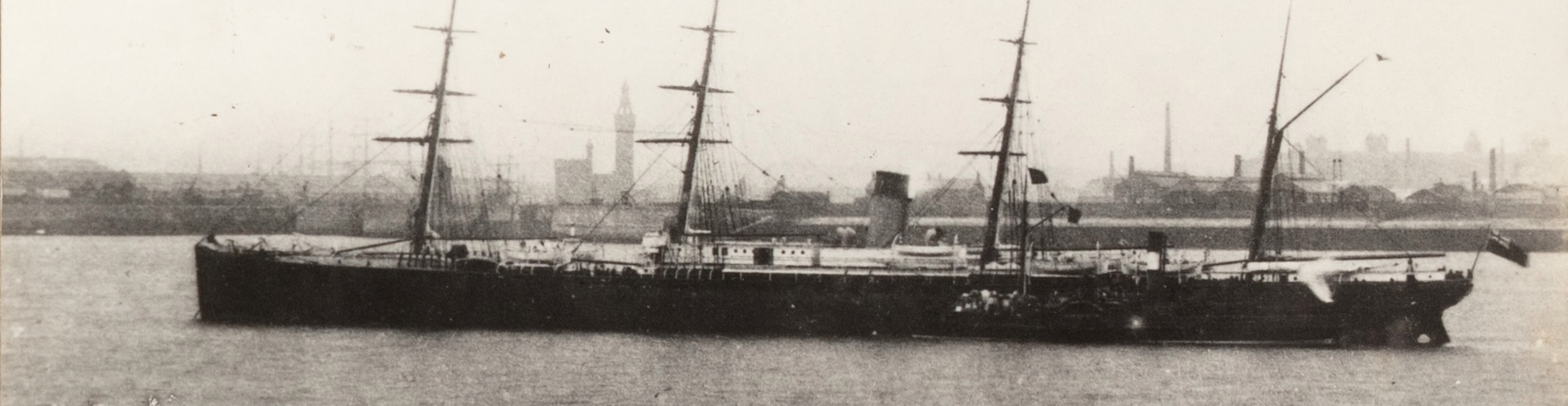
SS Baltic (1871)
White Star Line · entered service 1871 · Ship Guide
Overview
SS Baltic was one of White Star's first-generation Oceanic-class liners and one of the ships that turned the company's new design philosophy into a repeatable fleet identity. Harland & Wolff launched her on 8 March 1871 under the intended name Pacific; she entered service instead as Baltic on 14 September 1871.
Her career combined the themes that define early White Star history: steam-and-sail transition, passenger comfort, migration traffic, competitive speed, long North Atlantic service, and later transfer to another major line. In 1888 she became Holland America Line's Veendam, creating a separate documentary life that should not be merged casually with the White Star period.
Key Facts
Pacific Becomes Baltic
The launch name is an important provenance detail. The hull entered the water as Pacific but did not begin passenger service under that name. Construction-era records can therefore legitimately use Pacific, while operational White Star material belongs to Baltic.
This is exactly the kind of name change that can be mishandled when later summaries flatten the chronology. A good catalog record preserves the wording of the original document and explains the service name rather than silently replacing one with the other.
Oceanic-Class Context
Baltic emerged from the same early building program that produced Oceanic, Atlantic, and other foundational White Star steamers. The class established a recognizable combination of long hull form, comparatively improved accommodation, and visual uniformity.
That fleet context is more informative than treating Baltic in isolation. The design language mattered because passengers encountered not just one ship, but a family of vessels that made White Star's standards seem consistent and intentional.
Steam and Sail Together
Like her sisters, Baltic remained part of the transitional steam-and-sail era. Four masts and auxiliary sail existed alongside a compound steam engine and single screw. The ship therefore belongs to a period in which steam had become commercially dominant without yet eliminating older operating habits.
This mixed configuration is useful for dating visual material and for understanding why early White Star liners can look very different from the later twin-screw ships that dominate popular memory.
Early Grounding
Only weeks after entering service, Baltic grounded in Liverpool Bay in October 1871. She was refloated and returned to service. The event is historically useful because it documents ordinary operational risk rather than a defining disaster.
Not every casualty should be made into the organizing story of a ship. In this case the grounding belongs within a long and successful career rather than functioning as its central identity.
The 1873 Record Passage
In January 1873 Baltic made a celebrated passage from New York to Queenstown that placed her in the transatlantic speed-record tradition. Later references often use “Blue Riband” language, but the safest wording ties the claim to the specific direction and date.
The record is important because it complicates the familiar shorthand that White Star cared only about comfort. The company's early ships could compete credibly on speed while still being marketed through steadiness and passenger experience.
Long White Star Service
Baltic remained with White Star for roughly seventeen years, a substantial career for a ship introduced during such a fast-moving period of technological change. Brief Inman Line charters in the 1880s added another layer to the documentary trail.
Passenger lists, advertisements, agent material, and route ephemera from this period belong to the ship's formative White Star identity and should be distinguished from later Dutch material.
Veendam
Holland America Line acquired the ship in 1888 and renamed her Veendam. The transfer created a new corporate, visual, and route identity even though the hull remained the same.
In 1898, as Veendam, she struck a submerged wreck and was lost without loss of life. That final casualty belongs properly to the Holland America phase rather than to the earlier White Star story.
Passenger Experience and Commercial Identity
Baltic's passenger service belonged to a period when White Star was deliberately cultivating a reputation for steadier, more comfortable crossings. That reputation did not eliminate class hierarchy: saloon passengers and emigrants occupied very different spaces and experienced the ship differently, even while traveling on the same route.
Surviving ephemera therefore needs social as well as technical context. A saloon menu, an emigrant ticket, and a company advertisement may all document Baltic, but each represents a different layer of the ship's commercial world.
Charter and Corporate Mobility
The intermittent Inman Line charters in the 1880s show that liner identity could be more fluid than later fleet histories sometimes imply. A hull could remain recognizably the same while operating under a different commercial arrangement, creating genuine contemporary material that does not fit neatly into a single-company narrative.
For cataloging, this is a reminder to preserve the exact company imprint and route wording on an artifact rather than normalizing everything back to White Star simply because that is the ship's best-known owner.
Collecting and Attribution
Early White Star material is often difficult to date precisely because printed styles were less standardized and photographs are comparatively scarce. Strong attribution therefore benefits from multiple anchors: ship name, company, ports, date, and where possible the context of a specific voyage.
The later Veendam phase creates another common trap. Material from Holland America belongs to a different livery, route system, and corporate identity, even though the underlying hull began life as Baltic.
Interpretive Notes
Baltic is best understood as part of White Star's founding steam generation. The Oceanic-class context, the launch-name change, and the later Veendam identity are all essential to accurate cataloging.
Measurements in nineteenth-century sources vary depending on whether registered or overall dimensions are used. Preserving the figure and wording of the source behind a claim is often better than forcing all references into one modernized number.
Evidence-first ship guide