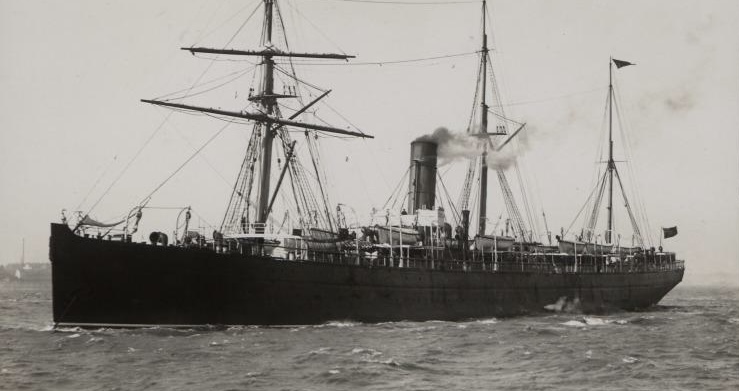
SS Bothnia
Cunard Line · 1874 · Ship Guide
Overview
SS Bothnia was a nineteenth-century Cunard transatlantic steamship built during the iron-hulled, compound-engine phase of Atlantic liner development. Launched in 1874 by J. & G. Thomson on the Clyde, she belonged to a generation of ships that still carried a sailing rig while relying on steam power for scheduled ocean service.
Her historical value is not based on celebrity in the later Lusitania, Mauretania, or Aquitania sense. Instead, Bothnia represents Cunard’s practical 1870s Atlantic network: mail, migrants, cabin passengers, and regular Liverpool connections to New York and Boston. She is a useful ship for understanding the transition from the early steam Atlantic into the larger, more specialized liners of the late nineteenth century.
This page treats Bothnia as a documented Cunard liner of 1874 and avoids confusing her with later Cunard cargo vessels or other ships reusing similar names.
Key Facts
Note on terminology: because Cunard’s formal corporate naming evolved, period references may use “Cunard,” “Cunard Line,” or the older British & North American Royal Mail Steam Packet Company context. For most collecting purposes, the important anchor is the 1874 Cunard transatlantic passenger ship.
Design & Construction (Context)
Bothnia was built at a moment when transatlantic liners still displayed the visual language of sailing ships while operating as scheduled steam vessels. Her iron construction, single screw, compound engine, and barque rig place her in the transitional steamship world before the large twin-screw liners of the 1890s became dominant.
This makes her especially useful for interpreting engravings, cabinet photographs, and early passenger-list material. A depiction showing a funnel, multiple masts, and a conservative nineteenth-century profile may be perfectly appropriate for Bothnia; it should not be judged by the silhouette expectations of later four-funnel express liners.
Service History (Summary)
Bothnia entered Cunard service in 1874 on the Liverpool–Queenstown–New York route. Her career belonged to the regular North Atlantic trade rather than a single dramatic headline episode: carrying passengers, mail, and emigrants during a period when ocean travel was becoming increasingly systematized and commercially dependable.
By the mid-1880s, she is also associated with Liverpool–Boston service. This matters for research because surviving manifests, voyage notices, and ephemera may point to either New York or Boston, depending on date. A route claim should therefore be tied to a specific sailing rather than treated as a fixed permanent identity.
Cunard Context
In Cunard history, Bothnia sits between the famous early paddle and screw steamers and the later prestige liners of the Edwardian and interwar periods. She was not a “floating palace” in the twentieth-century sense, but she was part of the dependable machinery of Atlantic migration and communication.
That quieter role is worth preserving. Ships like Bothnia often appear in passenger lists, newspaper shipping columns, immigration records, and family-history documents more than in luxury advertising. For many researchers, her importance may be genealogical as much as technological.
A Landmark in Cunard Scale
When Bothnia entered service, she displaced the old paddle steamer Scotia as Cunard’s largest ship. The significance was not a dramatic speed record but scale: roughly 4,535 gross tons, accommodation for around 300 first-class and 1,100 third-class passengers, and a barque rig paired with a single-screw compound engine.
Her official number was 68094 and her code letters were MVKQ. Those identifiers are useful when a register entry, insurance record, or archival reference is ambiguous.
Why Bothnia Matters
Bothnia sits at the point where the visual world of sail and the operating discipline of scheduled steam service still overlapped. Her 24-year Cunard career shows how migration, mail, and dependable routine—not spectacle—built the commercial foundation later express liners inherited.
Collecting Profile (What Tends to Survive)
Material connected to Bothnia is most likely to appear as passenger lists, sailing notices, period engravings, photographs, cabinet cards, line references, and later compiled fleet-list entries. Objects with a direct onboard association are possible but should be treated carefully, especially when the claim depends only on a handwritten note or family memory.
A strong attribution should include a date, route, passenger name, Cunard context, or period publication trail. For images, compare the ship’s profile, funnel and mast arrangement, and source caption against known 1870s Cunard references before assigning certainty.
Research & Attribution Notes
The name Bothnia was reused, and “Cunard Bothnia” can refer to more than one vessel depending on context. The 1874 passenger liner should be separated from later cargo ships and from generic family-history references that may copy secondary summaries without checking original records.
For evidence-first labeling, useful phrases include “SS Bothnia (Cunard, 1874),” “Cunard Line Bothnia passenger list,” or “attributed to the 1874 Bothnia pending route/date confirmation.” Avoid overclaiming an artifact as “from the ship” unless the chain of custody is documented.
Interpretive Notes (What to Avoid)
The main interpretive risk is treating Bothnia as insignificant because she lacks the glamour of later Cunard giants. A curator-minded reading gives her a different kind of importance: she documents the everyday Atlantic system of the 1870s and 1880s, where reliability, capacity, and migration mattered more than spectacle.
Evidence-first ship guideSources (Selected)
This list is intentionally conservative.
- Ocean Liner Curator — Sources (master bibliography)
- Norway Heritage — Bothnia (1), Cunard Line
- TheShipsList — Cunard Line fleet list
- National Museums Liverpool — Photograph of Bothnia, Cunard Line
- Immigrant Ships Transcribers Guild — SS Bothnia passenger manifest example
- Wikipedia — SS Bothnia (1874) (use as a pointer map; verify key claims in primary sources)