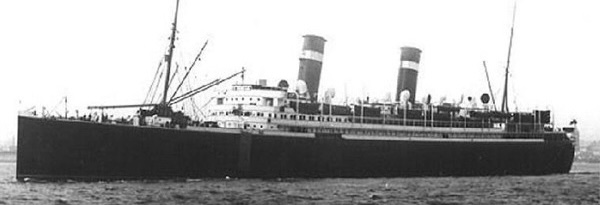
SS Calgarian
Allan Line · 1914 · Ship Guide
Overview
SS Calgarian was one of the Allan Line’s large late transatlantic liners, built for the Liverpool–Canada route at the very end of the company’s independent history. She belonged to the practical North Atlantic Canadian trade rather than the prestige express-liner world, and her significance lies in that context of regular service between Britain and the St. Lawrence ports. Her civilian career was very short, however, as the outbreak of the First World War led to rapid requisition and conversion into an armed merchant cruiser.
In collecting and interpretation, Calgarian is best divided into two main phases: brief peacetime Allan Line passenger service and wartime Royal Navy service as HMS Calgarian. Material from those phases should be distinguished carefully rather than treated as a single undifferentiated ship identity.
Key Facts
Published details can vary slightly depending on whether a source emphasizes civilian liner particulars or naval-service summaries. For cataloging purposes, it is best to preserve the exact wording used by the source or artifact being cited.
Design & Construction Context
Calgarian belonged to the Allan Line’s late-generation Canadian liners, built for the Liverpool–Quebec–Montreal route rather than the glamour end of the North Atlantic speed contest. She was closely associated in appearance with her near-sister Alsatian, and together they represented the final substantial passenger-liner development of the Allan system before its absorption into the Canadian Pacific framework.
Technically, she was notable for her steam-turbine machinery and four-screw arrangement, features that gave her a modern profile for the Canadian trade. In curatorial terms, she should be read as a late Allan Line flagship-type vessel for the Canadian route rather than as a general North Atlantic prestige liner.
Service History (Summary)
1913–1914 construction and entry into service: Built by Fairfield at Govan, Calgarian was launched in April 1913, completed in 1914, and began her maiden voyage from Liverpool to Canada on 8 May 1914.
Peacetime liner service: Her civilian identity belongs to the Liverpool–Quebec–Montreal trade. This is the correct interpretive frame for passenger lists, route brochures, luggage labels, deck plans, and commercial photography tied to Allan Line service.
Wartime requisition: With the outbreak of the First World War, her passenger career was effectively cut short. She was taken up by the Admiralty and converted into the armed merchant cruiser HMS Calgarian.
Early wartime patrol service: In naval employment she served first with the 9th Cruiser Squadron, patrolling off West Africa and later off the east coast of the United States. This phase belongs to a naval and patrol framework rather than a commercial passenger one.
Later transatlantic wartime service: She later spent much of her remaining career making wartime crossings between Canada and Britain. These voyages differ interpretively from normal peacetime transatlantic service because they belong to the logistical world of war rather than passenger-line routine.
1 March 1918: Off Rathlin Island, HMS Calgarian was torpedoed by the German submarine U-19. Three torpedoes struck the ship, and she sank with the loss of 49 men.
Aftermath: Because her civilian career was so brief, the ship’s historical memory is dominated by her wartime naval role and loss. Even so, she remains important as one of the last major Allan Line liners built for the Canadian trade.
A Civilian Career Measured in Months
Calgarian entered service on 8 May 1914, only weeks before the European crisis that became the First World War. Her intended role as a modern Allan Line Canadian liner therefore barely had time to develop before military requirements overtook the commercial plan.
That unusually short peacetime phase is important for attribution: genuine civilian material from 1914 belongs to a very narrow window compared with the much larger wartime documentary record.
HMS Calgarian
Requisitioned by the Admiralty, the liner became the armed merchant cruiser HMS Calgarian. Her wartime service involved transatlantic escort and patrol work rather than passenger operation, changing both command structure and the practical use of the ship.
1 March 1918
On 1 March 1918, after crossing from Halifax, Calgarian was torpedoed by the German submarine U-19 north of Rathlin Island. Three torpedoes struck the ship. Attempts were made to take her in tow, but the tow parted and she sank.
Published accounts record forty-nine deaths. Her loss ended a career in which wartime service had occupied far more time than the civilian Canadian route for which she had been built.
Interpretive Notes
This is a Canadian-route liner first: Calgarian should be understood chiefly through the Liverpool–Quebec–Montreal service world, not through North Atlantic express-liner assumptions.
The peacetime career was short but real: because the ship is commonly remembered as HMS Calgarian, it is easy to lose sight of her original Allan Line passenger identity.
Civilian and naval material belong to different interpretive worlds: passenger ephemera reflects the Canadian liner trade, while armed merchant cruiser references belong to a wartime naval framework.
Allan Line and Canadian Pacific context overlap: the ship belongs to the transitional phase when Allan was being absorbed into Canadian Pacific, but she did not enjoy a long normal post-merger commercial life under the new framework.
She is best read as a late Allan flagship-type liner: Calgarian helps illustrate the final substantial flowering of Allan Line Canadian passenger service before war and corporate consolidation changed the picture completely.
Evidence-first ship guideSources (Selected)
- Ocean Liner Curator — Sources (master bibliography)
- HMS / SS Calgarian — overview chronology, technical particulars, naval service, and loss
- Norway Heritage — SS Calgarian passenger-ship summary and route context
- Great Ships — concise service summary and transfer context
- The Ships List — Allan Line background context