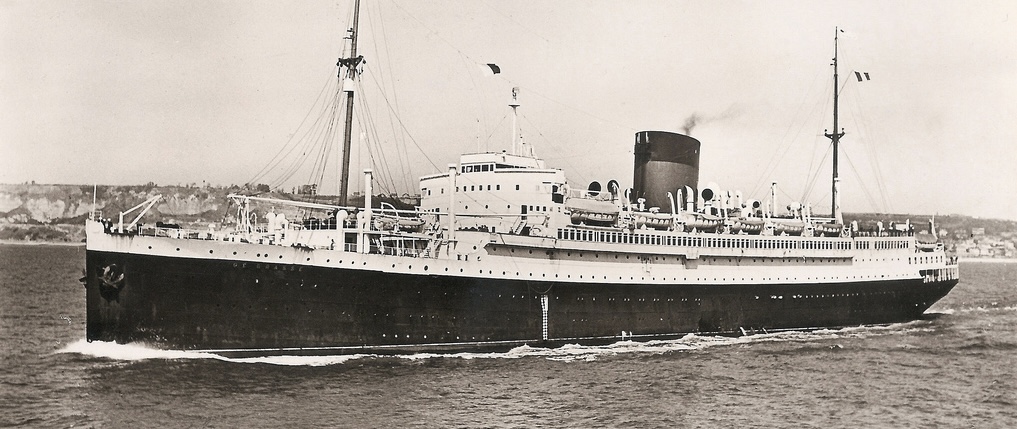
SS Champlain
Compagnie Générale Transatlantique · entered service 1932 · Ship Guide
Overview
SS Champlain was one of the French Line’s important early-1930s North Atlantic liners: modern, streamlined, and intended to offer a stylish but more moderate alternative to the great flagship-scale vessels of the period. She was not the line’s supreme symbol in the way Normandie would become, but she represented the same interwar French ambition to pair technical modernity with distinctive national design.
In collecting and interpretation, Champlain is especially useful because she belongs to the rich visual and printed world of 1930s French Line material without being overshadowed entirely by flagship mythology. Passenger lists, brochures, menus, route cards, and publicity images from her career often preserve a strong French Line identity in a somewhat more approachable and everyday service context.
Key Facts
Design & Construction Context
Champlain belongs to the same broad moment of French transatlantic renewal that produced some of the most visually distinctive liners of the interwar period. She was not built as a gigantic prestige vessel, but as a refined and commercially useful Atlantic ship whose design still reflected the French Line’s strong commitment to modern presentation, uncluttered deck lines, and stylish interiors.
This makes her interpretively important. She shows that the French Line’s interwar identity was not limited to a single famous flagship. Even below the level of Normandie, the company invested heavily in creating ships that looked modern, national, and aesthetically coherent. Champlain helps illustrate how French liner branding extended across the broader fleet.
Service History (Summary)
1931–1932: Built at Saint-Nazaire/Penhoët, launched in August 1931, and completed for French Line North Atlantic service. She entered service in 1932 as part of the company’s modernized interwar passenger fleet.
1930s: Served the Le Havre–New York route. In public image and collecting material, she belongs to the polished French Line world of brochures, passenger lists, and publicity that emphasized modern comfort and distinctive French style.
Fleet context: Champlain is often discussed alongside Lafayette, whose service role and appearance placed the two ships in close conversation within the French Line fleet. That relationship is useful for internal linking and for collector comparison, especially when identifying printed ephemera from the early 1930s.
1940: During the collapse of France in the opening phase of the Second World War, Champlain was lost off La Pallice after striking a mine on June 17, 1940. Her career therefore ended abruptly, unlike many interwar liners that went on to long wartime or postwar second lives.
Interpretive Notes
Do not reduce French Line history to only the biggest names: Champlain matters precisely because she was a substantial, visually modern, and commercially meaningful liner without being the line’s singular icon. She helps show how fleet identity operated below flagship level.
French Line house style can be a strong clue, but not a sole proof: brochures, passenger lists, menus, and advertising from the period often share recognizable CGT visual language. Attribution should still rest on printed ship name, date, route, and internal textual evidence.
Near-sister or running-mate confusion is possible: because Champlain is often discussed in relation to Lafayette, collectors should be cautious with unattributed photographs or generalized fleet references. Similar styling does not by itself confirm the ship shown.
Her wartime loss compresses the collecting window: unlike ships that survived into long postwar careers, Champlain generated a narrower body of service-era material. That can make genuine ship-specific ephemera especially attractive, while also increasing the temptation for sellers to over-attribute generic French Line material to her.
A modern cabin liner cut short: Champlain belonged to the French Line’s early-1930s move toward modern, more efficient passenger ships rather than the giant prestige scale represented by Normandie. Her design and service therefore help show the broader fleet modernization that surrounded, but was not identical to, the famous flagship program.
The June-versus-August 1931 launch-date disagreement should remain visible because it demonstrates how even basic chronology can diverge across otherwise respectable summaries. Her 17 June 1940 mine loss is clearer: the ship was lost to a mine, while later torpedoing affected the already exposed wreck. Those two events should not be collapsed into a single sinking account.
For attribution, that distinction separates the cause of the ship’s loss from later damage to the wreck and prevents two wartime events from being merged into one.
Evidence-first ship guide