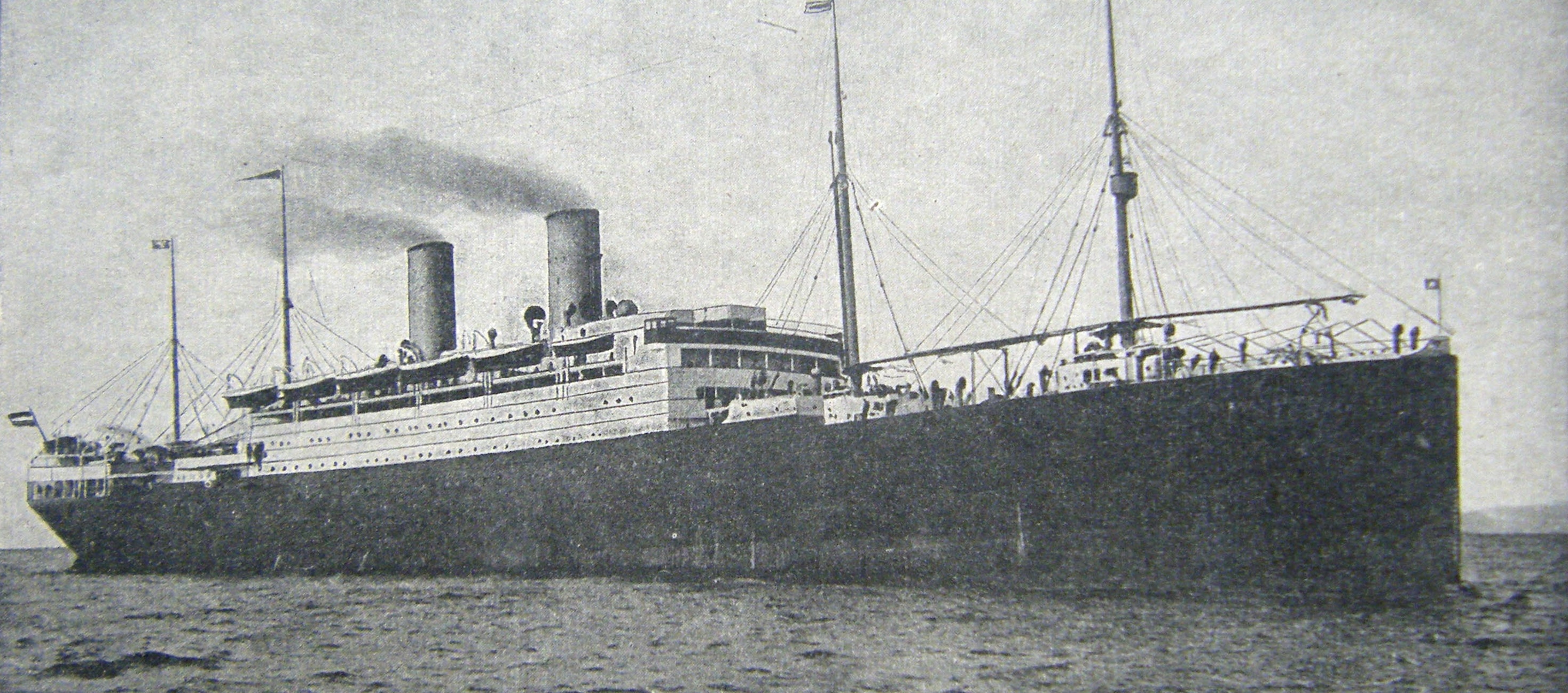
SS Cincinnati (1909)
Hamburg America Line · North Atlantic Service · Ship Guide
Overview
SS Cincinnati was a large Hamburg America Line intermediate liner built by Schichau at Danzig and launched in July 1908. Entering service in 1909, she was paired with the similar Cleveland for passenger, emigrant, and cargo traffic between Germany and the United States.
Her career was cut short by the First World War. Interned in the United States after 1914, she was seized after American entry into the war, renamed USS Covington, and used as a troop transport. U-86 torpedoed her off France on 1 July 1918; she sank the following day while under tow.
Key Facts
A Large Intermediate HAPAG Liner
Cincinnati and Cleveland were designed below HAPAG's largest prestige liners but with substantial passenger and cargo capacity. Contemporary company material compared them in appearance and comfort with Amerika and Kaiserin Auguste Victoria, while emphasizing their practical value in New York passenger and freight service.
The pair carried large numbers of third-class and steerage passengers, making them important to the migration economy as well as to cabin traffic.
Prewar Service
Cincinnati entered HAPAG service in May 1909. Her schedules included Hamburg and the major Channel ports en route to the United States. From 1910 to 1913 she also appeared seasonally on Mediterranean-to-American services, extending HAPAG's reach into southern European emigrant traffic.
In 1913 Cincinnati and Cleveland were assigned to a new Hamburg–Boston service, reinforcing their role as practical intermediate liners rather than record-seeking express ships.
Internment and American Seizure
When the First World War began in 1914, Cincinnati was in the United States and remained there under neutrality conditions. After the United States entered the war in April 1917, the vessel was seized and transferred for government use.
Renamed USS Covington, she was commissioned as a troop transport in July 1917. She completed six eastbound troop voyages from the United States to France, carrying more than 21,000 American servicemen.
The Loss of USS Covington
On the evening of 1 July 1918, while returning westward from Brest, Covington was struck by a torpedo fired by German submarine U-86. The hit flooded major machinery spaces and forced the ship to be abandoned.
Destroyers removed the survivors, while salvage parties remained aboard and tugs attempted to bring the damaged transport toward port. The flooding proved uncontrollable. On 2 July she settled rapidly and sank. U.S. Navy records identify six men lost.
Why Cincinnati Matters
Cincinnati adds an important counterpart to the existing Cleveland guide. Together, the sisters show how HAPAG used large intermediate liners to combine cabin traffic, mass emigration, freight, and route flexibility immediately before the First World War.
Her later identity as USS Covington also illustrates the wartime transformation of German passenger ships held in American ports: from commercial liners into troop transports serving the Allied war effort.
Interpretive Notes
Builder confusion appears in some secondary compilations: Cincinnati was built by Schichau at Danzig; her sister Cleveland was built by Blohm & Voss at Hamburg.
Launch and service years differ: she was launched in 1908 but entered HAPAG service in 1909, so both years appear in historical references.
Final-loss dates can be reported differently: the torpedoing occurred on 1 July 1918, while the damaged ship actually sank on 2 July.
Evidence-first ship guide