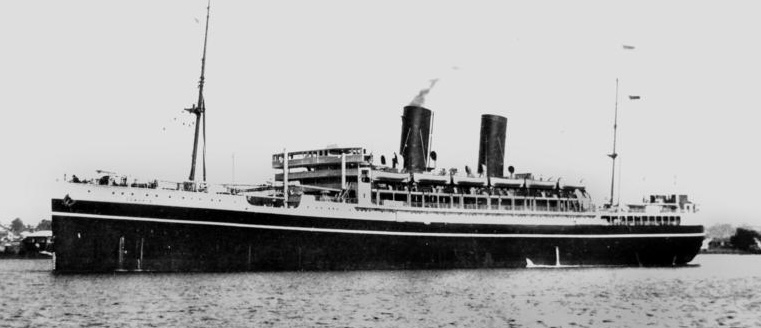
SS Comorin (1925)
P&O · entered service 1925 · Ship Guide
Overview
SS Comorin was one of three closely matched P&O C-class liners ordered to rebuild the company's interwar Australia service after the First World War. Built by Barclay, Curle & Company at Glasgow alongside sister Cathay, she was launched on 31 October 1924 and entered service in 1925.
Her peacetime career centered on long-distance passenger, mail, and refrigerated-cargo service through Suez. Like Cathay and Chitral, she was designed to help restore P&O's fortnightly Australian mail schedule, though the class lacked the reserve speed ideally suited to true mail-steamer work and was also employed on other eastern routes.
In 1939 Comorin was requisitioned by the Admiralty and converted into the armed merchant cruiser HMS Comorin. She served on the South Atlantic and convoy-escort stations until a catastrophic onboard fire in heavy North Atlantic weather forced her abandonment in April 1941.
Key Facts
C-Class Australia Service
Comorin, Cathay, and Chitral formed a purpose-built three-ship group for P&O's Australia trade. Their scale, passenger mix, refrigerated cargo volume, and moderate speed reflected the economics of regular imperial-route service rather than prestige competition.
The sisters helped P&O restore a fortnightly schedule to Australia. Their two-funnel appearance was partly cosmetic—the after funnel was a dummy in civilian service—and they carried both passengers and substantial refrigerated cargo across the long Suez route.
Machinery Modernization
In 1930 Comorin received machinery improvements intended to increase efficiency and speed, including low-pressure exhaust-turbine assistance. The work reflected P&O's effort to extend the usefulness of existing interwar tonnage rather than replace relatively young ships outright.
Contemporary reporting described the ship as capable of about 17½ knots after trials, modest by express-liner standards but useful on a route where timetable reliability mattered more than record speed.
HMS Comorin
The Admiralty requisitioned Comorin on 5 September 1939. Conversion to an armed merchant cruiser was completed on 30 December, with a main battery of seven 6-inch guns and lighter secondary armament.
She served on the South Atlantic Station, Bermuda convoy escort, and later the Freetown Escort Force. The conversion exploited the liner's range and endurance, but as with all merchant-hull cruisers, it placed a civilian-built ship into demanding naval work for which she had not originally been designed.
The 1941 Fire and Loss
On 6 April 1941, while in heavy North Atlantic weather, a serious fire broke out aboard HMS Comorin. The blaze could not be brought under control and the ship had to be abandoned.
Twenty men died, while 455 survived. The damaged hulk remained afloat and was shelled and sunk the following day by the destroyer HMS Broke. Unlike sister Cathay, which was later lost to enemy air attack, Comorin was destroyed by an onboard emergency rather than direct enemy action.
Why Comorin Matters
Comorin is a strong example of the interwar P&O route liner: important because she sustained a global passenger-and-cargo system rather than because she chased speed records. Her wartime conversion then shows how that same endurance and internal volume could be repurposed for naval patrol.
Her loss also reminds us that wartime liner casualties did not all come from torpedoes, mines, or bombs. Fire, weather, and the vulnerability of merchant construction could be equally decisive.
Interpretive Notes
Comorin is one of a defined three-ship sister group: Cathay, Comorin, and Chitral should be read together when interpreting P&O's mid-1920s Australian fleet reconstruction.
The civilian and naval phases should remain distinct: the two-funnel passenger liner and the armed merchant cruiser differed materially in appearance, equipment, and purpose.
Her loss was accidental, not battle damage: the ship caught fire in severe weather and was scuttled after abandonment.
Evidence-first ship guide