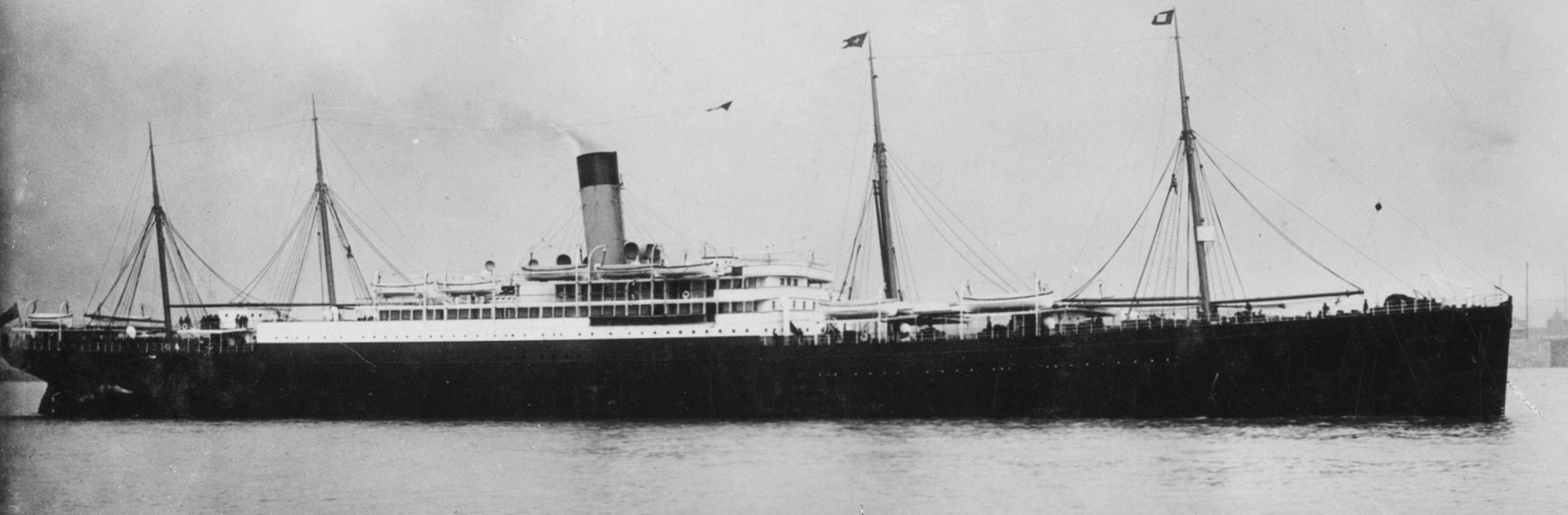
SS Cretic
White Star Line · in White Star service from 1903 · Ship Guide
Overview
SS Cretic was a medium-sized passenger liner whose career illustrates how ships moved between related companies inside the International Mercantile Marine system. Built by R. & W. Hawthorn, Leslie & Co. and launched on 25 February 1902 as Hanoverian for Leyland Line, she briefly became Mayflower before entering White Star service as Cretic in 1903.
She was never a prestige flagship. Her historical value lies in the practical world of Liverpool–Boston service, Mediterranean migration routes, wartime transport, and later return to Leyland as Devonian. That layered identity makes her especially useful for provenance work.
Key Facts
From Hanoverian to Cretic
The ship began as Hanoverian for Leyland Line and entered Liverpool–Boston service in 1902. Her rapid early transfer to Dominion Line as Mayflower, followed by another transfer to White Star as Cretic, reflects the corporate flexibility created by IMM ownership.
That sequence is not just corporate trivia. It affects how photographs, passenger lists, and printed material should be cataloged. A document from 1902 may be correct under Hanoverian; one from 1904 may be correct under Cretic. The hull stayed the same, but the documentary identity changed.
Boston Service
Under White Star, Cretic initially continued the Liverpool–Boston trade. Boston was an important immigrant and passenger port in its own right, and ships serving it should not be interpreted as secondary versions of the New York express fleet.
Passenger lists from this period document a mixed social world of first-, second-, and third-class travelers. The large lower-class complement places migration at the center of the ship's commercial purpose.
Mediterranean Service
White Star later moved Cretic into Mediterranean service linking ports such as Genoa and Naples with New York and Boston. This change connected the ship directly to southern European migration and altered the cultural geography of her passenger traffic.
For attribution, route is therefore as important as operator. A Liverpool–Boston passenger list and a Genoa–New York passenger list can both be authentic Cretic material while representing different phases of the White Star career.
Passenger and Emigrant Traffic
Cretic was a workhorse liner rather than a speed champion. Her commercial logic centered on carrying many people and substantial cargo dependably, and that role generated a rich paper trail: passenger lists, tickets, baggage labels, menus, postcards, and route notices.
These ordinary materials are often more useful than glamorous souvenirs because they can anchor the ship to a specific date, route, and passenger market.
First World War
During the First World War, Cretic entered government transport service. That phase should be treated separately from peacetime White Star operations because military movement records and wartime photographs belong to a different administrative context.
After the war she returned to commercial service, demonstrating how liners designed for migration could be repeatedly repurposed by wartime logistics and then restored to civilian work.
Return to Leyland as Devonian
In 1923 the ship returned to Leyland Line and became Devonian. This final identity created another hard provenance boundary before the ship's withdrawal and scrapping in 1929.
Material from the Devonian period should not be back-labeled as White Star Cretic merely because that is the better-known name. The printed contemporary identity should lead the catalog record.
Corporate Mobility as Historical Evidence
The rapid sequence of transfers is itself evidence of how IMM managed tonnage across related companies. Rather than treating the changes as bureaucratic noise, they help explain why the same ship can appear in records under different names and lines within a short period.
Interpretive Notes
The strongest provenance sequence is Hanoverian → Mayflower → Cretic → Devonian. Date, company, and route should accompany the ship name wherever possible.
Cretic also helps correct a prestige-heavy view of White Star. Much of the line's real business depended on ships like this: slower, flexible, migration-oriented vessels serving Boston and Mediterranean routes over many years.
Evidence-first ship guide