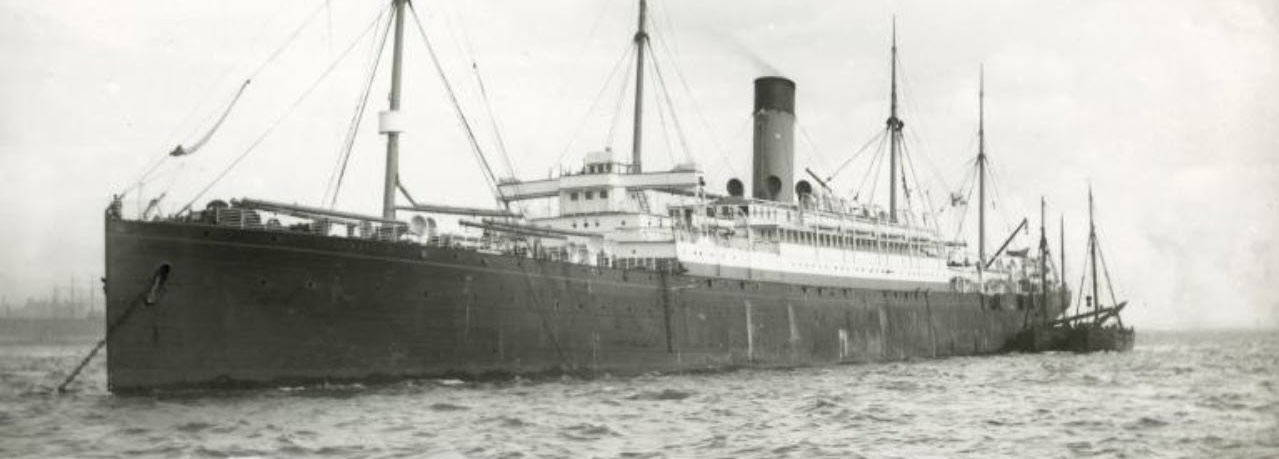
SS Cymric
White Star Line · entered service 1898 · Ship Guide
Overview
SS Cymric was a large White Star passenger-cargo liner whose design reveals much about the company's commercial priorities before the giant-liner era. Built by Harland & Wolff, launched on 12 October 1897, and entering Liverpool–New York service in February 1898, she emphasized capacity, economy, and passenger comfort rather than record speed.
Originally conceived with extensive livestock capacity, the design evolved toward greater passenger accommodation before completion. That change made Cymric an especially useful case study in how White Star adapted ships to changing market demand.
Key Facts
From Livestock Carrier to Passenger Liner
Cymric was originally conceived as a large passenger-and-livestock carrier related to White Star's cargo-oriented designs. During development, the balance shifted toward expanded passenger accommodation, especially for lower-cost travel.
This design history is important because it shows White Star responding to market demand rather than following one fixed fleet formula. The resulting ship retained major cargo capacity while becoming a substantial passenger liner.
Capacity Over Speed
Cymric was not built to challenge the fastest Atlantic liners. Her machinery supported moderate speed while allowing economical operation, large cargo volume, and relatively steady passage.
This makes her a useful corrective to speed-centered liner history. White Star's commercial success depended on ships that could carry many passengers and freight dependably, not only on headline-making express vessels.
Liverpool–New York
The ship initially served the Liverpool–New York route. Her large third-class capacity placed migration at the center of the passenger business, while first-class accommodation supported a smaller prestige market.
Passenger lists from these years can document individual migrant journeys and should be read as social-history sources rather than merely as collectible paperwork.
Shift to Boston
From 1903 onward, Cymric became closely associated with Liverpool–Boston service. The route shift matters because Boston had its own migration networks, agencies, and onward transport connections.
For attribution, a New York-era document and a Boston-era document belong to different phases even though both are White Star material.
Changing Passenger Classes
Accommodation changed over the ship's career. By 1913 she had been rearranged to carry second- and third-class passengers rather than the earlier first- and third-class configuration.
This is an important dating clue. A brochure or deck plan using second-class terminology cannot simply be interpreted through the original 1898 passenger arrangement.
Boer War and First World War Service
Cymric was used for troop transport during the South African War and later served in wartime transport roles during the First World War. In 1915 she also carried heavy munitions from New York to Liverpool.
Military use created documentary contexts distinct from ordinary passenger service. Wartime photographs and transport records should therefore be cataloged separately from peacetime White Star ephemera.
Final Voyage
After leaving New York on 29 April 1916, Cymric was torpedoed by U-20 on 8 May west-north-west of Fastnet Rock. She remained afloat for hours and sank the following day. Five lives were lost.
The attack places the ship within the wider history of submarine warfare, but it should not erase nearly two decades of ordinary passenger and cargo service.
Cargo, Livestock, and Commercial Flexibility
The original livestock-oriented concept is more than a design curiosity. It shows how White Star was trying to balance several revenue streams—passengers, freight, and animal cargo—within one hull. The later move toward expanded passenger accommodation reflects changing commercial expectations before the ship even entered service.
That flexibility continued throughout the career. A large cargo capacity and moderate speed made Cymric useful on routes where carrying volume economically mattered more than arriving first.
Passenger Experience Across Classes
The ship's changing class structure also documents shifts in the market. Early first- and third-class service belonged to one social arrangement; the later second- and third-class configuration reflected a different commercial strategy.
Deck plans, menus, and brochures should therefore be dated carefully. A space described as first class in one era may be repurposed or reclassified later.
Her long service also shows how White Star extracted value from ships built for versatility, with route, class, and cargo priorities evolving without requiring an entirely new hull.
Interpretive Notes
The strongest interpretation of Cymric centers on White Star's capacity-and-comfort strategy. She was a major liner precisely because she carried people and freight efficiently, not because she chased speed records.
Route and passenger-class changes should be tied to date, and wartime material should remain distinct from civilian service. Those distinctions make surviving ephemera far more informative.
Evidence-first ship guide