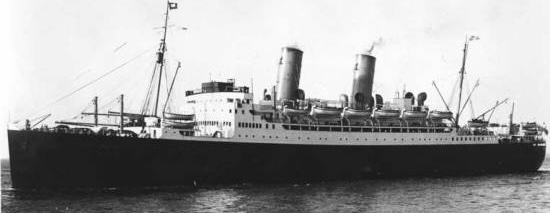
SS Duchess of Atholl
Canadian Pacific Steamships · entered service 1928 · Ship Guide
Overview
SS Duchess of Atholl was one of Canadian Pacific’s important interwar transatlantic liners and part of the company’s well-known quartet of “Duchess” ships. Built for the Canadian route between Liverpool and Quebec or Montreal, with winter adjustments to Saint John, she belonged to a specifically Canadian transatlantic service model rather than the more familiar New York-centered liner pattern. Her later career became especially significant in wartime troop transport, ending in torpedo loss in the South Atlantic in 1942.
In collecting and interpretation, Duchess of Atholl is best divided into two major phases: prewar Canadian Pacific three-class passenger service and wartime troopship service. Material from those phases should be distinguished carefully rather than treated as a single undifferentiated ship identity.
Key Facts
Design & Construction Context
Duchess of Atholl belonged to Canadian Pacific’s effort to direct transatlantic passenger traffic into Canada rather than exclusively through New York. The “Duchess” ships were designed to work the St. Lawrence season to Montreal and then shift winter service to Saint John, integrating ocean passage with rail connections across Canada and beyond. That geographic and commercial context is central to interpreting the ship.
She also belonged to a recognizable design family. Like her sister ships, she was large, handsome, and commercially important, but also associated with a reputation for lively rolling in rough weather. That characteristic became part of the “Duchess” identity and appears often enough in memoirs and commentary to matter interpretively.
Service History (Summary)
1927–1928: Built by William Beardmore at Dalmuir, Duchess of Atholl was launched in November 1927 and completed in June 1928. A turbine accident during fitting-out delayed completion slightly, so that a sister ship was finished before her despite the earlier launch.
1928 maiden service: She began her maiden voyage from Liverpool to Quebec and Montreal on 13 July 1928, entering Canadian Pacific’s transatlantic Canada service. This is the correct context for early passenger lists, brochures, and other liner ephemera tied to her commercial identity.
Late 1920s–1930s prewar service: In peacetime she served the Canadian route as one of the major “Duchess” liners, carrying passengers in first, tourist, and third class. Her route-world was distinctly Canadian and seasonal, unlike the more familiar fixed New York transatlantic pattern.
1939 requisition: At the end of 1939 she was requisitioned for troop transport service. From this point onward, references to the ship belong increasingly to a wartime military-transport framework rather than a civilian passenger one.
1940–1942 wartime service: During the war she carried troops on major transport routes, including Atlantic and South Atlantic movements. This phase became a defining part of her career, even though it differed completely from the passenger identity for which she had been built.
10 October 1942: While sailing from Cape Town toward Freetown, she was torpedoed by the German submarine U-178 about 200 miles east of Ascension Island. Despite multiple torpedo hits, most of those aboard were able to abandon ship successfully.
Rescue and aftermath: Although four crew members were killed, 821 survivors were rescued after distress signals were maintained from lifeboats equipped with wireless gear. The scale of the rescue is an important part of the ship’s final story.
Interpretive Notes
This is a Canada-route liner first: Duchess of Atholl should be understood within Canadian Pacific’s Liverpool–Canada service pattern, not as a generic North Atlantic express liner.
Prewar and wartime material belong to different worlds: passenger lists, brochures, menus, and cabin-class references belong to one interpretive frame, while troopship records, convoy context, and loss narratives belong to another.
The “Duchess” identity matters: the ship’s place within Canadian Pacific’s quartet of “Duchess” liners is important both visually and operationally, and helps situate her within a broader family of related vessels.
There is no postwar commercial second act: unlike Duchess of Bedford, which survived into a rebuilt postwar phase, Duchess of Atholl ended in wartime loss. That makes surviving prewar commercial material especially important for reconstructing her civilian identity.
Canadian Pacific route context: Duchess of Atholl belonged to a service pattern shaped by the seasons. Summer sailings could use the St. Lawrence and Quebec–Montreal gateway, while winter conditions redirected Canadian Pacific traffic through ice-free Atlantic ports. That operational geography is part of the ship’s identity and helps explain why schedules, brochures, and passenger lists can show different terminal patterns without implying a change of operator.
The four Duchess sisters are best understood as a family, but not as interchangeable careers. Their similar design makes comparison useful for plans and photographs; their wartime outcomes make date and ship-specific attribution essential. Atholl’s loss to U-178 on 10 October 1942 ended her story abruptly, and the compiled record of four dead and 821 survivors should remain attached specifically to that event rather than generalized to the class.
Evidence-first ship guide