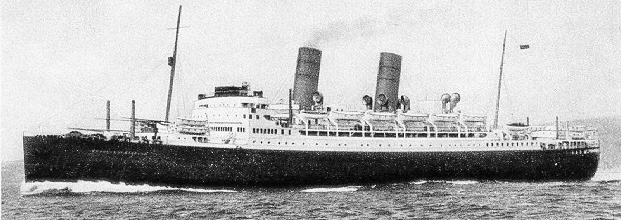
SS Duchess of Bedford
Canadian Pacific Steamships · entered service 1928 · Ship Guide
Overview
SS Duchess of Bedford was one of Canadian Pacific’s large interwar transatlantic liners and the first completed of the company’s well-known quartet of “Duchess” ships. Built for the seasonal Montreal–Liverpool route and winter Saint John service, she represented a specifically Canadian transatlantic strategy rather than a conventional New York-focused liner model. Her later career expanded far beyond peacetime passenger work, becoming especially significant in wartime troop transport before a postwar rebuilding and renaming produced a distinct second identity.
In collecting and interpretation, Duchess of Bedford is best divided into three phases: prewar Canadian Pacific three-class service, wartime troopship service, and postwar rebuilding as Empress of France. Material from those phases should not be treated as interchangeable, even though they belong to the same hull.
Key Facts
Design & Construction Context
Duchess of Bedford belonged to Canadian Pacific’s effort to channel transatlantic passenger traffic through Canada rather than entirely through New York. The “Duchess” ships were intended to operate farther up the St. Lawrence to Montreal, integrating sea passage with onward rail travel into central Canada and the American Midwest. That makes them distinct from many better-known Atlantic liners.
She also belongs to a recognizable Canadian Pacific design family. The four “Duchess” liners were large, handsome, and commercially important ships, but they also gained a reputation for lively motion in heavy weather. That reputation became part of their identity and is worth remembering when interpreting memoirs and passenger impressions.
Service History (Summary)
1928: Built by John Brown at Clydebank, Duchess of Bedford was launched in January 1928, completed that spring, and entered service with her maiden voyage from Liverpool to Quebec and Montreal on 1 June 1928.
Late 1920s–1930s prewar service: In her original form, she operated Canadian Pacific’s transatlantic service to Canada, with seasonal adjustments between Montreal and Saint John. This phase is the correct context for early passenger lists, company brochures, and other three-class passenger ephemera.
Wider cultural presence: During the interwar years the ship carried a variety of notable passengers and formed part of Canadian Pacific’s attempt to make the Canadian Atlantic route a major alternative to more familiar U.S.-bound crossings.
1939–1945 wartime service: With the outbreak of the Second World War, Duchess of Bedford was requisitioned as a troopship. In this role she served in a wide range of wartime transport duties, including voyages associated with India, Singapore, North Africa, Sicily, Italy, West Africa, and later repatriation work.
1942–1945 military significance: Her wartime career was substantial enough that many historical references emphasize troop movements rather than passenger service. This makes wartime records a separate interpretive category from peacetime liner material.
1947–1948 rebuilding: After the war, she entered Fairfield’s yard for overhaul and rebuilding. During this process she was renamed Empress of France, marking the beginning of a distinct second commercial identity rather than a simple continuation of her prewar role.
1948–1960 postwar career: Returning to service in September 1948, she operated the Liverpool–Montreal route in reduced-class form and later with revised accommodation. In this phase she belongs to the postwar Canadian Pacific “Empress” world rather than the original “Duchess” fleet context.
1960: Withdrawn from service and sold for scrapping, bringing to an end one of the more varied careers among Canadian Pacific’s major interwar liners.
Interpretive Notes
This is a Canada-route liner first: Duchess of Bedford should be understood within the Canadian Pacific transatlantic network centered on Quebec, Montreal, and Saint John, not as a generic North Atlantic express liner.
The “Duchess” and “Empress” phases are distinct: prewar material under Duchess of Bedford and postwar material under Empress of France belong to different historical and commercial identities, even though they refer to the same ship.
Wartime service should not be collapsed into peacetime passenger identity: troopship records, convoy references, and landing-operation associations belong to a different evidentiary frame than passenger ephemera and company promotional material.
Accommodation language is a useful dating clue: references to cabin, tourist, third, first, or later revised class arrangements can often help place an artifact or document into the correct phase of the ship’s long career.
From Duchess to Empress: Duchess of Bedford survived the war and therefore experienced a transition that her lost sisters never did. Her postwar rebuilding and 1947 renaming as Empress of France mark a genuine new service identity, with altered interiors, branding, and passenger expectations. Material under the two names belongs to the same hull but not the same presentation or historical phase.
Her prewar life also belongs to the wider Canadian Pacific system of seasonal North Atlantic service and cruising. The company balanced scheduled migration and passenger traffic with leisure voyages, so a Duchess-era brochure may document either line service or a cruise itinerary. Route and date are therefore indispensable catalog anchors.
The survival of Duchess of Bedford into the postwar period also makes her a useful control case against her lost sisters: shared class origins do not imply shared service histories, and later refit-era photographs should not be back-dated to the prewar Duchess configuration.
For surviving ephemera, the safest practice is to preserve the contemporary ship name first and add the later Empress of France continuity as a secondary note.
Evidence-first ship guide