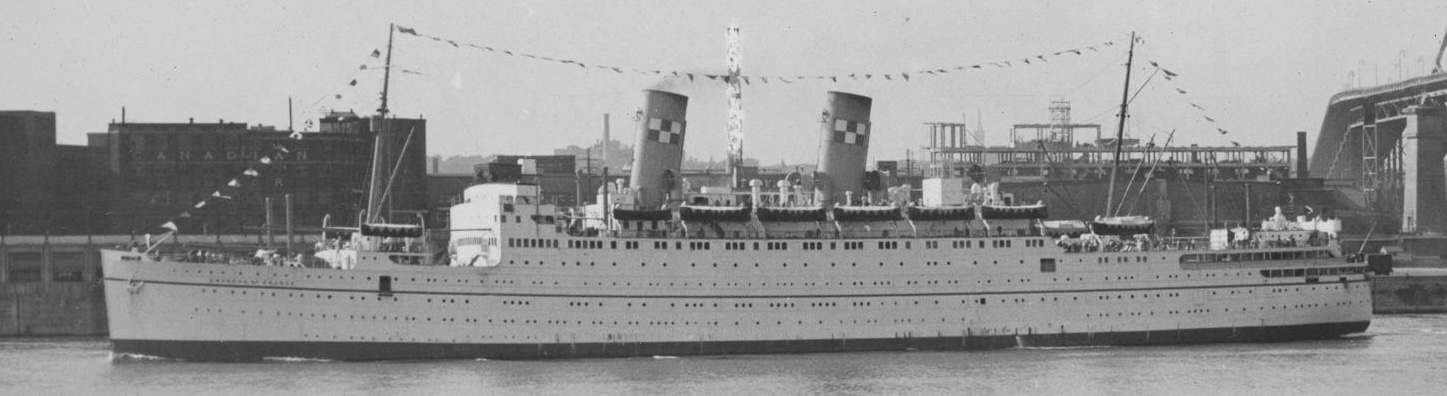
RMS Empress of France
Canadian Pacific · 1928 · Ship Guide
Overview
RMS Empress of France was the former Allan Line liner Alsatian, built by William Beardmore & Company on the Clyde and completed in 1914. She was one of the largest Canadian-route liners of her generation and a technically notable ship, with turbine machinery driving four screws and a cruiser stern unusual on a North Atlantic passenger liner of the period.
After First World War service and the absorption of Allan Line operations into Canadian Pacific, the vessel was renamed Empress of France in 1919. Under that name she served primarily between Britain and Canada, also making cruises and a brief period of trans-Pacific service before withdrawal in 1931.
Identity correction: an earlier version of this guide incorrectly described the German-built Tirpitz, which became RMS Empress of Australia. This page now treats the correct ship: the former Allan Line Alsatian of 1913–14.
Key Facts
Alsatian and the Allan Line
Alsatian and her sister Calgarian were conceived as major improvements to Allan Line's Canadian service. Contemporary publicity emphasized their size, four-shaft turbine propulsion, extensive enclosed promenade space, and modern passenger facilities.
Their cruiser sterns were particularly distinctive. The form had stronger associations with naval vessels, and its use on a large North Atlantic passenger liner marked a visible departure from the counter stern common to earlier merchant ships.
War Service and Canadian Pacific
The First World War interrupted the ship's early commercial career. After the conflict, Allan Line's operations were absorbed into Canadian Pacific's ocean services, and Alsatian emerged under the new name Empress of France.
Her first voyage under the new name left Liverpool for Quebec on 14 November 1919. Passenger lists survive from the following years and provide strong voyage-level evidence for her Canadian Pacific service.
Cruising and Trans-Pacific Service
Canadian Pacific used Empress of France beyond ordinary Atlantic crossings. In 1923 she made a world cruise from New York, illustrating the growing commercial importance of long-distance leisure cruising during the interwar period.
She was also placed briefly in trans-Pacific service beginning in late 1928. That episode makes route dating particularly important: an artifact bearing the same ship name may belong to North Atlantic, cruise, or Pacific contexts.
Withdrawal and Identity Boundaries
The liner made her final Southampton–Quebec voyage in October 1931 and was subsequently laid up before being scrapped in 1935. Her career under the Empress of France name therefore belongs to the 1919–1931 period.
A later Canadian Pacific ship also carried the name Empress of France after the Second World War. That vessel was the former Duchess of Bedford and should not be conflated with this former Alsatian.
Interpretive Notes
Do not import Empress of Australia history: the German liner Tirpitz became Empress of Australia, not this ship.
Name chronology matters: material before 1919 belongs to Alsatian; Canadian Pacific material from 1919 onward may bear Empress of France.
There were two Canadian Pacific ships of the name: this guide covers the 1913–14 former Alsatian, not the later former Duchess of Bedford.
Evidence-first ship guideSources (Selected)