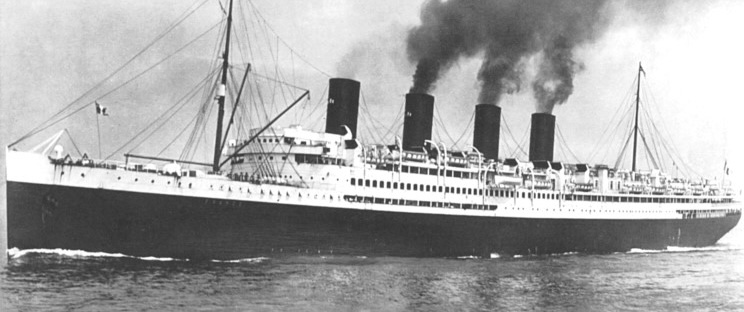
SS France (1912)
Compagnie Générale Transatlantique · entered service 1912 · Ship Guide
Overview
SS France entered French Line service in April 1912 as the Compagnie Générale Transatlantique’s most conspicuous pre-war statement: a large, four-funnel transatlantic liner built at Saint-Nazaire to compete in the prestige space dominated by British and German “ships of state.” Nicknamed the “Versailles of the Atlantic” in later retellings, she is remembered less for speed records than for décor, cuisine, and the way she reframed CGT’s public image on the North Atlantic.
Her timing is part of the story. France began her career immediately after the Titanic disaster, when safety expectations, lifeboat provision, and public confidence were being renegotiated in real time. In World War I she passed into government use, shifting from luxury liner to wartime utility; in the interwar years she returned to peacetime passenger work and cruising before being laid up and scrapped in the mid-1930s.
Evidence-first note: “France” is a high-noise name across multiple eras (including the far more famous 1962 France). For artifacts, anchor attribution with the issuer line (“Compagnie Générale Transatlantique” / “French Line”), typography era, route block, and date—then confirm the ship name.
Key Facts
Design & Construction (Context)
France was conceived as a prestige liner first: a dramatic four-funnel silhouette, turbine propulsion, and interiors meant to signal French taste as much as French engineering. In the CGT narrative arc she sits between the earlier Saint-Nazaire-built trio (La Lorraine, La Savoie, La Provence) and the later, more overtly “modernist” interwar French Line style.
For collectors, her design language is a gift. Printed material from this period often leans into ornament, formal typography, and “state-adjacent” prestige messaging—distinct from both Edwardian British branding and the sharper geometric modernism that arrives after the war.
Service History (Summary)
1912–1914: Le Havre–New York flagship service. Entered transatlantic operations in April 1912 and quickly became CGT’s public face on the North Atlantic.
1914–1918: Wartime requisition and conversion. With war, the ship moved into state service—commonly described as auxiliary cruiser and troop transport work, with hospital-ship conversion also appearing in published ship histories.
1919–early 1930s: Interwar passenger service and cruising. Returned to peacetime use in a changed market: immigration restrictions and economic volatility pushed liners toward mixed strategies (scheduled crossings plus cruising and special voyages).
1932–1936: Lay-up and disposal. Laid up during the Depression-era contraction of transatlantic travel, then withdrawn and scrapped by the mid-1930s.
Interpretive Notes
SS France is an “identity ship”: she teaches how a line presents itself when it wants to be taken seriously. For CGT, that meant projecting refinement and national confidence—an approach that makes her ephemera unusually rich in branding signals.
Collector guidance: on menus, passenger lists, sailing schedules, luggage labels, and stationery, look for the issuer line (“Compagnie Générale Transatlantique”), the port pairing (Le Havre / New York), and the era cues in typography and printing. If an item simply says “France” without CGT context, treat it as un-attributed until you can anchor it to the company and route.
Prestige without copying the British model: France represented a distinctly French answer to the prewar prestige-liner race. Her four funnels made her visually comparable to the era’s largest express ships, but her public identity rested as much on interiors, cuisine, and French service culture as on machinery or speed. That distinction is useful when reading period advertising, which often sold national style as strongly as transportation.
The First World War and later oil conversion divide the ship’s record into materially different phases. Troop and hospital work belong to wartime emergency use; the 1923 conversion and later cruising belong to a peacetime effort to keep an older prestige liner commercially useful in a changing market.
Evidence-first ship guide