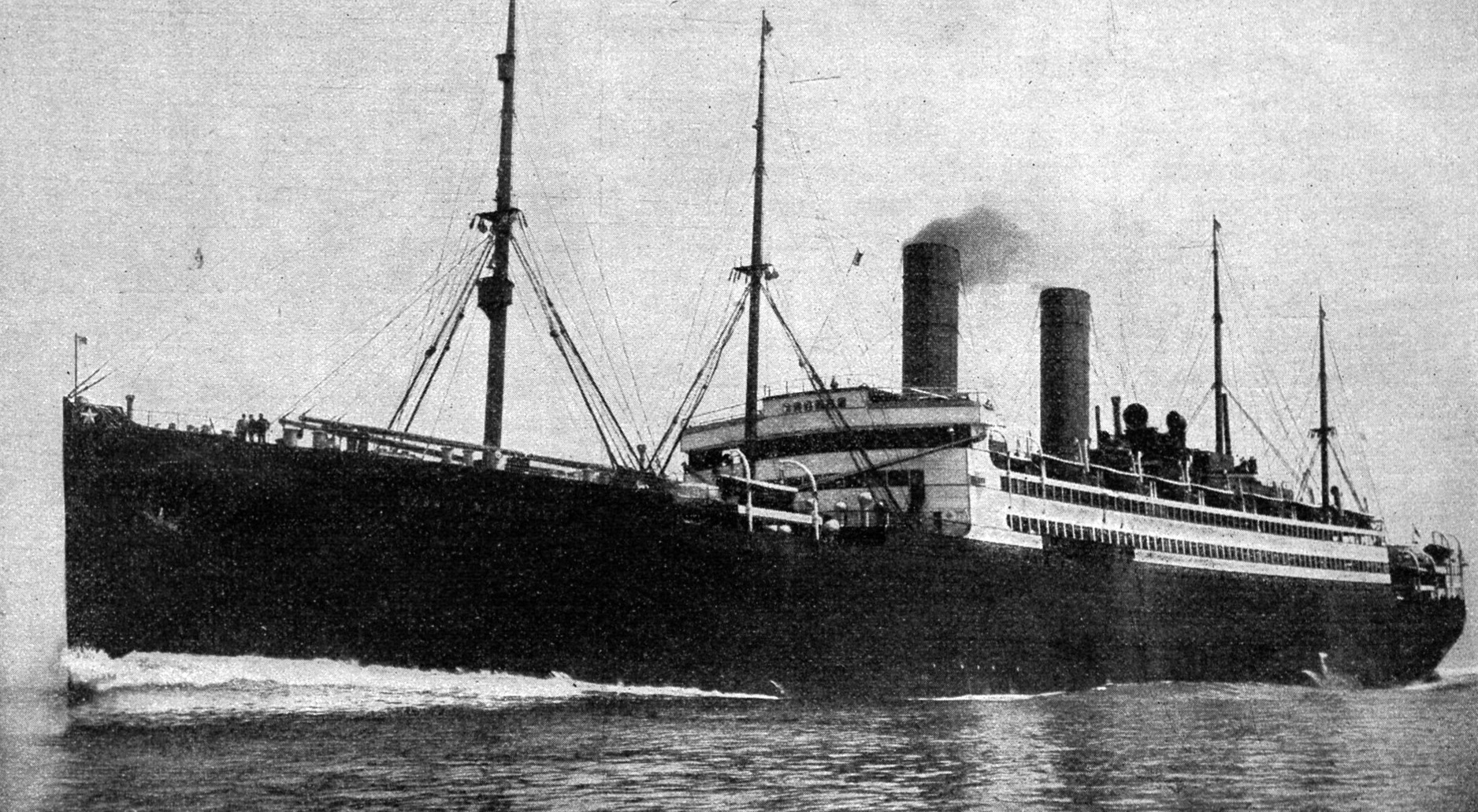
SS George Washington
North German Lloyd · 1909 · Ship Guide
Overview
SS George Washington was a major North German Lloyd passenger liner launched at Stettin on 10 November 1908 and placed on the Bremen–New York route in 1909. Designed around large-scale passenger capacity and comfort rather than record speed, she later became one of the most historically layered liners of her generation.
Her career passed through North German Lloyd service, U.S. Navy troop transport duty, presidential diplomatic voyages, interwar American passenger service, the short-lived USS Catlin identity in 1941, British Lend-Lease use, and U.S. Army service before final disposal in 1951.
Key Facts
North German Lloyd Passenger Service
George Washington was built for the mass passenger economy of the prewar North Atlantic. Her large third-class capacity was commercially important, while first- and second-class spaces allowed the company to market comfort without chasing the most expensive speed records.
The American name itself was a commercial asset on a route serving large numbers of emigrants bound for the United States.
Seizure and Troop Transport
When war began in 1914, the German liner sought refuge in neutral New York. The United States took her over on 6 April 1917 and converted her for troop transport. She commissioned on 6 September as USS George Washington.
Naval History and Heritage Command records 18 round-trip voyages in support of the American Expeditionary Forces over the next two years. This wartime phase generated a documentary record very different from the prewar passenger liner: troop manifests, Navy photographs, movement orders, and transport records.
Woodrow Wilson and the Peace Conference
The ship’s most famous individual voyage began on 4 December 1918, when President Woodrow Wilson and the American peace delegation sailed for Europe aboard George Washington. She reached Brest on 13 December under a dramatic naval escort.
The vessel later carried Wilson again as well as other diplomatic parties. These presidential voyages should be distinguished from routine troop transport work rather than allowed to stand in for the ship’s entire wartime record.
Interwar American Service
After the war, George Washington returned to civilian passenger work under American control. Her interwar phase connected the former German liner to United States Shipping Board and United States Lines operations.
By the early 1930s, however, aging machinery, the Depression, and changing transatlantic economics pushed the vessel into lay-up.
USS Catlin and the Second World War
The Navy reacquired the old liner in January 1941 and commissioned her as USS Catlin (AP-19) on 13 March. The experiment was short-lived. NHHC records that her coal-burning machinery could not provide the speed needed for safer wartime transport, and she was decommissioned on 26 September.
Britain then took the ship under Lend-Lease, but aging boilers and the difficulty of supplying skilled stokers limited usefulness. She ultimately returned to U.S. control and later served the Army as USAT George Washington.
Immigration, Diplomacy, and Multiple Public Identities
The ship’s prewar third-class capacity makes migration central to her German commercial story, while the Wilson voyages later gave the same hull a highly public diplomatic identity. Those two histories are both important, but one should not eclipse the other.
In collections, the most visually dramatic material often comes from presidential or naval service, yet ordinary passenger lists and emigrant records may better represent the ship’s day-to-day commercial function before 1914.
Collecting and Phase Separation
The ship’s later aliases and operators create a particularly noisy cataloging environment. A U.S. Navy photograph labeled USS George Washington, a 1941 USS Catlin document, an interwar United States Lines menu, and an Army transport record can all concern the same hull while carrying completely different institutional meanings.
Where possible, record the exact date, operator, service designation, and route. That prevents a famous presidential voyage from becoming the default explanation for every object connected with the ship.
Why George Washington Matters
George Washington matters because a single hull moved through German migration-era commerce, American troop transport, presidential diplomacy, interwar passenger service, and two different Second World War reuse attempts.
For attribution, “George Washington” alone is never enough. Operator, date, Navy designation, route, and printed institutional context are the fields that reveal which historical phase an object actually documents.
Evidence-first ship guideSources (Selected)
This list is intentionally conservative.