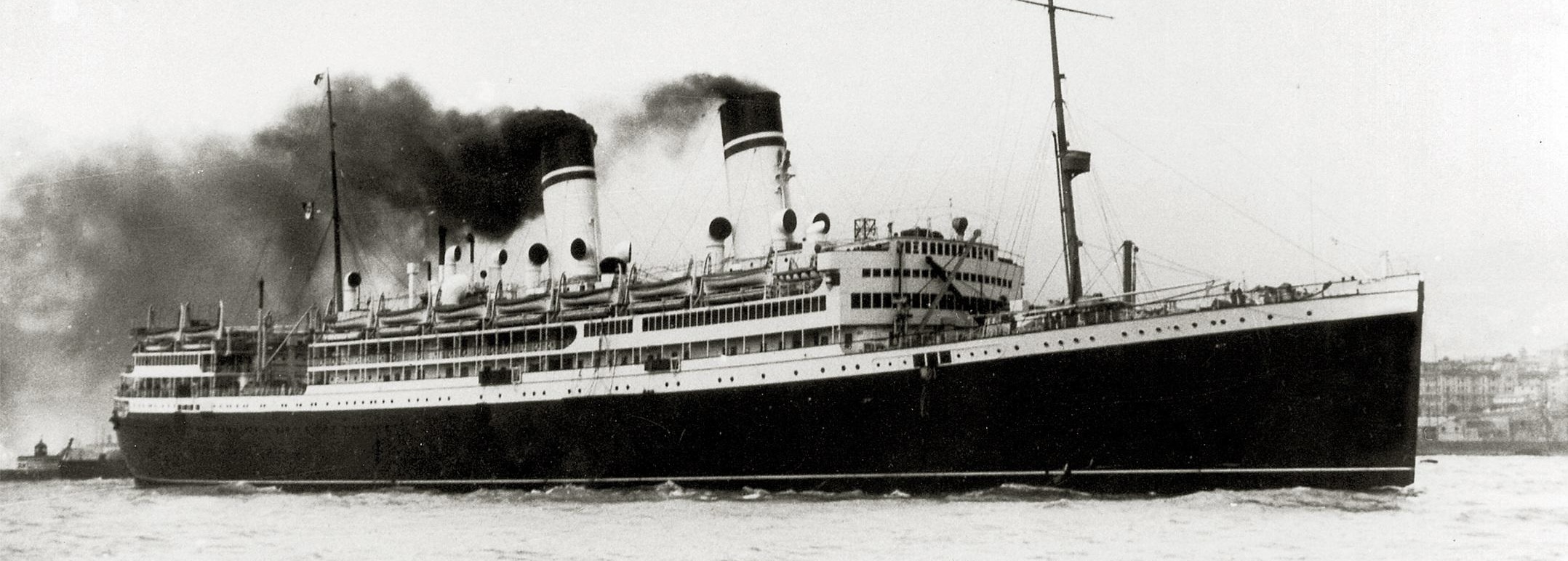
SS Giulio Cesare
Navigazione Generale Italiana · 1922 · Ship Guide
Overview
SS Giulio Cesare was a large Italian liner built for Navigazione Generale Italiana and completed in 1922 for the South America service. She belonged to the important interwar Mediterranean–South Atlantic passenger trade, carrying both higher-class travelers and very large numbers of emigrants and migrant passengers between Italy and South America.
In collecting and interpretation, Giulio Cesare is especially interesting because she spans several distinct phases: early NGI service, later Italian Line operation, cruising and route experimentation, and finally wartime Red Cross service before destruction in 1944. Artifacts from those phases should be dated and contextualized carefully rather than grouped too broadly.
Key Facts
Some quick-reference sources focus more on route and passenger arrangements than on a single standardized gross-tonnage figure. For museum-level precision, preserve the exact technical figure and measurement form used by the source or artifact being cited.
Design & Construction Context
Giulio Cesare belonged to the generation of Italian liners built to reconnect Italy with South America after the First World War. She was part of a route system shaped heavily by migration, national prestige, and the continuing importance of River Plate traffic to Italian shipping lines.
The ship’s internal arrangements also reflect that mixed role. She offered substantial first- and second-class accommodation, but the very large tourist-class capacity reminds us that this was not simply an elite transatlantic liner. Like many Italian South America ships, she operated in the overlapping worlds of migration transport, long-distance family travel, and prestige passenger service.
Service History (Summary)
1922–1932: Entered service for Navigazione Generale Italiana on May 4, 1922. Her principal work was the Genoa–Naples–South America route, though summary references also note service touching North American ports and broader passenger employment.
Interwar career: until 1925, Giulio Cesare and Duilio were among the largest ships in the Italian merchant fleet. This gives her real significance within Italian liner history even if she is less frequently discussed than later ships such as Rex or Conte di Savoia.
1932: Passed into Italian Line operation when NGI was folded into the reorganized national company structure. This change matters interpretively because company attribution on later printed materials may reflect the Italian Line rather than NGI.
Late interwar years: sources note that she was also used in cruise or special-route contexts, showing that her service was not confined narrowly to one unchanging passenger pattern.
1942–1944: Served under the International Red Cross. This marks a sharp shift away from commercial liner identity into a humanitarian wartime context.
1944: Destroyed in an Allied air attack on August 28, 1944, bringing an end to a long and varied career.
Route Changes in the 1930s
After the 1932 creation of the Italian Line, Giulio Cesare did not remain confined to the River Plate trade. In November 1933 she was reconditioned for Mediterranean–South Africa service, demonstrating how the new national company redeployed older prestige tonnage as route economics changed.
The 1935 Gibraltar Collision
In 1935, Giulio Cesare collided in Gibraltar harbor with the German steamship Barenfels. Contemporary and later summaries assign responsibility to the German vessel. The incident did not end the Italian liner’s career, but it provides a useful dated casualty marker in the later commercial phase.
A Famous 1927 Passenger Group
During June and July 1927, the ship carried Real Madrid’s team from Barcelona to South America for an exhibition tour. The episode is a small but useful reminder that South Atlantic liners moved not only migrants and families but also touring cultural and sporting groups.
Wartime End
In 1942 the ship was chartered for International Red Cross service and later laid up at Trieste. On 28 August 1944 she was sunk by Allied Beaufighters. Later recollections note that the attacking airmen were reprimanded because commanders believed they had struck a hospital ship.
Why Giulio Cesare Matters
Giulio Cesare is valuable because her career links migration, national fleet consolidation, route redeployment, special passenger movements, humanitarian wartime service, and destruction in one continuous hull history.
Interpretive Notes
Company identity should be dated carefully: early artifacts may belong to Navigazione Generale Italiana, while later ones may properly belong to the Italian Line. Treating all material simply as “Italian Line” risks flattening the interwar corporate transition.
Migration context is central: with very large tourist-class accommodation, Giulio Cesare should often be interpreted through migration and family-travel history, not only through elite liner culture.
Wartime humanitarian service is a different documentary world: International Red Cross material should not be treated as routine passenger-liner ephemera, even though it concerns the same hull.
She is a route-history ship as much as a design-history ship: while visually and technically substantial, Giulio Cesare is especially valuable for understanding the Italy–South America connection and how Italian passenger shipping adapted between the wars.
Evidence-first ship guideSources (Selected)