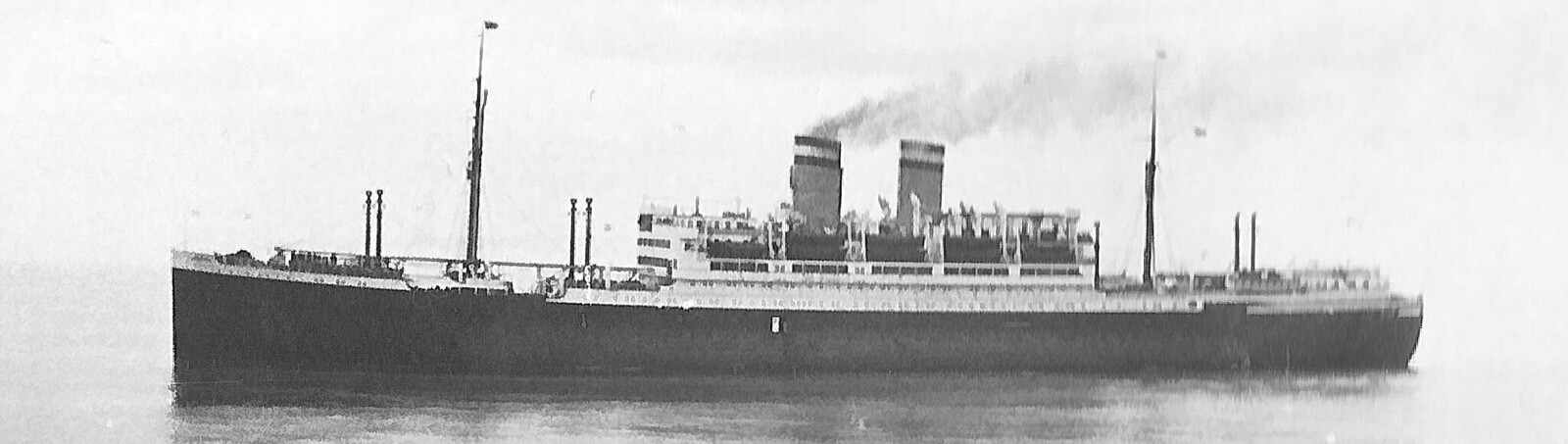
SS Hamburg (1925)
Hamburg America Line · entered service 1926 · Ship Guide
Overview
SS Hamburg was one of Hamburg America Line's principal interwar passenger liners, built by Blohm & Voss as yard no. 473. Launched on 14 November 1925 and placed in service on 28 March 1926, she worked the Hamburg–New York route during Germany's postwar rebuilding of its merchant passenger fleet.
Her story does not end with the destruction of the German passenger trade in the Second World War. Converted into a Kriegsmarine accommodation ship in 1940, Hamburg struck a mine and sank in the Baltic on 7 March 1945. The Soviet Union later raised the wreck, rebuilt it over a lengthy period, and returned it to service in 1960 as the whaling factory ship Yuri Dolgoruki. She survived in that entirely different role until 1977.
Key Facts
Interwar HAPAG Service
Hamburg belonged to the practical rebuilding generation of German liners after the First World War. The ship was large enough to represent HAPAG prominently on the North Atlantic but was not conceived as a revival of the enormous prewar Imperator-class strategy. Regularity, passenger capacity, and commercial viability mattered more than symbolic size records.
For collectors, this phase produces the most recognizably “liner” material: passenger lists, sailing schedules, menus, deck plans, luggage labels, and agency advertising tied to Hamburg–New York service.
Wartime Use
From 1940 Hamburg served the Kriegsmarine as an accommodation ship and was associated in succession with U-boat flotillas at Kiel, Danzig, and Gotenhafen. That role transformed the documentary trail: civilian voyage material largely disappears and naval photographs, station records, and wartime movement data become more important.
On 7 March 1945, during the Baltic evacuation crisis, the ship struck a mine off Saßnitz and sank. Treating that event as her absolute endpoint, however, misses one of the more unusual postwar afterlives of any interwar liner.
Soviet Salvage and Yuri Dolgoruki
The wreck was raised by the Soviet Union and taken for reconstruction. Beginning in 1950, the former liner was extensively converted at Warnemünde into a whaling factory ship. The work lasted about a decade; as Yuri Dolgoruki she entered service in July 1960.
The conversion changed the vessel's function, arrangement, and national identity so radically that postwar objects should not be cataloged casually under “SS Hamburg.” Yet the hull continuity makes the Soviet career essential to a full biography of the ship.
Interpretive Notes
Name reuse: several German ships carried the name Hamburg. Date, HAPAG branding, dimensions, and route should accompany any attribution.
Two lives, one hull: the 1920s liner and 1960s Soviet whaling ship were operationally very different, but they are not separate vessels.
Do not stop the story in 1945: salvage and conversion extended the physical life of the ship for more than thirty years after her wartime sinking.
Evidence-first ship guide