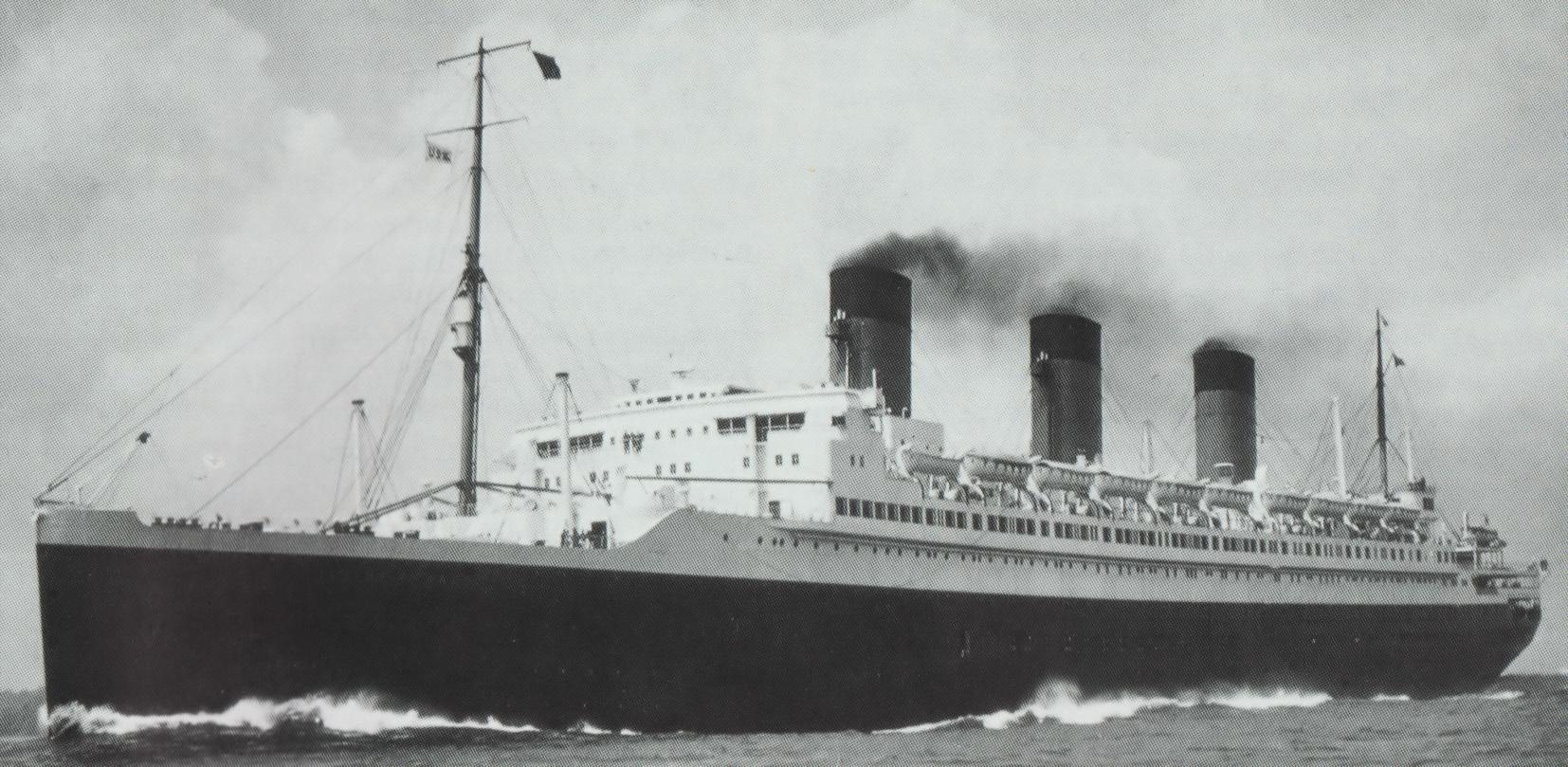
SS Île de France
Compagnie Générale Transatlantique (French Line) · entered service 1927 · Ship Guide
Overview
SS Île de France was a flagship-era French transatlantic liner built for the Compagnie Générale Transatlantique (CGT), known in the English-speaking world as the “French Line.” Entering service in 1927 on the Le Havre–New York run, she became closely associated with interwar glamour and the public embrace of modern decorative design at sea—especially the shipboard rise of Art Deco.
For collectors, Île de France sits in a high-yield zone: a long commercial career, strong brand identity, and a wide paper trail across multiple decades. That abundance is an advantage, but it also increases the need for careful period matching. “Looks right” is not the same as “fits the correct refit era,” and the ship’s interior and service profile changed materially over time.
This page is written as a reference doorway: it summarizes widely documented facts, flags uncertainty where it exists, and avoids turning repeated anecdotes into “record” without evidence.
Key Facts
Design & Construction (Context)
Île de France belongs to the interwar “statement ship” era: the vessel itself was a CGT advertisement in steel—modern, confident, and designed to be talked about. The ship is frequently cited as an early and influential showcase of Art Deco in the passenger-ship context, with a decorative program that deliberately leaned modern rather than historicist.
Collecting implication: “Art Deco” is a useful keyword, but it can become a lazy attribution shortcut. When an object is said to be “from Île de France,” ask what kind of object it is (passenger paper, staff paper, cabin fixture, dining room service piece), and whether the styling and production method fit the ship’s documented eras (prewar, wartime, postwar refit).
Service History (Summary)
Entering service in 1927, Île de France operated the marquee North Atlantic route between France and New York through the peak interwar years. Like many premier liners, her public identity blended speed, comfort, and a carefully curated onboard world—menus, music programs, souvenir booklets, and a “house style” that made CGT material recognizable even when it is detached from its original context.
World War II interrupted civilian service. In general terms (and depending on the phase of the conflict), major liners were variously laid up, requisitioned, converted, or repurposed for state needs rather than passenger commerce. After the war, Île de France returned to transatlantic operations and remained active into the late 1950s, bridging the shift from classic liner travel toward the jet age.
1956 Andrea Doria Rescue (Evidence Note)
Île de France is remembered not only for luxury but also for action: she played a central role in rescuing passengers after the collision and sinking of the Italian liner Andrea Doria in July 1956. For collectors, this matters because “rescue” narratives often attach themselves to unrelated material later. If an item is marketed as “Île de France / Andrea Doria rescue-related,” the evidentiary bar should rise: look for date-locked documentation, named individuals, verifiable voyage context, or period press provenance—not just a good story.
Collecting Profile (What Tends to Survive)
Compared to ships with short careers, Île de France can produce a wide range of authentic material: printed ephemera (menus, wine lists, passenger notices, baggage labels, stationery), onboard retail/souvenir items, and CGT corporate print. That said, authenticity hinges on era discipline. A 1930s-style menu layout, a 1950s design language, and a postwar refit photograph are not interchangeable.
Practical method: when possible, anchor the object to (1) a date, (2) a class context (first/second/tourist), and (3) a known CGT design system (printer marks, typography, paper stock, bilingual conventions). Where those anchors are absent, use restrained labels such as “CGT / French Line, attributed” rather than “from Île de France” as a statement of fact.
Later History & “Afterlife”
In the ship’s final chapter, Île de France became physically available in a way most liners never did: she was used as a filming platform in the 1959 movie The Last Voyage while awaiting disposal, then ultimately scrapped in Japan. This “afterlife” can produce legitimate, dateable photographs and documentation—but it also generates later souvenirs and misattributed salvage claims. When an item is said to be “from the scrapping” or “from the film ship,” insist on traceable paperwork.
Interwar design, wartime service, postwar rescue: Île de France is often remembered for the 1956 Andrea Doria rescue, but that episode sits within a much longer career that helped redefine French passenger-liner design in the 1920s and continued through wartime service and postwar rebuilding.
The official Maritime Administration record of 13 lifeboats and 753 survivors rescued gives the 1956 operation unusual documentary precision. Even so, rescue history should not eclipse the ship’s earlier design importance or later service; those phases generated different interiors, routes, and forms of evidence that belong in their own chronological context.
Evidence-first ship guide