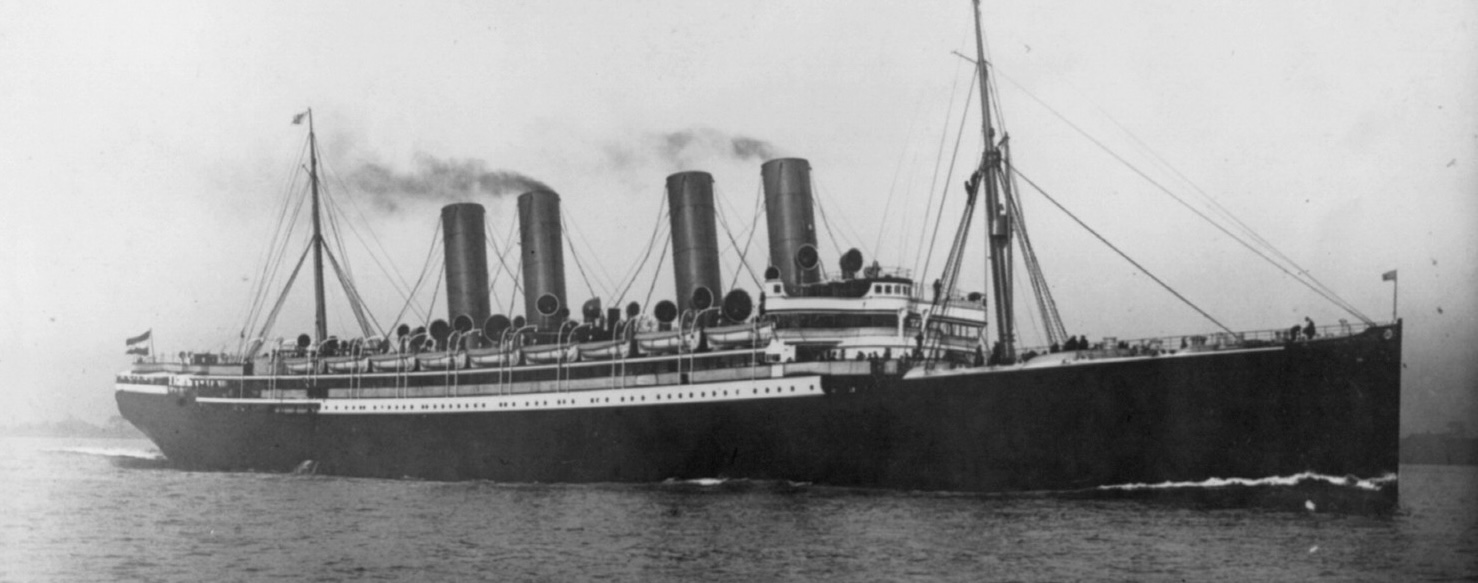
SS Kaiser Wilhelm der Grosse
Norddeutscher Lloyd · 1897 · Ship Guide
Overview
SS Kaiser Wilhelm der Grosse was Norddeutscher Lloyd’s breakthrough express liner of the late 1890s—an outwardly confident statement of German industrial ambition on the North Atlantic. Launched in 1897 and entering service that autumn, she is widely treated as the first “four-funnel” superliner: a ship whose size, profile, and publicity helped redefine what a prestige passenger steamer looked like.
Her fame is not only visual. In March 1898, Kaiser Wilhelm der Grosse captured the Blue Riband with an average speed commonly cited around 22.3 knots—an emblematic moment in the era’s transatlantic competition. She also appears early in the story of ship-to-shore communication: sources note Marconi equipment installed and publicly demonstrated by 1900.
Evidence-first note: “Blue Riband” figures can vary by how a source frames the record (eastbound vs westbound, and which crossing is being quoted). If you publish a speed, cite the specific record claim and the underlying crossing context.
Key Facts
Design & Construction (Context)
Kaiser Wilhelm der Grosse is often treated as the prototype of a new kind of prestige liner: a ship marketed as a national achievement, not merely a commercial conveyance. Her four funnels are central to that visual rhetoric. Later four-funnel liners would make the feature a kind of shorthand for power and safety—sometimes regardless of whether four uptakes were strictly necessary.
For a collector, the design story shows up in the paper: Norddeutscher Lloyd advertising, postcards, and souvenir material frequently emphasize the “four-stacker” silhouette and the ship’s “express” identity. When attributing, be careful: later NDL publicity about the “Kaiser class” or the “Four Flyers” can blur multiple sister ships together.
Service History (Summary)
1897–1900: Express debut and record culture. Entering service in September 1897, Kaiser Wilhelm der Grosse quickly became a headline ship. In March 1898 she captured the Blue Riband (commonly cited average speed ~22.3 knots), signaling a real shift in the competitive narrative of Atlantic express service.
1900–1913: A “modern” liner aging in public view. The ship’s long career includes well-documented port and operational incidents (including a major pier-side fire in 1900 and later collisions). By the early 1910s, technological and market changes (including new British and German rivals) made even a famous superliner feel dated. In 1913, she was rebuilt in ways that altered her passenger arrangements and public role.
August 1914: Conversion and loss. At the outbreak of war, Kaiser Wilhelm der Grosse was requisitioned and fitted out as an auxiliary cruiser. Operating as a raider in the early weeks of the conflict, she later put into Río de Oro (Villa Cisneros) to coal. On 26 August 1914 she was caught and engaged by the British cruiser HMS Highflyer. German accounts emphasize scuttling to avoid capture; British accounts emphasize damage and sinking under gunfire. Either way, her career ended there—an early, symbolic loss of a famous passenger ship in the opening month of World War I.
Interpretive Notes
Kaiser Wilhelm der Grosse is a classic “signal ship”: she matters because she changed the visual and competitive language of ocean travel, then became a reference point for what came after. She is also a cautionary object lesson in how quickly “state-of-the-art” becomes “historical”—and how wartime can repurpose (and destroy) civilian prestige tonnage with startling speed.
For attribution work, treat the name as a hypothesis, not a conclusion. NDL material can circulate as general fleet advertising; postcards can be reprinted; and “four-funnel liner” imagery can be misidentified. Anchor claims in date, route, publisher/printer, and iconography before attaching Blue Riband or wartime narratives.
Evidence-first ship guideSources (Selected)
Use these as a starting index and corroborate publish-ready details (dimensions by register edition, speed-record framing, incident specifics) with primary or institutional sources where possible.
- Ocean Liner Curator — Sources (master bibliography)
- Wikipedia — SS Kaiser Wilhelm der Grosse (starting index; corroborate key facts)
- Wikipedia — Sinking of SS Kaiser Wilhelm der Grosse (battle outline; corroborate details)
- Norway-Heritage — Kaiser Wilhelm der Grosse (specs and service notes)
- Titanic Inquiry Project — Kaiser Wilhelm der Grosse (specification index)
- GG Archives — Kaiser Wilhelm der Grosse (immigrant-ship index; verify with registers)