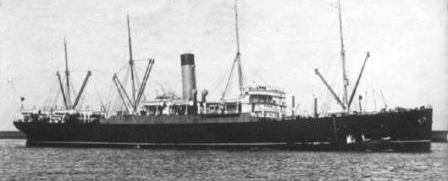
SS Lake Michigan
Beaver Line · Canadian Pacific Line · 1901 · Ship Guide
Overview
SS Lake Michigan was a British passenger-cargo steamship launched in 1901 by C. S. Swan & Hunter at Wallsend-on-Tyne. Built for Elder Dempster’s Beaver Line, she soon became part of Canadian Pacific’s North Atlantic system and served the Liverpool–Quebec–Montreal route.
She was not an express luxury liner in the Cunard or White Star sense. Her historical value lies in the working Atlantic: immigrant transport, Canadian route development, cargo carriage, imperial wartime service, and the vulnerability of commercial steamships during the First World War. In that sense, Lake Michigan is a useful example of the practical passenger-cargo liner that connected Britain, Canada, and the wider Atlantic world.
This page treats Lake Michigan as the British-built Beaver Line / Canadian Pacific steamship launched in 1901 and sunk in 1918. The name can easily be confused with vessels operating on Lake Michigan itself, so builder, owner, route, and date should always be checked before attribution.
Key Facts
Note on measurements: tonnage figures vary between builder-style summaries, line histories, and wartime loss databases. Treat the variation as a documentation issue unless the surrounding identity details also conflict.
Design & Construction Context
Lake Michigan belonged to a class of practical North Atlantic passenger-cargo steamships: large enough for regular ocean service, but not designed primarily as speed record breakers or floating palaces. Her four-mast, single-funnel profile and twin-screw machinery reflect a ship built for dependable route work rather than theatrical luxury.
Her builder, C. S. Swan & Hunter, was part of the major Tyne shipbuilding world that supplied British and imperial shipping networks. The ship’s proportions, cargo capacity, and modest speed place her within the Canadian emigrant and passenger-cargo trade rather than the elite express liner competition more closely associated with Liverpool–New York service.
Service History (Summary)
Lake Michigan was launched in September 1901 and completed in early 1902 for Elder Dempster’s Beaver Line. Soon afterward she was used as a transport during the Boer War period, showing how commercial liners could be drawn into imperial military logistics almost immediately after completion.
In 1903 she passed into Canadian Pacific operation and began Liverpool–Quebec–Montreal service. This route mattered because it connected British ports with Canada’s St. Lawrence gateway and formed part of the broader infrastructure of migration, settlement, business travel, and seasonal Atlantic movement.
Canadian Pacific & the St. Lawrence Route
Canadian Pacific’s Atlantic liners were part of a larger transportation system. The ocean crossing did not end the journey: passengers could continue by rail into Canada or onward toward the United States. Ships such as Lake Michigan therefore belong to both maritime history and migration history.
In research terms, the St. Lawrence route is important because passenger lists, advertisements, timetables, and port records may describe the same voyage from different perspectives. A passenger manifest can establish date and route; a timetable can show intended service; a newspaper notice can show public-facing schedule information; and a line history can place the voyage within fleet operations.
Accidents & Wartime Service
Lake Michigan had a documented accident history before her final loss. In February 1904 she collided with the steamship Matterhorn and sank, but was later refloated and taken to Gravesend. In November 1916 she was damaged by a mine, another reminder that passenger-cargo steamships faced wartime hazards even when they were not naval vessels.
Her final loss came on April 16, 1918, when she was torpedoed and sunk by German submarine U-100 off Eagle Island. Loss records classify her as a passenger steamer, which is useful for identifying the ship’s wartime role, but any detailed casualty or cargo claim should be checked against contemporary records rather than repeated from later summaries alone.
Passenger Lists & Migration Evidence
For researchers, Lake Michigan is especially useful as a document-anchored ship. Passenger lists and sailing notices can connect her to named people, dates, routes, masters, and ports. That kind of evidence is often more meaningful than a brief fleet-table entry because it shows the vessel as part of lived migration and family history.
When cataloging a passenger document, preserve the original route language and do not normalize it too aggressively. “Liverpool,” “Quebec,” “Montreal,” seasonal service, wartime status, and line ownership may all help distinguish this ship from unrelated Great Lakes vessels or other ships carrying similar names.
Collecting Profile
Material connected with Lake Michigan is likely to be documentary rather than glamorous: passenger lists, postcards, fleet notices, Canadian Pacific or Beaver Line ephemera, wartime references, and printed route material. Strong attribution should require the ship name, a dated voyage, a named passenger or crew connection, or a line context that clearly points to the 1901 British-built steamship.
Because the ship’s name is geographically evocative, a generic “Lake Michigan” item should not be assumed to refer to this ocean-going liner. The safest cataloging language is specific: “SS Lake Michigan, Beaver Line / Canadian Pacific, built 1901,” followed by the supporting evidence.
From Beaver Line to Canadian Pacific
Lake Michigan's transfer into Canadian Pacific service in 1903 placed her inside a much larger transportation system. The company's Atlantic ships connected directly with Canadian rail routes, so the liner's significance extended beyond the ocean crossing itself. Migrants, commercial travelers, and cargo could move onward through the St. Lawrence gateway into the Canadian interior.
This network context explains why ships of her type mattered despite lacking the glamour of the express liners. Their value lay in dependable seasonal service, cargo capacity, and integration with rail timetables rather than prestige speed.
First World War Service and Loss
During the First World War Lake Michigan continued to be used in transport service under wartime conditions. On 16 April 1918 she was torpedoed and sunk off the west coast of Ireland by the German submarine U-100.
Her loss illustrates the exposure of ordinary passenger-cargo tonnage to unrestricted submarine warfare. Ships such as Lake Michigan were commercially valuable precisely because they could carry people and large quantities of cargo, and those same characteristics made them important wartime targets.
Why Lake Michigan Matters
The ship belongs to the infrastructure history of migration and empire more than to the mythology of luxury liners. Her career links the Beaver Line, Canadian Pacific, the St. Lawrence route, military transport, and wartime loss in a single working vessel.
Interpretive Notes
Lake Michigan helps broaden ocean-liner history beyond famous express liners. She represents the quieter machinery of the Atlantic world: practical ships carrying passengers, emigrants, cargo, and wartime burdens. Her story is not one of prestige interiors or speed records, but of network, utility, risk, and documentary trace.
Evidence-first ship guideSources (Selected)
This list is intentionally conservative.
- Ocean Liner Curator — Sources (master bibliography)
- Norway Heritage — S/S Lake Michigan, Canadian Pacific Line
- Tyne Built Ships — Lake Michigan (1902)
- uboat.net — Ships hit by U-100
- Wrecksite — SS Lake Michigan
- The National Archives — Passenger lists research guide
- Uboat.net — First World War merchant-ship loss database