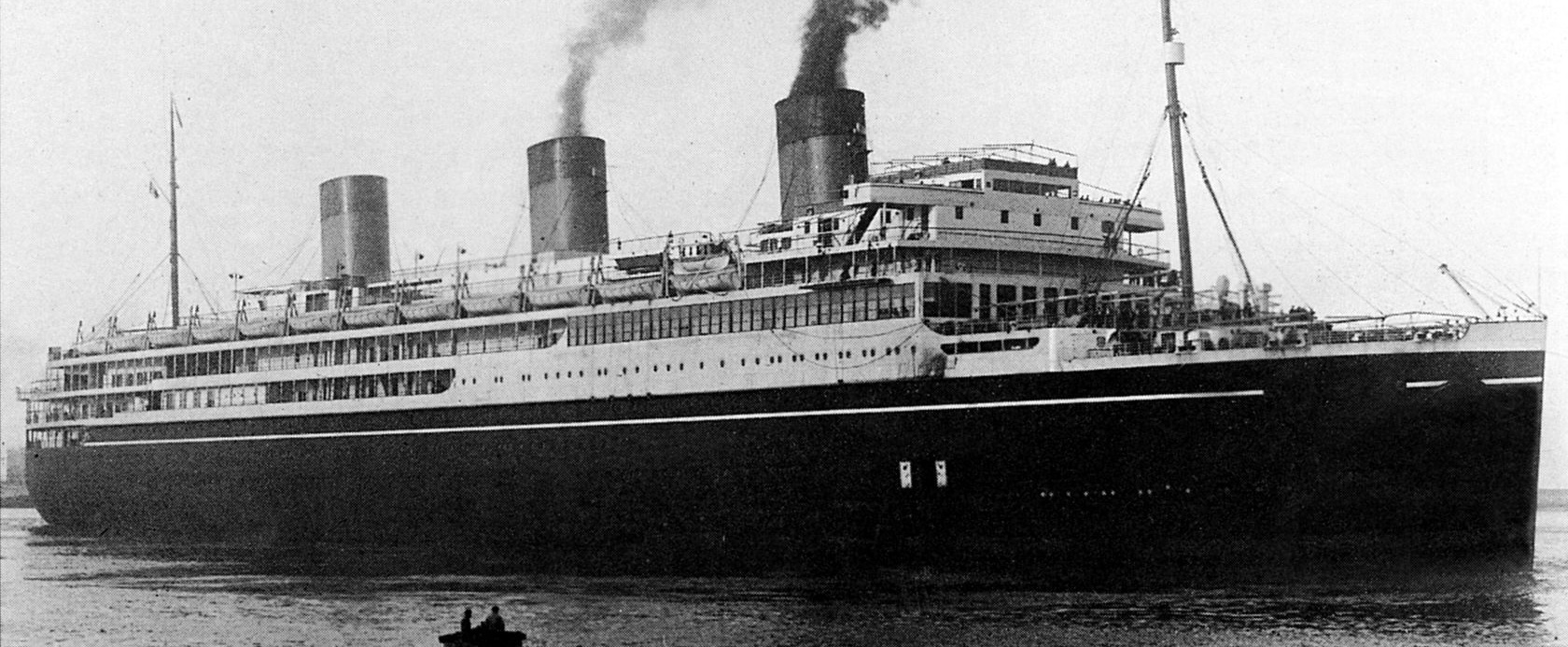
SS L'Atlantique
Compagnie de Navigation Sud-Atlantique · entered service 1931 · Ship Guide
Overview
SS L'Atlantique was the ambitious flagship of Compagnie de Navigation Sud-Atlantique, built at Saint-Nazaire for service between France and the east coast of South America. Completed in September 1931, she was the largest and fastest passenger liner then assigned to that route and became especially noted for monumental Art Deco interiors.
Her career was extraordinarily brief. On 4 January 1933, while sailing without passengers from Bordeaux toward Le Havre for overhaul, a fire spread through the accommodation. Nineteen crew members died. The ship remained afloat and was towed to Cherbourg, but arguments between owners and insurers over whether she could economically be rebuilt lasted for years. She was ultimately sold for demolition and broken up at Port Glasgow in 1936.
Key Facts
A Flagship for the South Atlantic
L'Atlantique was designed for a route whose conditions differed from the North Atlantic. The long voyage to Brazil, Uruguay, and Argentina placed a premium on spacious public rooms, ventilation, open-deck life, and comfort in warm climates. Her shallow draught and broad beam also reflected the requirements of River Plate service.
Contemporary and later accounts emphasize the scale of her interior program: broad corridors, a multi-deck central hall, shopping facilities, and a modern decorative scheme that helped make the vessel an important reference point in French interwar passenger-ship design.
Commercial Reality
The ship's prestige exceeded the traffic available to fill her consistently. Later histories note that demand on the Europe–South America route was not always sufficient for a liner of her size, leaving Sud-Atlantique dependent on government support. That tension between design ambition and route economics is essential context for understanding the ship.
In 1932 the funnels were raised, a visible modification that helps date photographs from the short service career.
The January 1933 Fire
Early on 4 January 1933 a fire was discovered in the passenger accommodation while L'Atlantique was en route for overhaul. Flames spread rapidly through the interior. Captain René Schoofs eventually ordered the approximately 200-person crew to abandon ship. Nineteen crew members were killed, several during the difficult evacuation.
The burning liner remained afloat. Salvage tugs fought for control of the drifting hull and eventually brought her to Cherbourg, where the fire was finally extinguished on 8 January. The accommodation from multiple decks was devastated and hull plating above the waterline had buckled, but the lower machinery spaces were less severely damaged.
Insurance Dispute and Scrapping
The owners regarded the ship as a total loss; insurers argued that repair might still be economically possible. That disagreement left the gutted vessel at Cherbourg for roughly three years while surveys, estimates, and litigation continued. The final insurance settlement was widely reported at the equivalent of about US$6.8 million.
In February 1936 L'Atlantique was sold for breaking and towed to Port Glasgow, where Smith & Houston dismantled her. The delay between the fire and scrapping is therefore not inactivity without historical significance—it is part of the ship's legal and commercial story.
Interpretive Notes
Short career, large documentary footprint: because the vessel attracted design attention and then suffered a spectacular casualty, retrospective coverage can outweigh material from her actual passenger voyages. Date artifacts carefully.
Pre- and post-1932 photographs differ: raised funnels provide one useful visual clue.
Fire history requires precision: the casualty began on 4 January 1933; the ship was not immediately scrapped and remained the subject of a prolonged salvage and insurance dispute.
Evidence-first ship guide