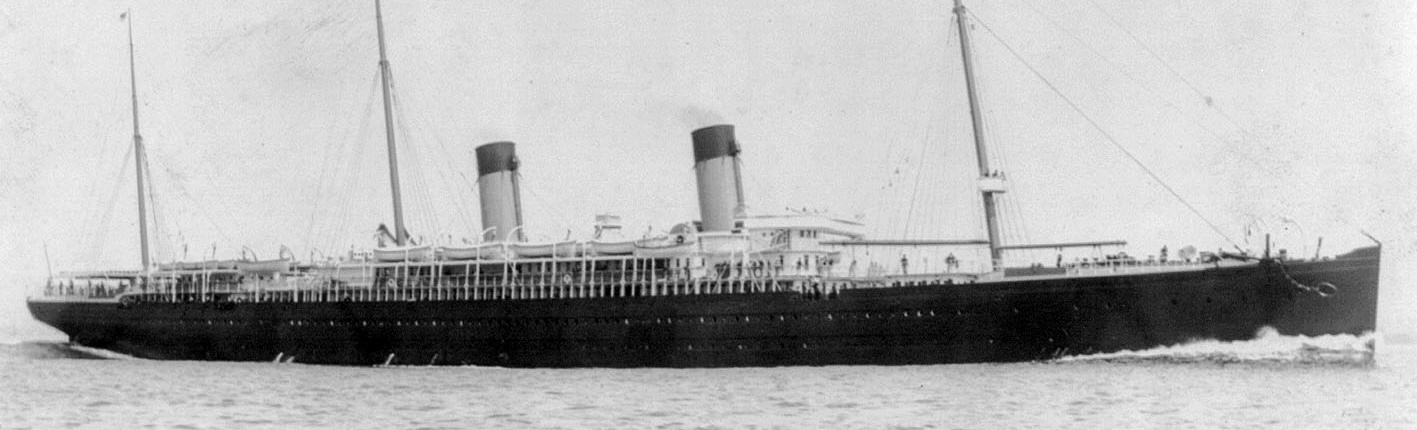
RMS Majestic (1889)
White Star Line · entered service 1890 · Ship Guide
Overview
RMS Majestic was the sister of Teutonic and one of White Star's decisive steps into the modern twin-screw express-liner era. Built by Harland & Wolff, launched on 29 June 1889, and entering service on 2 April 1890, she was larger, faster, and mechanically more modern than the company's 1870s generation.
Her career combined late-Victorian prestige, a specific 1891 westbound speed record, Boer War transport duty, major rebuilding in 1902–03, reserve status, and a brief return to active service after the loss of Titanic. She therefore offers a useful bridge between White Star's early express ambitions and the giant-liner era that followed.
Key Facts
The Twin-Screw Era
Majestic and Teutonic marked a major technological and visual break from White Star's earlier single-screw liners. Steel construction, twin screws, and higher sustained speed made them true express ships in the late-Victorian Atlantic competition.
Twin screws improved both performance and redundancy. The change also helped produce a more modern silhouette and operating profile, making the sisters important precursors to later White Star express designs.
Prestige and Passenger Markets
Although remembered for speed, Majestic carried a mixed passenger population. First class provided the prestige face of the ship, while second and third class connected the vessel to the broader migration economy of the Atlantic.
This mixed social function matters when interpreting surviving ephemera. A first-class brochure and a third-class ticket document different experiences aboard the same ship and should not be collapsed into a generic idea of “luxury liner travel.”
The 1891 Westbound Record
In July 1891 Majestic made the celebrated westbound crossing commonly summarized as 5 days, 18 hours, 8 minutes at about 20.1 knots. The achievement belonged to the record culture of the era and added prestige to both White Star and British shipbuilding.
The wording should remain specific. “Westbound record in July 1891” is more historically useful than an undated blanket claim that the ship was “the fastest liner.”
Long Working Career
After the brief record period, Majestic continued for many years as a working transatlantic liner while newer ships entered the fleet. Route patterns evolved, with later service associated with Southampton and Cherbourg as well as the earlier Liverpool and Queenstown system.
This long career means route wording can be a valuable dating tool for passenger lists and printed ephemera.
Boer War Service
During the Second Boer War, Majestic served as a troop transport. As with other liners requisitioned for government use, the ship's documentary context changed from passenger commerce to military logistics.
Photographs, troop references, and official papers from this phase should be cataloged separately from ordinary White Star material.
The 1902–03 Rebuild
A major refit in 1902–03 altered boilers, mast arrangement, funnel height, and other features. The work extended the ship's useful life but also created a clear visual breakpoint.
For photographic attribution, pre-refit and post-refit appearances should not be treated as interchangeable. Changes in profile can help date an otherwise weakly labeled image.
Reserve and Titanic-Era Return
By 1911 Majestic had moved into reserve as newer White Star tonnage displaced her. After Titanic was lost in April 1912, the older liner briefly returned to active service while the company adjusted fleet deployment.
This late return is historically interesting because it shows how an apparently obsolete ship could regain short-term operational value when circumstances changed abruptly.
Retirement
White Star finally withdrew Majestic, and breaking began in 1914. Her career had lasted long enough to span the transformation from the late-Victorian twin-screw breakthrough to the age of giant turbine liners.
Interpretive Notes
This is the 1889-launched Majestic, not the much larger ex-Bismarck that joined White Star under the same name in 1922. Build year is essential.
The 1891 speed claim should remain tied to direction and date, while the 1902–03 rebuilding should be treated as a meaningful visual and technical breakpoint.
Evidence-first ship guide