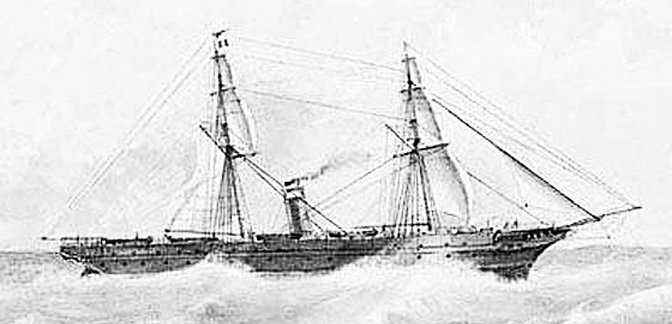
SS Malta
Cunard Line · 1865 · Ship Guide
Overview
SS Malta was a Cunard Line iron screw steamship launched by J. & G. Thomson at Glasgow on 19 October 1865. She entered service on 20 February 1866 and spent more than two decades moving among Cunard’s Liverpool–New York, Liverpool–Queenstown–Boston, and Mediterranean services.
Her long career is especially useful for understanding how nineteenth-century steamers were upgraded rather than simply replaced. In 1879 Malta was re-engined with compound machinery by J. Jack & Co. of Liverpool, extending her commercial life before she was eventually wrecked off Cape Cornwall in 1889.
Key Facts
A Flexible Cunard Workhorse
Malta was not tied to one prestigious route throughout her career. Cunard moved her among New York, Boston, and Mediterranean work as commercial needs changed. That flexibility is part of the ship’s significance.
For researchers, route context can therefore be more useful than a generic “Cunard” label. A document mentioning Boston or a Mediterranean itinerary may still belong to Malta even if it does not resemble the line’s better-known Liverpool–New York material.
Migration, Mail, and Passenger Evidence
Passenger lists and port records are particularly strong evidence for a ship of this era because they preserve date, route, master, and passenger community. Those details often matter more than decorative branding.
When transcribing nineteenth-century records, retain period terms such as “burthen,” “steamship,” and the route wording used by the document. Apparent discrepancies in tonnage do not automatically indicate a different ship because measurement conventions changed and records were not always standardized.
The 1879 Re-engining
In 1879 J. Jack & Co. of Liverpool fitted Malta with compound engines. This modernization marks a useful technical breakpoint in her career and helps explain why a relatively small mid-1860s hull remained commercially useful into the late 1880s.
For image and document interpretation, pre- and post-1879 specifications should not be silently blended. Machinery descriptions in contemporary notices can help date otherwise ambiguous material.
Mediterranean and North Atlantic Phases
Norway Heritage’s compiled route chronology places Malta in Mediterranean service in 1874, back on North Atlantic work after modernization, and again on Mediterranean routes in the early 1880s. Her deployment was therefore more varied than a single-route summary suggests.
This pattern illustrates how Cunard used older tonnage pragmatically. A ship did not have to remain on a flagship route to retain commercial value.
Wreck off Cape Cornwall
Malta was wrecked off Cape Cornwall in 1889. The event generated a separate body of newspaper and maritime-casualty evidence from her normal passenger-service record.
Claims that an object was physically recovered from the wreck require substantially stronger provenance than a generic association with the casualty. Dated contemporary reporting and a traceable chain of custody should be expected before making a recovery claim.
Passenger Lists and Migration Evidence
Malta appears in emigrant and passenger-list records that can anchor the ship to a specific date, master, route, and group of travelers. Those documents are especially important because a small working Cunarder left a thinner decorative archive than later prestige liners. A manifest can therefore tell us more about the ship’s real social function than a generic fleet portrait.
When using nineteenth-century sources, preserve their terminology. “Burthen,” tonnage, route names, and class labels were not always standardized, and later databases may normalize values differently. A difference in reported tonnage should be investigated rather than automatically treated as proof of a second ship.
Collecting and Wreck Claims
Surviving material may include Cunard notices, passenger records, newspaper reports, and wreck coverage. Claims that an item was physically recovered from the 1889 wreck deserve a much higher evidentiary threshold than ordinary ship association. A documented chain of custody, contemporary recovery record, or institutional provenance is far stronger than later family tradition alone.
Generic Cunard material from the 1860s–1880s should also not be assigned to Malta simply because the dates overlap. Ship name, route, master, or another vessel-specific anchor should be present.
Why the Route Changes Matter
The alternation between New York, Boston, and Mediterranean assignments shows that Cunard treated older ships as adaptable network assets rather than as vessels with one immutable route identity. That operational flexibility is itself useful evidence when a surviving timetable or advertisement seems inconsistent with a simplified fleet history.
Her career also shows how incremental engineering upgrades could postpone obsolescence, allowing an 1860s steamer to remain useful deep into the 1880s.
Why Malta Matters
Malta demonstrates the adaptability of a working Victorian liner: changing routes, upgraded machinery, and more than twenty years of service without ever becoming a celebrity ship.
Her surviving evidence rewards careful, document-led research. Route, date, master, and machinery phase are stronger attribution tools than the name alone.
Evidence-first ship guideSources (Selected)
This list is intentionally conservative.