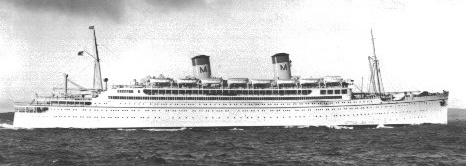
SS Mariposa
Matson Lines · 1932 · Ship Guide
Overview
SS Mariposa was one of Matson Lines’ celebrated interwar Pacific liners, built for fast and stylish service linking the American West Coast with Hawaii, Samoa, Fiji, New Zealand, and Australia. She belonged to Matson’s so-called “white ship” era: vessels that combined tropical-cruise imagery, modern American engineering, and a strong house identity distinct from the North Atlantic express-liner tradition.
In collecting and interpretation, Mariposa matters because she sits at the intersection of luxury tourism, Pacific route culture, and wartime transformation. Prewar Matson ephemera, wartime transport images, and later Home Lines material under the name Homeric all belong to the same hull, but not to the same interpretive phase.
Key Facts
Figures for length, tonnage, and even class descriptions can vary slightly depending on whether a source is describing the ship as built, in wartime conversion, or in later Home Lines service. For stricter catalog work, preserve the exact form used by the source or artifact being cited.
Design & Construction Context
Mariposa belonged to Matson’s distinct Pacific world rather than to the standard North Atlantic prestige hierarchy. Her importance lies in how she helped define an American interwar vision of tropical and South Pacific travel: white-painted hulls, fast schedules, modern machinery, and carefully marketed romance attached to Hawaii and beyond.
This made her culturally significant in a different way from a Cunard or French Line flagship. She was not meant to dominate the Atlantic blue-riband imagination. Instead, she was designed to make the Pacific itinerary itself feel glamorous and coherent. In that sense, Mariposa is one of the key vessels for understanding how liner identity could be built around destination culture as much as around shipboard luxury alone.
Service History (Summary)
1931–1932: Built at Quincy for Matson Lines, launched in July 1931, completed in December, and sent into service in January 1932. She joined the interwar Matson fleet that marketed Pacific travel as an elegant American experience.
1930s: Operated Matson’s Pacific services linking the West Coast, Hawaii, and the South Pacific. In collecting terms, this is the classic Mariposa era: brochures, passenger lists, menu cards, deck plans, and advertising materials centered on the ship’s role in the “white ships” world.
1941–1945: Entered wartime transport service. Like many civilian liners, Mariposa was transformed from a passenger vessel into a troop carrier, and wartime photographs show a sharply different documentary identity from her prewar leisure-travel phase.
Postwar and sale: After the war she did not simply resume her old Matson life unchanged. She was eventually sold and entered Home Lines service as Homeric, beginning a substantial second career under another name.
1953–1974: Served as Homeric before ultimate withdrawal and scrapping in 1974. This means the hull has two major collecting lives, and materials from the later phase should not be folded back casually into a Matson interpretation.
Interpretive Notes
Name discipline is essential: prewar Mariposa, wartime transport Mariposa, and Home Lines Homeric all refer to the same hull but to different collecting categories. Catalog records should follow the printed name and service context actually shown on the artifact.
Matson material has a strong house identity: white-ship imagery, tropical destinations, and Pacific-route marketing often make Matson ephemera visually distinctive. Even so, attribution should still rest on internal evidence such as ship name, date, route, or deck-plan details rather than style alone.
Pacific glamour differs from Atlantic glamour: Mariposa is best understood not as a smaller imitation of an Atlantic express liner but as part of a different travel imagination altogether. Seller descriptions sometimes flatten this distinction by calling every large passenger ship a generic “luxury liner.”
Wartime transformation can obscure peacetime identity: because the ship’s war service was substantial, secondary summaries may overemphasize troopship use at the expense of her original commercial meaning. Good curator practice preserves both, while clearly distinguishing the interwar Matson chapter from later military and Home Lines phases.
Evidence-first ship guideSources (Selected)
- Ocean Liner Curator — Sources (master bibliography)
- SS Mariposa (1931) — overview chronology, specifications, wartime service, and later career as Homeric
- SS Maritime — Mariposa history, Matson service context, and later conversion narrative
- Transportation History — launch context for the 1931 Matson liner Mariposa
- Matson corporate history page — background on Matson travel-film and liner-era heritage