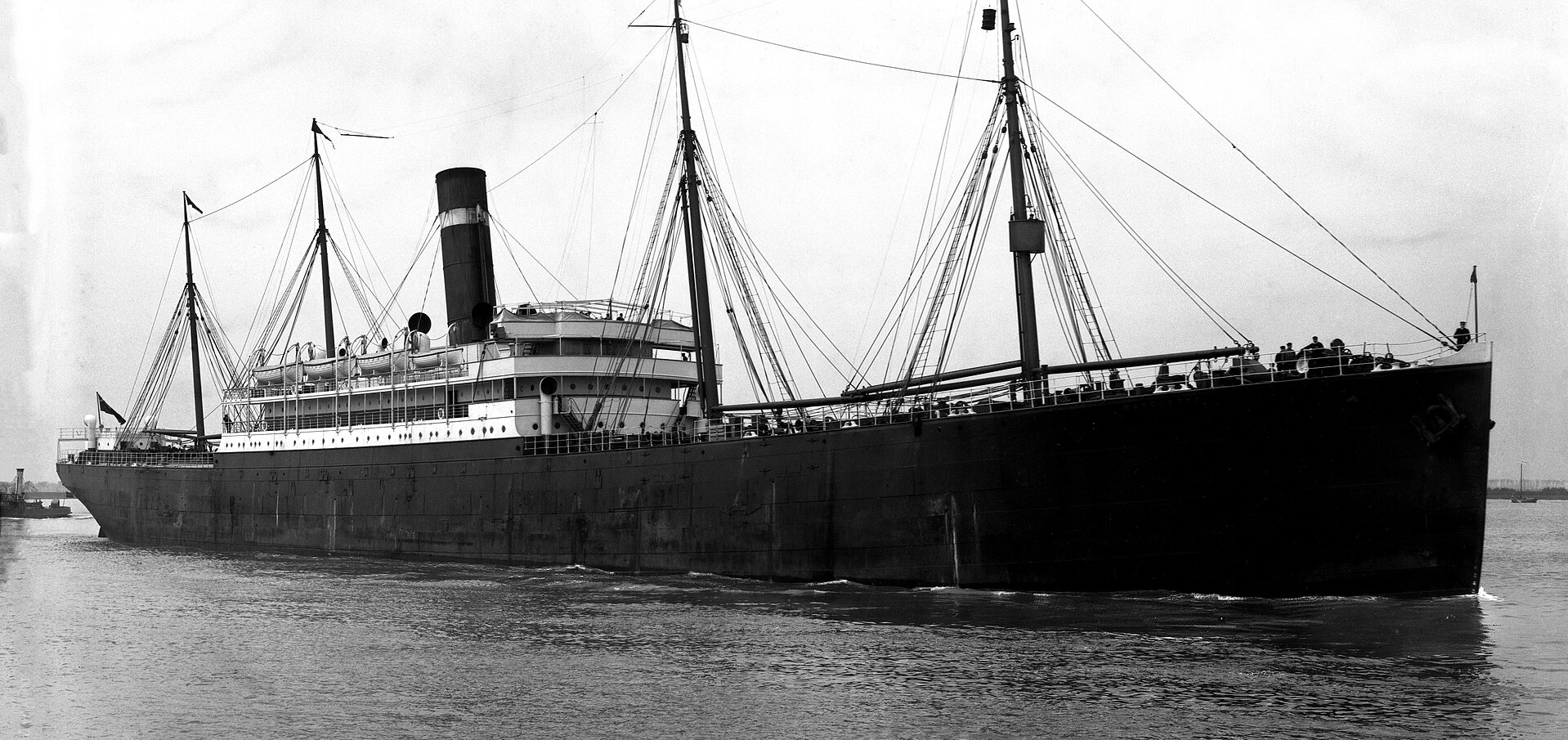
SS Marquette
Atlantic Transport Line · entered service 1898 · Ship Guide
Overview
SS Marquette was a late-nineteenth-century British transatlantic cargo-passenger steamer best associated with the Atlantic Transport Line. Built in Scotland as Boadicea, she entered service in 1898 and was soon acquired by Atlantic Transport Line, renamed Marquette, and placed into the company’s North Atlantic system. She was not an express luxury liner in the Cunard or White Star sense, but she is valuable as evidence of a commercially important hybrid type: a livestock, cargo, and limited-passenger steamer serving the Atlantic trade at the edge of the great liner age.
Her story has three main phases: construction for Wilson & Furness / Furness-Leyland interests, Atlantic Transport Line service, and later chartered Red Star Line operation before wartime transport duty. The ship is also remembered for her loss in October 1915, when she was torpedoed in the Aegean while serving as a military transport.
This page treats Marquette as an Atlantic Transport Line cargo-passenger ship with later Red Star and wartime contexts. It should not be confused with Great Lakes vessels or other ships carrying the same name.
Key Facts
Note on figures: Marquette appears in sources under both her original name, Boadicea, and her later Atlantic Transport Line name. Tonnage figures can differ depending on date, register, and whether the source is describing the ship before or after later reporting changes.
Design & Construction (Context)
Marquette belonged to a class of practical North Atlantic cargo-passenger steamers ordered in the late 1890s for Wilson and Furness-Leyland interests. Unlike the grand express liners built to win publicity through speed or luxury, this type was designed around commercial flexibility: cargo space, cattle capacity, reliable passage-making, and a small number of first-class passenger berths.
Her four-masted profile, single screw, and triple-expansion machinery place her firmly in the transitional world of late Victorian steam navigation. She was modern enough for regular transatlantic work, but still visually and commercially tied to older mixed-service patterns where cargo revenue and livestock capacity mattered as much as passenger prestige.
Atlantic Transport Line Service
Atlantic Transport Line acquired Boadicea and her sisters during a period of rapid fleet adjustment after the Spanish-American War altered the company’s tonnage position. Renamed Marquette, she joined the line’s London–New York service, where she served a different market from the famous high-speed mail liners. Her passenger lists and sailing notices are especially useful because they document the quieter, businesslike side of Atlantic travel: fewer passengers, mixed cargo, and less theatrical publicity.
For Ocean Liner Curator purposes, Marquette is a reminder that the Atlantic system was not only made of record-breakers. The trade also depended on ships like this: reliable, commercially adaptable vessels that connected ports, cargo flows, emigrant and passenger movement, and corporate networks.
Red Star Line Charter Context
Marquette later appeared in Red Star Line service, particularly in relation to Antwerp–Philadelphia operations. This matters for attribution: material connected to Marquette may appear under Atlantic Transport Line, Red Star Line, or wartime transport contexts depending on date. A Red Star Line reference does not automatically mean a different ship, but it does require date-sensitive labeling.
For ephemera, the safest description is often a compound one: “SS Marquette, Atlantic Transport Line vessel, Red Star Line charter period,” when the paper trail supports it. Avoid flattening the ship’s whole career into a single operator when the artifact itself belongs to one phase.
Wartime Service and Loss
During the First World War, Marquette was used as a British military transport. On October 23, 1915, she was torpedoed in the Aegean while carrying military personnel, medical staff, and animals. The sinking became particularly significant in New Zealand memory because New Zealand medical personnel, including nurses, were among those lost.
This final chapter should be handled with care. A commercial passenger-list item from 1899, a Red Star-era postcard, and a wartime memorial item are all “Marquette material,” but they belong to different evidence categories. The ship’s sinking gives the name emotional force; it should not be used to imply wartime association for every object connected to the vessel.
Collecting Profile
Surviving Marquette material may include passenger lists, sailing notices, postcards, line-issued ephemera, and later memorial or military-context references. Because she was not a glamour liner, authentic material may be less visually dramatic than Cunard or White Star pieces, but it can be historically rich—especially when it documents route, operator, date, and passenger/cargo patterns.
The strongest attributions will name the ship, line, route, and date. “Atlantic Transport Line” alone is not enough if the claim is specifically about Marquette; likewise, a generic Red Star Line item should not be assigned to her without a dated sailing, image caption, passenger list, or other corroborating marker.
Interpretive Notes (What to Avoid)
Avoid treating Marquette as a conventional luxury ocean liner simply because she crossed the Atlantic and carried passengers. Her significance is more specific: she represents the mixed cargo-passenger ecosystem that supported Atlantic transport alongside better-known express liners. That makes her useful for interpreting the infrastructure of ocean travel, not just its glamour.
Also avoid merging her with unrelated Great Lakes or coastal vessels named Marquette. In cataloging, include dates, operator, route, and wartime context whenever possible.
The casualty record also illustrates why wartime transport decisions belong in the interpretation of a ship loss. The presence of medical personnel aboard an unmarked troop transport was not merely incidental; it shaped contemporary criticism and the event's later place in New Zealand public memory.
Evidence-first ship guide