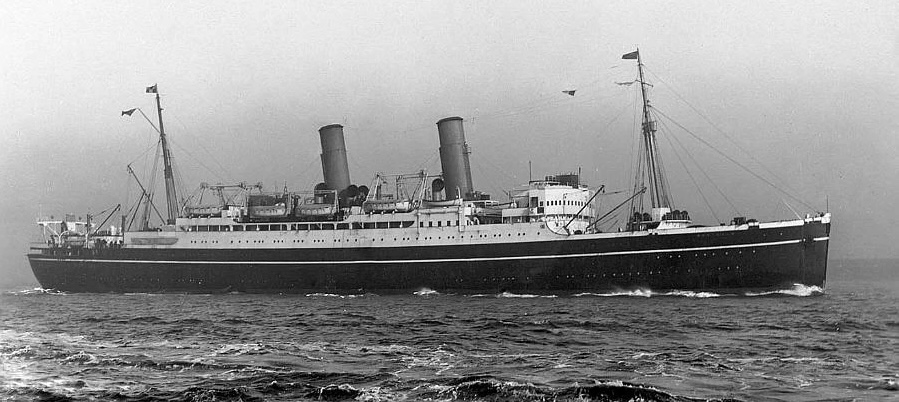
SS Montcalm
Canadian Pacific · entered service 1922 · Ship Guide
Overview
SS Montcalm was a Canadian Pacific passenger liner built by John Brown & Co. at Clydebank as yard no. 464. Launched on 3 July 1920 and completed in December 1921, she began service from Liverpool to Saint John, New Brunswick, on 17 January 1922.
Together with Montclare and Fairfield-built Montrose, she formed a closely related group of postwar liners designed for the practical Britain–Canada passenger, migrant, mail, and cargo trade. Their history is less about prestige speed than about maintaining an integrated transatlantic-and-rail transport system.
Montcalm's career also shows how the interwar liner market changed: she received new geared turbine machinery in 1929, moved increasingly into pleasure cruising from 1932, and then entered naval service as HMS Wolfe during the Second World War.
Key Facts
Canadian Route Service
Montcalm's seasonal pattern reflects the geography of Canadian Atlantic service. During open navigation she could serve Quebec and Montreal; in winter, Saint John provided an ice-free Atlantic terminus connected to Canadian Pacific's rail system. A route printed on surviving ephemera therefore often identifies the season as well as the voyage.
The large third-class complement reflects the continuing importance of migration to Canada in the 1920s. Cabin-class traffic, visiting relatives, tourists, and business travelers shared the same ship with passengers whose voyage was the first stage of settlement farther inland.
Mechanical Modernization and Cruising
In 1929 Harland & Wolff at Belfast fitted Montcalm with new single-reduction geared turbine machinery. The refit was a substantial attempt to extend the useful life and efficiency of a ship that had entered service only seven years earlier.
By 1932 Canadian Pacific was using Montcalm mainly for pleasure cruises. Surviving passenger lists show later cruise itineraries beyond the Canada route, including Atlantic islands and European ports. That shift mirrors the wider contraction of traditional migrant traffic and the growing importance of leisure cruising during the Depression era.
HMS Wolfe
The Admiralty requisitioned Montcalm in 1939 and renamed her HMS Wolfe. She first served as an armed merchant cruiser, later spent time as a troopship, and was acquired outright by the Admiralty in 1942 for depot-ship work.
As a submarine depot ship, Wolfe supported naval operations far removed from the civilian Britain–Canada route for which she had been built. Uboat.net records service in home waters followed by transfer toward the Eastern Fleet later in the war.
She did not return to Canadian Pacific passenger service. After continued naval use, the ship was withdrawn and sent to Faslane for demolition in 1952.
Interpretive Notes
The “Mont” trio were related, not identical: Montcalm and Montclare came from John Brown; Montrose came from Fairfield. Builder and yard number should not be copied across the class.
Cruise-era material is legitimate Montcalm history: 1930s leisure voyages were not incidental. They represent a material change in how Canadian Pacific used the ship.
HMS Wolfe is the same hull but a different archival identity: naval records and photographs should be cataloged by wartime name and role while retaining the connection to the former liner.
Evidence-first ship guide