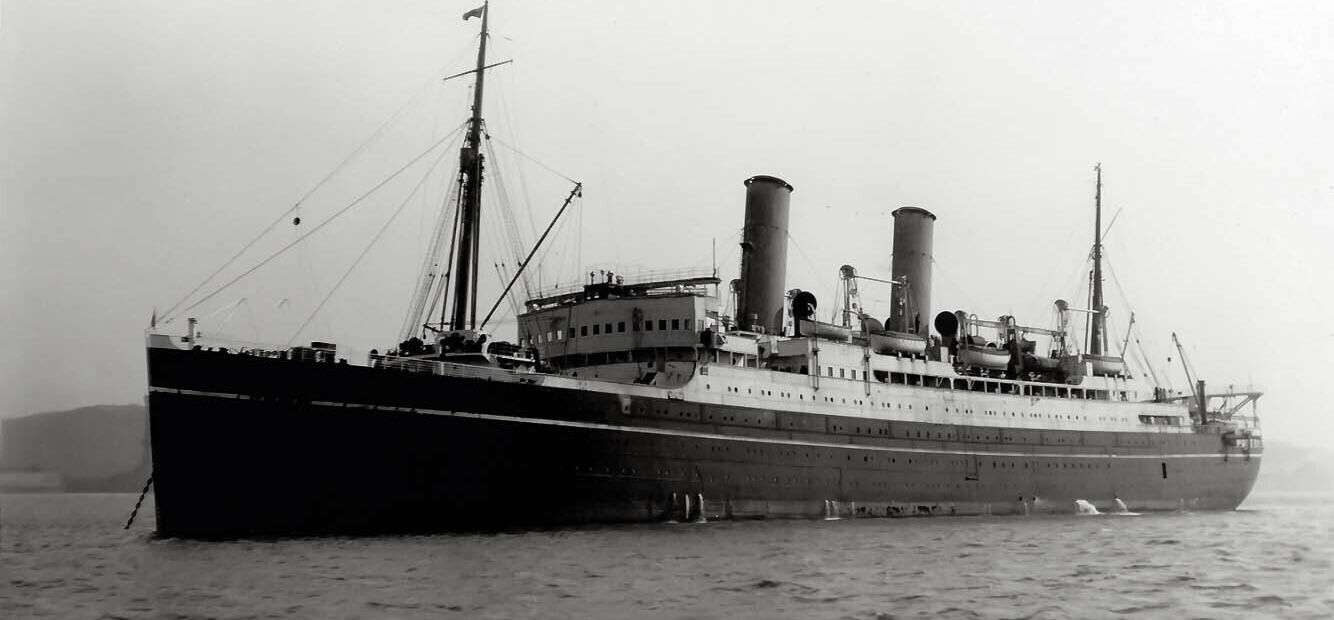
SS Montrose
Canadian Pacific · entered service 1922 · Ship Guide
Overview
SS Montrose was one of Canadian Pacific's post–First World War “Mont” liners for Britain–Canada service. Unlike her near-sisters Montcalm and Montclare, which John Brown built at Clydebank, Montrose was built by Fairfield Shipbuilding & Engineering Co. at Govan as yard no. 529.
Launched on 14 December 1920 and completed in 1922, she entered Canadian Pacific passenger service in May of that year. Her civilian career centered on migration, family travel, tourism, mail, and cargo between Britain and Canada, with seasonal changes in Canadian terminal ports and increasing cruise work during the 1930s.
The previous version of this guide contained two major errors: it assigned Montrose to John Brown yard no. 465, which belongs to Montclare, and said she survived to be scrapped in 1950. In fact, she was requisitioned by the Royal Navy, renamed HMS Forfar, and sunk by U-99 on 2 December 1940.
Key Facts
Britain–Canada Service
Montrose was built for practical Atlantic work rather than record speed. Canadian Pacific tied its steamship network directly to Canadian rail service, so arriving passengers could continue inland across the country. Cabin and third-class accommodation reflects a market that included migrants, family visitors, tourists, and business travelers rather than only luxury passengers.
Canadian seasonality shaped operations. During the St. Lawrence navigation season, Quebec and Montreal were central terminals; in winter, Saint John, New Brunswick, became especially important. Period passenger lists therefore need to be interpreted by date rather than assuming one permanent route.
Refit and Cruising
Like the other “Mont” ships, Montrose was mechanically updated during her career. By the early 1930s Canadian Pacific also used ships of this class increasingly for pleasure cruises as changing immigration patterns reduced the old third-class market. Photographs of Montrose at cruise ports such as Madeira belong to this later interwar phase.
HMS Forfar
In 1939 the Admiralty requisitioned Montrose and converted her to an armed merchant cruiser. Because the Royal Navy already had naming constraints, the ship entered naval service as HMS Forfar, pennant F30. Conversion was completed in November 1939, after which she served on Northern and Western Patrol duties.
On 2 December 1940, after separating from convoy HX-90 in the North Atlantic, Forfar was attacked by U-99 under Otto Kretschmer. Multiple torpedo hits sank the ship west of Ireland. Uboat.net records 172 deaths and 21 survivors.
Why the Correction Matters
Confusing Montrose with her John Brown-built sisters does more than alter a yard number. It obscures the fact that Canadian Pacific deliberately obtained closely related ships from two Clyde builders. Likewise, replacing a wartime sinking with a fictitious postwar scrapping removes the ship's entire naval identity and casualty history.
For attribution, civilian Canadian Pacific material and HMS Forfar records should be treated as distinct phases of the same hull. The name, date, route, and service branch are all necessary.
Evidence-first ship guide