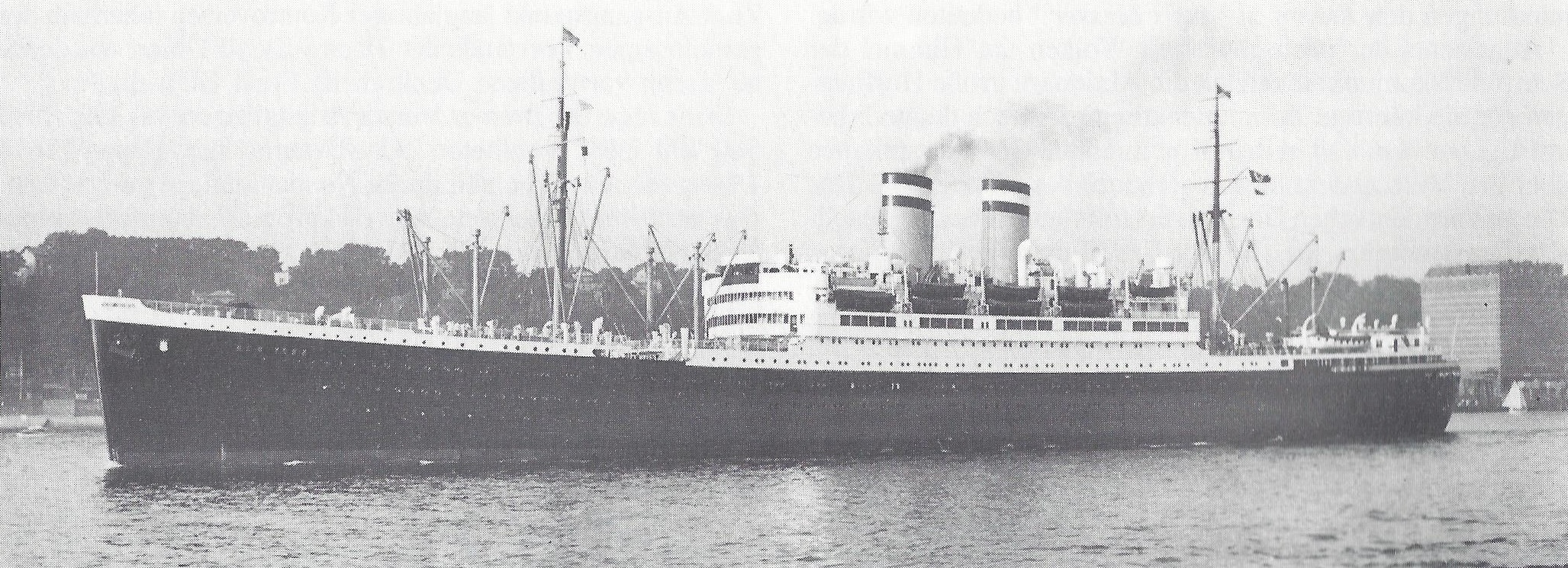
SS New York (1927)
Hamburg-America Line · entered service 1927 · Ship Guide
Overview
SS New York was a Hamburg-America Line passenger liner of the interwar period, built as part of HAPAG’s effort to restore regular transatlantic passenger service after the upheaval of the First World War and the loss of its great prewar express liners. Entering service in 1927, she belonged to the group often associated with the “Albert Ballin” type of medium-large liners and served the Hamburg–Southampton–Cherbourg–New York route. She was neither a superliner nor a minor emigrant ship, but rather a substantial and commercially important interwar Atlantic liner positioned between those worlds.
In collecting and interpretation, New York represents HAPAG’s recovery-era Atlantic identity: modern, capable, and internationally oriented, but shaped by the more restrained commercial realities of the interwar years. Material tied to her often reflects route regularity and class structure rather than Blue Riband ambition or extreme prestige display.
Key Facts
Published particulars vary slightly depending on whether a source summarizes the ship as built or after her 1930s refits. For cataloging purposes, retain the specific figures and wording used by the source or artifact being cited.
Design & Construction Context
New York belongs to the interwar rebuilding phase of German transatlantic passenger shipping. After the post-1918 collapse of the prewar German liner position, HAPAG needed ships that were modern and commercially viable without attempting immediate competition in the superliner category. The result was a class of capable medium-large liners that restored presence and regularity to the Atlantic route system.
Her design was therefore pragmatic as much as symbolic. She carried multiple passenger classes, offered a respectable level of comfort, and maintained an international route pattern via Southampton and Cherbourg that positioned HAPAG once again within the mainstream North Atlantic passenger market.
Service History (Summary)
1926–1927: Built by Blohm & Voss at Hamburg, launched in October 1926, and placed into HAPAG service in March 1927. Her route linked Hamburg with New York via key intermediate calling points in Britain and France.
Late 1920s–early 1930s: Served as a regular interwar Atlantic liner in the HAPAG fleet, helping sustain Germany’s passenger presence on the New York route during a period of cautious recovery and commercial normalization.
1930s: Underwent refits that altered both tonnage and service speed and adjusted passenger accommodation in response to changing market needs. These changes reflect the increasingly fluid economics of interwar passenger shipping.
1940: Requisitioned from civilian service and assigned to wartime use as an accommodation ship under the Kriegsmarine. By this point, her role as a commercial Atlantic liner had effectively ended.
1945: Bombed and sunk at Kiel on 3 April 1945. The hulk was later raised during postwar harbor-clearance work and ultimately scrapped.
Interpretive Notes
This is an interwar recovery liner, not a prewar HAPAG giant: New York should not be interpreted through the same lens as Imperator, Vaterland, or Bismarck. Her significance lies in restored continuity and commercial practicality rather than sheer scale.
Route evidence matters: material showing Southampton or Cherbourg calls is fully consistent with the ship’s operating pattern and helps locate her within the wider North Atlantic passenger system rather than a purely Hamburg-centered narrative.
As-built and post-refit material should be distinguished: because the ship’s speed, tonnage, and accommodations changed in the 1930s, earlier and later ephemera may reflect different service assumptions and should not be flattened into a single static profile.
The 1930 and 1934 rebuilds are especially useful to collectors because they turn engineering history into visual evidence. Machinery changes affected performance, while lengthening changed proportions and tonnage; dated photographs, brochures, and deck plans should therefore be matched to the correct physical configuration rather than treated as timeless representations.
Evidence-first ship guide