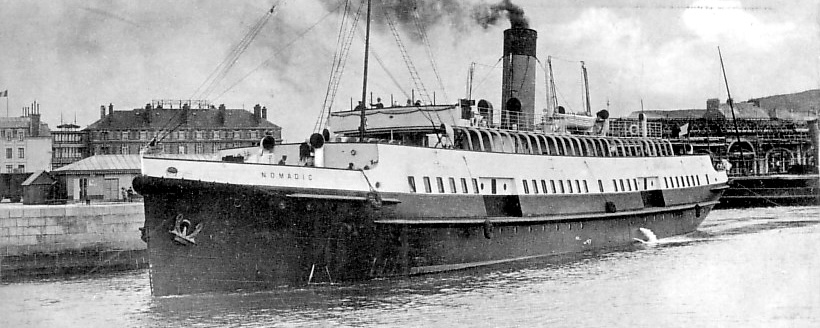
SS Nomadic
White Star Line · 1911 · Ship Guide
Overview
SS Nomadic was built for the White Star Line as a tender at Cherbourg—designed to ferry passengers, baggage, and mail between shore facilities and large transatlantic liners that could not berth directly at the pier. Although small compared with the ocean liners she served, Nomadic is historically outsized: she survives today as the last remaining White Star vessel.
This guide treats Nomadic as a working part of the “liner system” rather than a headline ship: a piece of port logistics that helps explain how the big liners actually operated.
Key Facts
Note on dates and “firsts”: published sources differ on some commissioning details and early movements. This page keeps the facts table conservative and expands only where documentation is clear.
Design & Role (Why a Tender Matters)
Cherbourg was an important call for express liners, but the harbor arrangement often required passengers to transfer by smaller craft. Nomadic (and her near-sister Traffic) were built specifically to make that transfer feel orderly and “on-brand,” extending the White Star experience to the last mile of the voyage.
For collectors, this role is useful: many surviving materials associated with a major liner call can actually be port-and-transfer ephemera rather than something produced onboard the big ship itself.
Service History (Summary)
In White Star service, Nomadic operated at Cherbourg handling transfers for the company’s premier liners in the prewar years. After World War I, her working life continued in various roles under different ownerships and names, reflecting a common pattern for small utility vessels: practical usefulness outlasting brand identity.
Her later preservation story is part of what makes her so prominent today—she is not just “a survivor,” but a rare, tangible artifact from the operational ecosystem of the great transatlantic liners.
Collecting Notes (Evidence-First)
Items claimed as “from Nomadic” appear on the market, but the same rules apply as with any ship attribution: prioritize documentation (institutional deaccession records, yard paperwork, dated photographs, or a traceable chain of custody). When that chain is missing, describe objects as “attributed” rather than “confirmed.”
A practical caution: White Star branding is widely reproduced and often loosely applied to unrelated items. If an object is said to come from Nomadic, ask what links it to the tender specifically (not merely to White Star as a brand).
Evidence-first ship guideSources (Selected)
Conservative starting points; expand with primary documentation where possible.