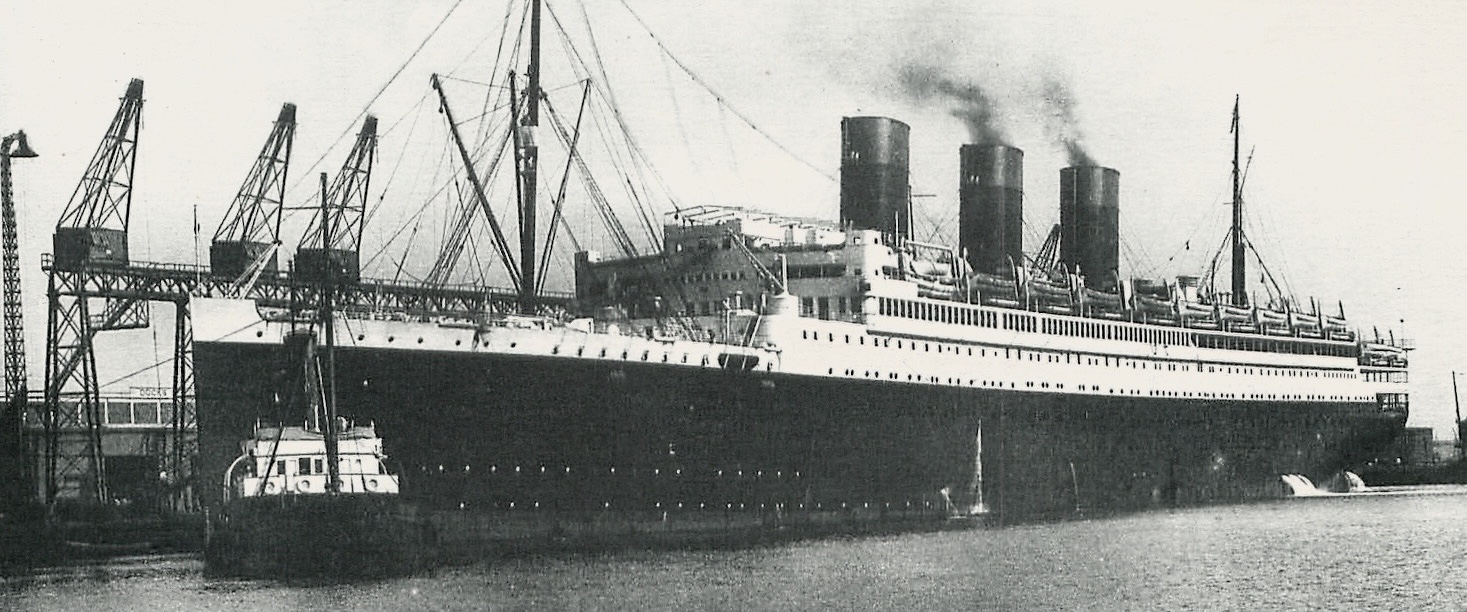
SS Paris
Compagnie Générale Transatlantique · entered service 1921 · Ship Guide
Overview
SS Paris was the French Line’s principal post–World War I flagship on the North Atlantic—a large, modern liner conceived before the war, then completed and introduced into peacetime service in 1921. In the 1920s, she represented a deliberate French return to transatlantic prominence: big tonnage, big public visibility, and an interiors story meant to compete in the same prestige arena as the era’s best-known British and German ships.
For collectors and curators, Paris is especially valuable because she sits at a high-documentation intersection: postwar rebuilding of commercial travel, the rise of illustrated passenger publicity, and a period when shipboard print culture (menus, passenger lists, brochures, cabin-class guides, stationery) was both abundant and stylistically distinctive. Many surviving artifacts can be tied to specific sailings and classes—if you prioritize items that carry dates, route chains, or ship-name identifiers.
Evidence-first note: “Paris” is a recurring ship name. When precision matters, label as “SS Paris (1916/1921)” (launched during WWI; entered service 1921) to avoid accidental cross-attribution.
Key Facts
Design & Construction (Context)
Paris is best understood as a ship built for a prewar world, then launched into a postwar one. The hull and basic conception belonged to the late-1910s scale race; her commercial career, however, unfolded in the 1920s when passenger expectations and onboard “experience” branding were rapidly intensifying. That hybrid identity shows up in photographs and in printed material: a ship that still reads as grand and substantial, but increasingly framed through modern publicity language.
For evidence-first cataloging, pay attention to design cues embedded in ephemera: dining-room names, class terminology, typographic styles, and especially the way the company names itself (“Compagnie Générale Transatlantique,” “French Line,” agent imprints). These signals can help place undated pieces into a tighter window than “1920s/30s.”
Service History (Summary)
1921–late 1920s: Postwar flagship service. Introduced in 1921, Paris became CGT’s leading transatlantic liner of the decade—an emblem ship on the Le Havre–New York run. Her period is unusually visible in surviving print culture, which often includes sailing dates and route chains.
1930s: Mature service in a changing market. Through the 1930s, the North Atlantic trade was increasingly pressured by economics and shifting travel patterns. Even so, CGT continued to project prestige through shipboard life and publicity—exactly the kind of material that becomes collectible evidence.
1939: Fire and effective loss. A major fire at Le Havre in 1939 left Paris badly damaged. The wreck remained a familiar sight and a documentation magnet: photographs, press accounts, and postwar disposal notes that often surface in secondary references.
Interpretive Notes
Paris is a strong “dateable ephemera” ship. Many authentic items include an itinerary line (ports), a printed ship name, and a specific date—enough to anchor a catalog record without over-reliance on memory or generic company branding. Where you can’t date an item directly, look for printer imprints, agent addresses, and class terminology (First/Second/Third vs later variants) to narrow the likely range.
Watch for two recurrent attribution pitfalls: (1) confusing “French Line” material across multiple ships (especially in generic brochure forms), and (2) mixing “launched 1916” with “entered service 1921” as if they are interchangeable. For collector-facing writing, it helps to state both milestones plainly and keep claims about “first” or “largest” tightly sourced.
A prewar design completed for a postwar world: Paris was conceived before the First World War but entered service only after it, placing her between two generations of liner design and passenger expectations. That delayed chronology matters when interpreting interiors, publicity, and claims about her place in French Line development.
Her 18 April 1939 fire and capsize at Le Havre created an unusually abrupt end to an otherwise mature passenger career. Wreck photographs and salvage imagery should be separated from ordinary service material; they document the terminal disaster phase rather than the appearance or condition of the liner during normal operation.
That boundary matters clearly.
Evidence-first ship guide