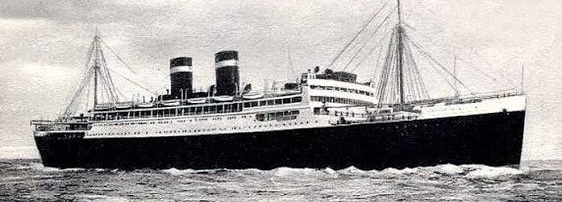
SS Pennsylvania
Panama Pacific Line · 1929 · Ship Guide
Overview
SS Pennsylvania was the third and last of Panama Pacific Line’s large American-built intercoastal liners, created for the New York–California passenger service via the Panama Canal. She belonged to the distinctive canal-and-coastal route world rather than the classic North Atlantic express-liner tradition. Her significance lies in that intercoastal role, in her modern turbo-electric machinery, and in her later transformation into the South American liner Argentina.
In collecting and interpretation, Pennsylvania is best divided into three main phases: Panama Pacific Line intercoastal service, post-1938 South American service as Argentina, and wartime transport service. Material from those phases should be distinguished carefully rather than treated as a single undifferentiated ship identity.
Key Facts
Published tonnage figures vary because sources may describe the ship as built, after 1938 rebuilding, or under different registry conventions. For cataloging purposes, preserve the exact wording used by the source or artifact being cited.
Design & Construction Context
Pennsylvania completed Panama Pacific Line’s notable trio of large intercoastal liners, which linked the U.S. East and West Coasts through the Panama Canal. Her route world was not the classic Atlantic migration or express-liner system, but a distinctly American passenger trade shaped by canal transit, coastal destinations, and long domestic journeys.
She was also part of a technically significant generation of U.S.-built turbo-electric liners. In that sense, Pennsylvania represents a specifically American interwar type of passenger-ship modernity, and one that later adapted to the Good Neighbor-era South American service under a new name.
Service History (Summary)
1929 construction and entry into service: Built at Newport News, Pennsylvania was launched in July 1929 and entered Panama Pacific Line service later that year as the third and last of the line’s large sister ships.
Panama Pacific service: In her original identity she served the New York–California route via Havana and the Panama Canal. This is the correct interpretive frame for passenger lists, brochures, deck plans, luggage labels, and route ephemera tied to the Pennsylvania name.
Intercoastal identity: Unlike the better-known Atlantic liners, Pennsylvania belonged to the American intercoastal world made possible by canal transit. That route geography should shape interpretation more than North Atlantic comparisons.
1937–1938 transition: When U.S. maritime mail subsidies were withdrawn and Panama Canal toll revisions increased costs, Panama Pacific discontinued its New York–California liner service. Pennsylvania and her sisters were taken out of service and transferred into South American operations after rebuilding.
As Argentina: Rebuilt with one funnel instead of two and revised passenger arrangements, the ship entered the New York–Buenos Aires service via the Caribbean, Brazil, and Montevideo under her new name. This phase should be treated separately from her Panama Pacific identity, even though it involved the same hull.
Wartime service: From 1942 to 1946 she served under War Shipping Administration control as a transport and troopship. This belongs to a military transport framework rather than a civilian passenger one.
Postwar and end of career: After postwar reconversion, she returned to commercial South American service as Argentina, was laid up in 1958, and was eventually scrapped in 1964. Her long later career under a different name means surviving material must be dated carefully.
Interpretive Notes
This is a Panama Canal intercoastal liner first: Pennsylvania should be understood chiefly within the New York–California via Panama Canal passenger system, not through North Atlantic assumptions.
The later Argentina identity is major, not incidental: because the ship had a substantial second life under another name, artifacts and photographs must be dated carefully or they can be misattributed.
Route context is especially important here: Panama Pacific material, River Plate service ephemera, and wartime transport records belong to three quite different historical worlds.
This ship represents American interwar liner modernity: turbo-electric propulsion, canal-route operation, and U.S.-built scale all help set her apart from more familiar Atlantic examples.
The 1938 rebuilding materially changed the ship’s identity: changes in funnel arrangement, passenger capacity, and route system make it important to distinguish clearly between Pennsylvania and Argentina in catalogs and interpretation.
Evidence-first ship guideSources (Selected)
- Ocean Liner Curator — Sources (master bibliography)
- SS Argentina / Pennsylvania — overview chronology, technical particulars, rebuilding, and service history
- Panama Pacific Line — route system and fleet context
- Sister-ship context for the Panama Pacific trio
- Sister-ship context for the Panama Pacific trio