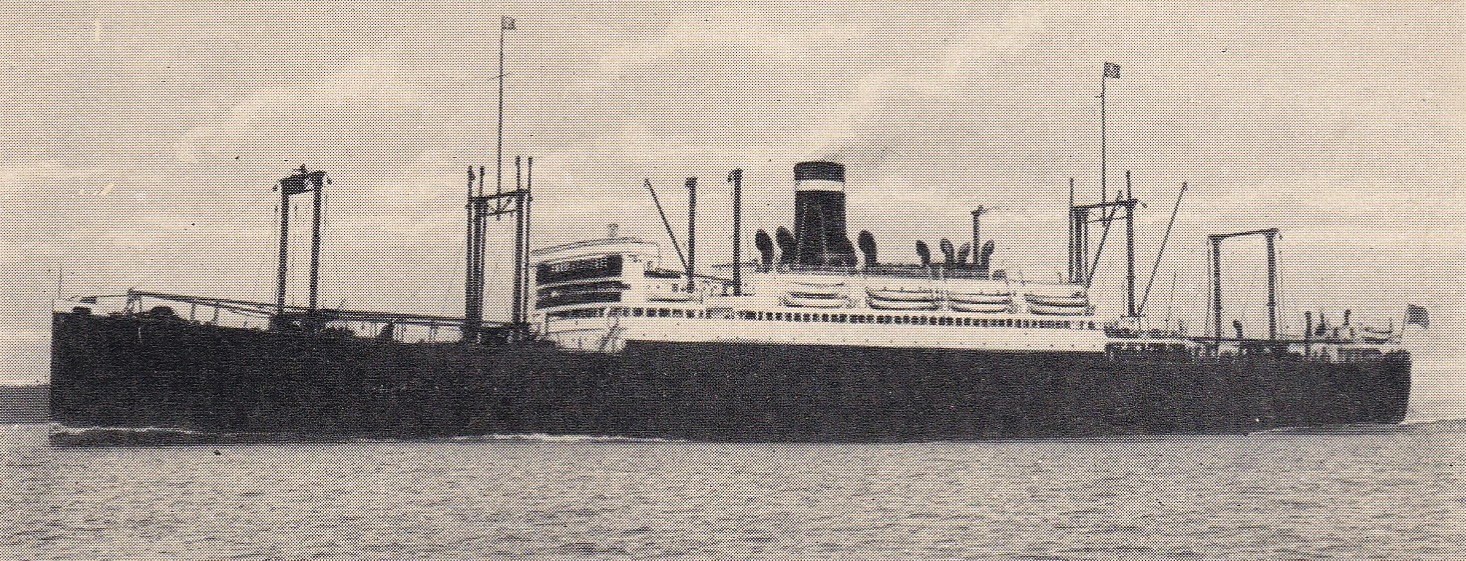
SS President Harding (1921)
United States Lines · entered service under this name 1922 · Ship Guide
Overview
SS President Harding was one of the large passenger-and-cargo ships created under the United States Shipping Board's post-First World War building program. She was launched at New York Shipbuilding Corporation in Camden, New Jersey, on 23 December 1920 as Lone Star State, completed in 1921, and briefly carried the name President Taft before becoming President Harding in 1922.
Unlike many of the Shipping Board's 535-foot ships, which were assigned to Pacific services, President Harding became a long-serving United States Lines Atlantic vessel. She worked the New York–Europe trade through the interwar years and was often advertised with sister President Roosevelt as an American-built alternative to the larger former German liners in the same fleet.
Her career ended abruptly in 1940. Sold to Belgian interests and renamed Ville de Bruges, she was attacked by German aircraft in the Scheldt on 14 May during the invasion of Belgium. Contemporary and later sources describe the casualty somewhat differently—as bombing, beaching, burning, or sinking—but agree that the ship was lost as an operating vessel.
Key Facts
Published figures for tonnage and exact measured length vary because sources mix register measurements, overall length, and figures recorded at different dates. The “535” designation refers to the well-known Shipping Board type rather than a single universally quoted register length.
From Lone Star State to President Harding
The ship belonged to the U.S. Shipping Board's large Design 1029 family, conceived during the wartime emergency but completed as passenger-and-cargo liners after the Armistice. The class emerged from an ambitious attempt to give the United States a modern merchant fleet of its own rather than relying primarily on foreign-built tonnage.
Her naming history reflects the administrative churn surrounding the fleet. Launched as Lone Star State, she was among the “state” ships renamed for American presidents in 1922. An early assignment made her President Taft, but the name was quickly revised and she became President Harding. Period documentation from 1922 therefore deserves close attention: two presidential names can appear within a very short span.
United States Lines and the North Atlantic
President Harding entered United States Lines service in the early 1920s and became one of the fleet's regular Atlantic ships. Passenger material shows her operating between New York and northern European ports including Bremen, Southampton, and Cherbourg.
She was not in the same size category as Leviathan, but that difference was part of her commercial role. The 535-foot ships offered substantial cabin space and cargo capacity at a scale suited to regular scheduled service rather than pure prestige. United States Lines advertising frequently paired President Harding with President Roosevelt, emphasizing that the sisters were American built.
The 535-Foot Shipping Board Family
The Design 1029 ships are best understood as a family rather than as isolated liners. Their histories spread across several operators, oceans, and later wartime identities. Many of the class migrated into Pacific Mail, Dollar Line, American President Lines, Army, or Navy service.
President Harding and President Roosevelt were unusual within the family because both spent much of their prewar careers in Atlantic service with United States Lines. That pairing makes company brochures, passenger lists, deck plans, and advertisements especially valuable for identifying material connected with the two ships.
Interwar Service and Documentary Identity
Through the 1920s and 1930s, President Harding remained a familiar United States Lines name. Her printed material belongs to a transitional period in American shipping: government ownership and subsidy, private management, immigration restrictions, Depression-era passenger traffic, and the gradual replacement of older vessels by newer Manhattan and Washington.
For collectors, the line name alone is not enough to date a piece precisely. Early President Harding material can overlap with the fleet's shifting ownership and management arrangements, while the brief President Taft identity belongs to a particularly narrow 1922 window.
Ville de Bruges and the 1940 Loss
In 1940 the ship was sold to Belgian interests and renamed Ville de Bruges. Her new career barely began before Germany invaded Belgium and the Netherlands in May.
On 14 May 1940 she was attacked by German aircraft in the Scheldt. Sources consistently treat the casualty as the end of the ship, but differ in the exact physical sequence afterward. Some describe her as bombed and sunk, while others indicate that she was damaged, beached, burned, and only later dismantled. The safest conclusion is that the air attack rendered her a total loss and ended her operational career.
Interpretive Notes
Do not collapse the 1922 names: Lone Star State, President Taft, and President Harding are successive identities of the same hull, but each can anchor an object to a different moment.
“535” is a class shorthand: contemporary and later sources use several measurements for these ships. A quoted 516- or 518-foot register length is not necessarily incompatible with the familiar 535-foot overall designation.
Final-fate language varies: “bombed,” “sunk,” “beached,” and “burned” appear in different accounts of Ville de Bruges. The documented date and operational loss are firmer than a single simplified description of the wreck sequence.
Evidence-first ship guideSources (Selected)
- Ocean Liner Curator — Sources (master bibliography)
- E. C. McKellar / Shipscribe — Steel Shipbuilding Under the U.S. Shipping Board, 1917–1921
- Shipscribe — EFC Design 1029 notes and illustrations
- GG Archives — SS President Harding archival collection
- U.S. Shipping Board annual reports and contemporary United States Lines passenger literature