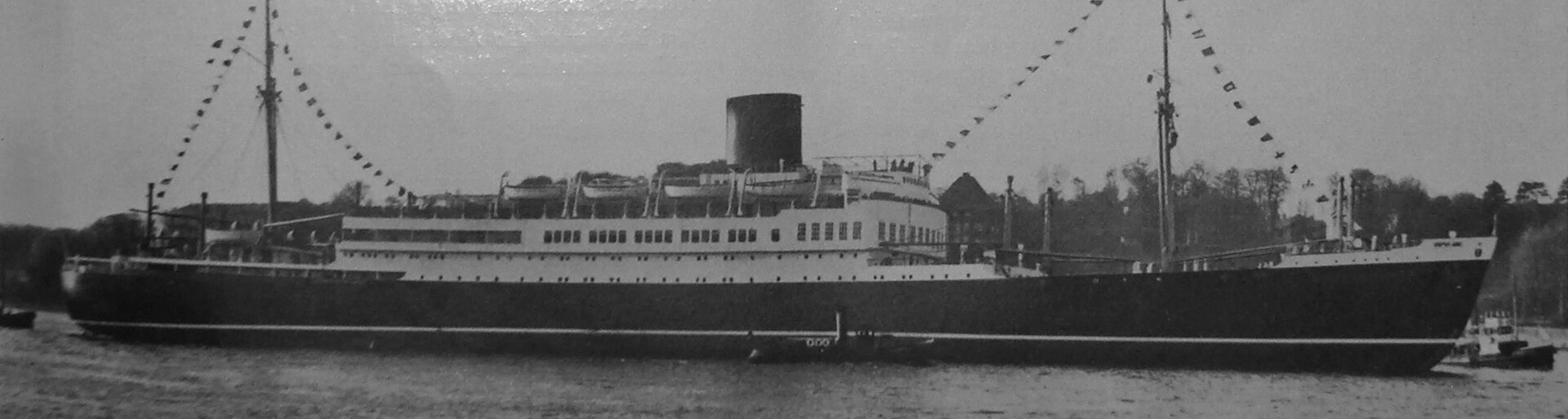
SS Scharnhorst
Norddeutscher Lloyd · 1935 · Ship Guide
Overview
SS Scharnhorst was one of Norddeutscher Lloyd’s celebrated East Asia express liners, built for the long Bremen–Far East route in the mid-1930s. She belonged to the interwar world of high-speed long-distance passenger service linking Europe with the Mediterranean, Suez, and East Asia rather than the North Atlantic express-liner race. Her significance lies both in that prewar German liner context and in her later wartime afterlife under Japanese control as the converted escort carrier Shinyo.
In collecting and interpretation, Scharnhorst is best divided into three main phases: prewar Norddeutscher Lloyd East Asia service, Japanese-controlled transport and military conversion after 1942, and final wartime service as Shinyo. Material from those phases should be distinguished carefully rather than treated as a single undifferentiated ship identity.
Key Facts
Published passenger totals and technical particulars can vary slightly depending on whether sources summarize the civilian liner or the later naval conversion. For cataloging purposes, it is best to preserve the exact wording used by the source or artifact being cited.
Design & Construction Context
Scharnhorst belonged to Norddeutscher Lloyd’s distinguished trio of East Asia liners built in the 1930s for long-distance service to the Far East. She should be understood chiefly within the Europe–Suez–East Asia route framework, where schedule, speed, and modern passenger comfort mattered, rather than through the better-known North Atlantic prestige contest.
In design terms, she represented a polished interwar German long-haul liner type: not the biggest ship afloat, but a highly refined express vessel for one of the world’s most important extended liner routes. Her elegant silhouette and route identity gave her a strong symbolic role in German overseas passenger shipping before the Second World War.
Service History (Summary)
1934–1935 construction and entry into service: Built at Bremen by AG Weser, Scharnhorst was launched in December 1934, completed in 1935, and entered Norddeutscher Lloyd’s East Asia service later that year.
Prewar East Asia service: In her original role she linked Germany with major Mediterranean, South Asian, Southeast Asian, Chinese, and Japanese ports. This is the correct interpretive frame for passenger lists, brochures, deck plans, route literature, luggage labels, and commercial photography tied to her civilian identity.
Late 1930s route significance: Together with her sister ships, she formed part of one of the most modern and prestigious long-haul liner services in the German merchant fleet. Her significance lies in that East Asia express context rather than in transatlantic comparison.
1939–1942 interruption and internment: With the outbreak of war in Europe, Scharnhorst was caught in the Far East and could no longer continue normal civilian service. She remained in Japanese waters and later passed effectively under Japanese control.
Japanese wartime use: Her identity after this point changed fundamentally. She moved from German passenger-liner service into Japanese wartime employment, first as transport and then as the basis for a naval conversion.
Conversion into Shinyo: The ship was rebuilt in Japan as the escort carrier Shinyo, a transformation that drastically altered both her appearance and historical meaning. This phase should be treated separately from her prewar passenger-ship life.
17 November 1944: As Shinyo, she was torpedoed and sunk in wartime service. Her end therefore belongs to the naval history of the Pacific War rather than to the ordinary closure of a civilian liner career.
From German Liner to Japanese Naval Asset
War stranded Scharnhorst in Japan, where she remained until the Japanese government acquired her on 7 February 1942. Initial plans treated the hull as transport tonnage, but after the Battle of Midway Japan urgently expanded escort-carrier conversion programs.
Conversion work began at Kure later in 1942. The resulting Shinyo had a flight deck, hangar, elevators, anti-aircraft armament, and bulges for stability. The conversion was effectively complete in late 1943, after which the ship entered escort-carrier service.
Loss in Convoy HI-81
In November 1944, Shinyo escorted convoy HI-81 from Japan toward the Philippines and Singapore. On 17 November USS Spadefish attacked and torpedoed the carrier northwest of Shanghai. U.S. Naval History and Heritage Command records the sinking as one of the American submarine force’s major carrier kills late in the Pacific War.
Why Scharnhorst Matters
Scharnhorst is one of the most dramatic examples of a passenger liner being physically transformed into a warship. The civilian and naval phases share one hull but almost nothing else in function, appearance, documentation, or historical meaning.
Interpretive Notes
This is an East Asia express liner first: Scharnhorst should be understood chiefly through Norddeutscher Lloyd’s Europe–Far East route system, not through North Atlantic assumptions.
The later Japanese phase is historically major: because the ship’s afterlife as Shinyo is so dramatic, it can overshadow her original significance as a refined prewar German passenger liner.
Civilian and military material belong to entirely different interpretive worlds: prewar route ephemera reflects commercial passenger culture, while later references concern wartime transport, conversion, and naval operations.
Sister-ship context matters: Scharnhorst is best understood alongside Gneisenau and Potsdam, since the trio formed a coherent East Asia liner group.
The conversion changed the ship’s identity completely: items showing the vessel as a German liner should not be casually merged with references to Shinyo, even though they concern the same hull.
Evidence-first ship guideSources (Selected)
- Ocean Liner Curator — Sources (master bibliography)
- Japanese carrier Shinyo — overview of the ship’s later wartime identity and origins as Scharnhorst
- German liners reference context for Scharnhorst and the East Asia service
- Fleet and photographic reference context for the civilian liner
- Naval History and Heritage Command — sinking of escort carrier Shinyo, 17 November 1944