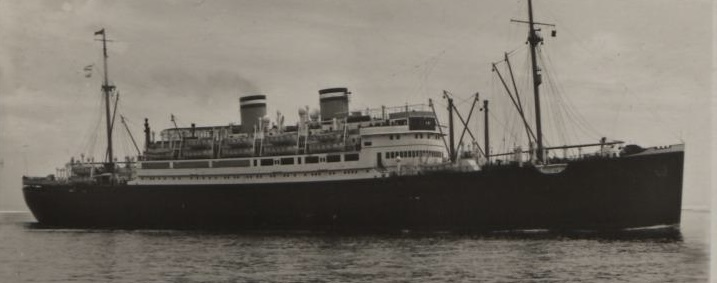
MS St. Louis
Hamburg-America Line · entered service 1929 · Ship Guide
Overview
MS St. Louis was a Hamburg America Line passenger liner built by Bremer Vulkan and launched in 1928. Because she was diesel-powered, many technical and historical references style her as M/S or MS St. Louis; this guide keeps the public-facing “MS St. Louis” title while noting that the more precise machinery designation is motor ship.
St. Louis was the sister ship of Milwaukee, but her historical memory is dominated by one event: the 1939 refugee voyage in which more than nine hundred passengers, most of them Jewish refugees fleeing Nazi persecution, were denied refuge in Cuba and then not admitted to the United States or Canada before the ship returned to Europe. That voyage makes St. Louis both an ocean-liner subject and a Holocaust-history subject, requiring more care than an ordinary service-history summary.
This page is a reference doorway: it summarizes widely documented facts, separates passenger-liner history from Holocaust interpretation, and avoids reducing a human tragedy to a collectible or “famous ship” label.
Compare St. Louis with her Hamburg America Line sister ship: similar interwar motor-liner context, but very different historical memory and collecting profile.
Key Facts
Design & Construction (Context)
St. Louis belonged to a late-1920s Hamburg America Line program that produced practical, modern motor liners rather than giant prestige ships. Her role was not to compete with the largest Atlantic liners by size or speed, but to provide dependable transatlantic service, flexible passenger accommodation, and suitability for cruise work during periods when scheduled Atlantic demand was weaker.
Her sister-ship relationship with Milwaukee is useful, but it should be handled carefully. The two ships share a design and operational context, yet St. Louis carries a much heavier public memory because of the 1939 refugee voyage. A good ship guide can hold both truths at once: she was a Hamburg America motor liner, and she became the setting for one of the most cited refugee crises of the late 1930s.
Service History (Summary)
St. Louis entered service in 1929 and was used primarily on Hamburg America Line’s North Atlantic service, with Hamburg, Halifax, and New York commonly appearing in route descriptions. Like many interwar liners, she also made cruise voyages, including Atlantic-island, Mediterranean, North African, and Scandinavian itineraries in seasons when pleasure travel could supplement regular line service.
In the mid-1930s, the ship also appeared in the broader world of state-directed German leisure and propaganda travel. That context should not be allowed to overwrite the ship’s earlier commercial use, but it does matter when dating brochures, passenger lists, photographs, and cruise ephemera.
The 1939 Refugee Voyage
On May 13, 1939, St. Louis sailed from Hamburg for Havana carrying 937 passengers, most of them Jewish refugees seeking safety from Nazi persecution. Although many had documentation connected to Cuba and hoped eventually to enter the United States, Cuban authorities refused entry to nearly all of the passengers. The ship then approached the coast of Florida, but the United States did not admit the refugees; Canada also declined to provide refuge.
Captain Gustav Schröder worked to avoid returning the passengers to Germany. The ship eventually returned to Europe, docking at Antwerp on June 17, 1939, after arrangements were made for passengers to enter Britain, France, Belgium, and the Netherlands. Because several of those continental countries were later occupied by Nazi Germany, many passengers remained in danger after disembarkation.
Interpretive caution: the 1939 voyage should be treated primarily as refugee and Holocaust history, not as a dramatic liner anecdote. Dates, passenger numbers, receiving countries, survival figures, and later memorial claims should be checked against Holocaust-history sources rather than repeated from casual summaries.
Captain Gustav Schröder
Captain Gustav Schröder is central to the ship’s 1939 memory because he resisted simply returning the refugees to Nazi Germany and helped pursue arrangements for passengers to disembark elsewhere in Europe. He was later honored for his conduct, including posthumous recognition by Yad Vashem as Righteous Among the Nations. For interpretation, Schröder’s role should be stated with care: he did not “save everyone,” but his actions mattered within a constrained and hostile political situation.
Wartime and Postwar Fate
During World War II, St. Louis was used as an accommodation ship. She was heavily damaged by Allied bombing at Kiel in August 1944, later repaired enough for postwar use as a hotel ship in Hamburg, and ultimately scrapped at Bremerhaven in 1952.
This later history creates separate provenance categories. Material associated with prewar HAPAG service, the 1939 voyage, wartime accommodation use, postwar hotel-ship use, and scrapping-era claims should not be blended together without evidence. A photograph of the ship, a passenger list from a normal voyage, and an item linked to the refugee voyage are not equivalent just because they share the same ship name.
Collecting Profile (What Tends to Survive)
St. Louis-related material can include Hamburg America Line passenger lists, postcards, photographs, cruise ephemera, menus, baggage labels, and printed references connected to the 1939 refugee voyage. The highest-risk category is anything claimed to be directly connected to a named refugee passenger, Captain Schröder, or the 1939 voyage itself. Those claims may be true, but they require a higher standard of documentation.
Practical method: first identify the category of material—ordinary HAPAG service, cruise use, 1939 refugee voyage, wartime use, or postwar survival. Then look for hard anchors: date, voyage, passenger name, line marks, passenger-list correlation, archive stamp, album context, or chain of custody. If those anchors are missing, use restrained wording such as “associated with MS St. Louis” rather than implying direct connection to the refugee voyage.
Interpretive Notes (What to Avoid)
The main interpretive trap is letting the phrase “Voyage of the Damned” become the whole story. It is a familiar phrase, but it can flatten the passengers into symbols rather than people and turn a policy failure into a dramatic subtitle. Prefer clear, dated language: Jewish refugees, Cuba, the United States, Canada, forced return to Europe, and the later danger created by Nazi occupation.
A second trap is using the ship’s fame to inflate ordinary artifacts. A generic HAPAG postcard of St. Louis is not automatically a refugee-voyage artifact. Conversely, a plain document with a date, passenger name, or route connection may be historically far more important than a visually dramatic souvenir.
Ordinary service still matters: before May 1939, St. Louis was a working HAPAG motor liner with regular transatlantic passages and cruise employment. Preserving that commercial context does not diminish the refugee voyage; it helps explain why a routine passenger vessel became the setting for an extraordinary political and humanitarian crisis.
The provenance threshold for 1939 material should be especially high. A generic postcard, menu, or HAPAG brochure depicting the ship is not evidence that it was carried on the refugee voyage. Direct association should rest on a dated sailing, passenger or crew name, archival mark, correspondence, passenger-list correlation, or another testable chain of evidence. The historical importance of the voyage makes restraint more important, not less.
The same caution applies to later memorial language: retrospective titles can be useful interpretive shorthand, but they should not replace the contemporary names, dates, policies, and documented choices that shaped what happened to the passengers.
Evidence-first ship guide