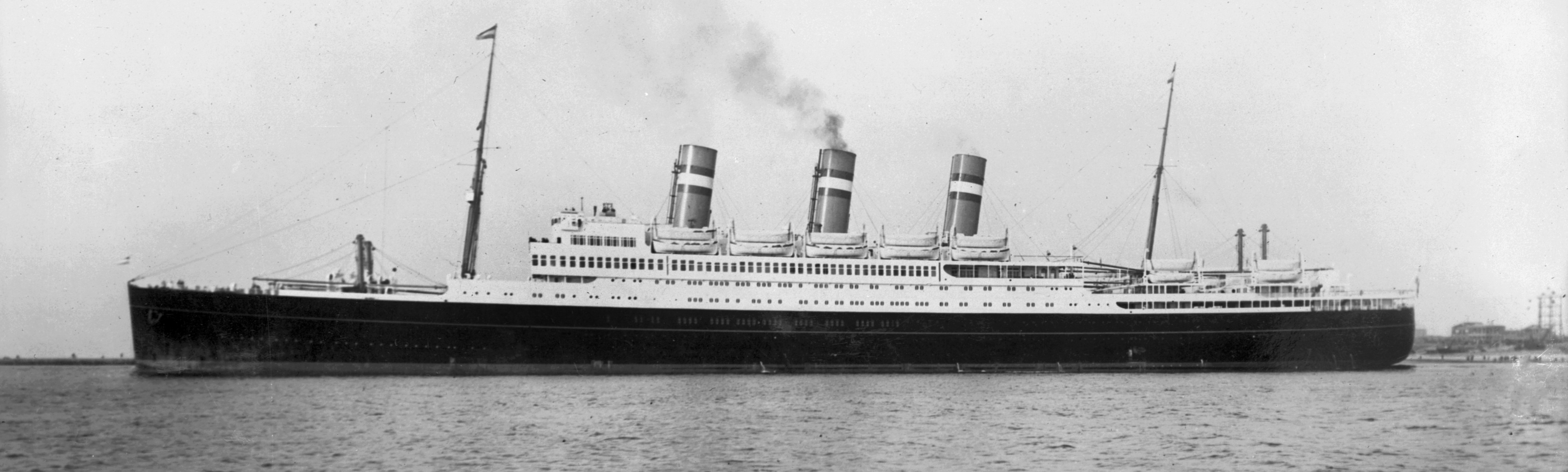
SS Statendam (1929)
Holland America Line · entered service 1929 · Ship Guide
Overview
SS Statendam—Holland America Line’s long-delayed late-interwar flagship—was conceived in the early 1920s and finally completed in 1929, after an unusually protracted build that began at Harland & Wolff (Belfast) and concluded at Wilton’s yard in Schiedam. That timeline matters: the ship was designed for one passenger-shipping world (heavy migration traffic) and delivered into another (post-quota, post-boom travel), which shaped both her accommodations and her marketing.
In service, Statendam became a “two-season” ship: scheduled Rotterdam–Hoboken crossings in the main transatlantic season, and winter cruising (often Caribbean) from New York. She is particularly strong for collectors because Holland America produced abundant printed matter—passenger lists, sailing schedules, menus, and cruise brochures—frequently dated and route-specific.
Evidence-first note: Holland America reused the name Statendam across multiple ships. When labeling artifacts, use a disambiguator such as “Statendam (launched 1924, completed 1929)” or include the route/date to anchor the item.
Key Facts
Design & Construction (Context)
Statendam is a useful case study in “design meeting policy.” Her keel was laid in 1921, but U.S. immigration restriction sharply reduced the mass migration market that had long sustained third-class volumes. In the long pause and redesign cycles that followed, Holland America adjusted the ship’s accommodation balance—one reason her build story is as historically meaningful as her voyages.
Technically, she represents the mature turbine-liner mainstream rather than the “speed queen” subset: twin-screw turbine propulsion optimized for reliable schedules and economy. In curatorial writing, that translates into a different documentary emphasis—less Blue Riband rhetoric, more timetables, routes, and the lived experience of a flagship that did both line voyages and winter cruises.
Service History (Summary)
1929: Entry into service. Completed on 3 April 1929, Statendam made her long-delayed maiden voyage on 11 April 1929, taking up Holland America’s Rotterdam–Hoboken route and quickly becoming a central fleet symbol.
Late 1929–1939: Seasonal liner service and winter cruising. In the main season she worked scheduled transatlantic sailings (often via Boulogne, Southampton, and Plymouth). In winter she typically cruised from New York—frequently Caribbean itineraries—creating a rich paper trail: cruise brochures, programmes, entertainment schedules, and themed menus that differ markedly from the “line voyage” material.
1933: Refit and continuing Depression-era operation. Statendam is often described as economical to operate, and she survived the Depression-era slump better than many prestige contemporaries. For artifact dating, “pre-1933” vs “post-1933” is a helpful internal divider when you’re comparing deck plans, cabin categories, and onboard department names.
1939–1940: Wartime lay-up and destruction. After war began in September 1939, the ship carried large numbers of passengers on late-season crossings and was then laid up in Rotterdam from December 1939. During the German invasion in May 1940, fighting and fire in the port left her a burnt-out wreck; the hulk was later scrapped in August 1940.
Interpretive Notes
Statendam collecting is strongest when you treat the ship as a date-and-route problem. Many authentic pieces are easy to anchor because Holland America frequently printed the voyage date, ports of call, and ship name prominently. The risk is name re-use: later “Statendam” ships and modern HAL souvenirs can blur searches and listings.
A practical cataloging split that keeps collections tidy: (1) Line voyage material (Rotterdam–Hoboken) vs (2) Winter cruise material (Caribbean/Mediterranean) vs (3) Late-1939 wartime crossing context. The object types may look similar (menus, programmes), but the content and scarcity differ.
Rotterdam harbor in May 1940: Statendam’s destruction is best understood within the fighting around Rotterdam rather than summarized simply as a liner “bombed in port.” The ship became collateral to an urban and military battle that engulfed the harbor during the German invasion of the Netherlands.
That context changes how loss imagery should be read. Photographs of the burned-out ship document not only the end of a passenger liner but also the destruction of Rotterdam’s waterfront and the collapse of normal commercial shipping under invasion. Prewar cruise and Atlantic-service material belongs to a very different interpretive frame.
The ship’s relatively short prewar career also gives ordinary passenger material unusual value. Schedules, menus, deck plans, and cruise brochures document a HAL flagship that never received the long peacetime life its size and investment suggested. The abrupt 1940 destruction therefore creates a sharp boundary between a modern interwar passenger product and the wartime ruin seen in later photographs.
Explore the wider context: Why Passenger Capacities Change · Migrant Traffic and Tourist Traffic · How to Identify a Refit from a Photograph.
Evidence-first ship guide