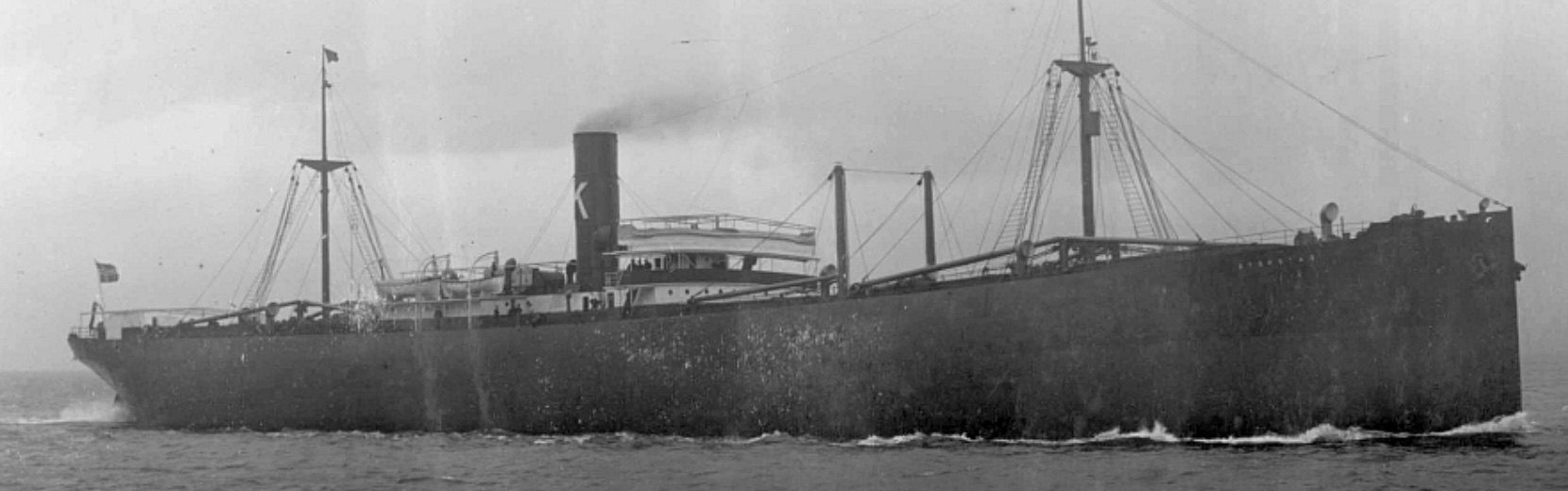
SS Storstad
A. F. Klaveness · 1911 · Ship Guide
Overview
SS Storstad was a Norwegian bulk cargo steamer built by Armstrong, Whitworth & Co. and completed in 1911 for A. F. Klaveness. She was not an ocean liner, but she occupies an unavoidable place in liner history because her collision with RMS Empress of Ireland on 29 May 1914 caused one of the deadliest peacetime passenger-ship disasters of the twentieth century.
The disaster did not end Storstad’s career. She survived the collision, continued trading through the First World War, and was sunk by German submarine U-62 on 8 March 1917 while carrying maize from Buenos Aires to Rotterdam for Belgian relief. Three people died in that final loss.
Key Facts
A Working Cargo Ship
Storstad was designed for bulk cargo rather than passenger prestige. Her documentary footprint before 1914 is consequently very different from that of a liner: port photographs, charter records, cargo documentation, owner correspondence, and register entries are more characteristic than menus or passenger brochures.
This matters because the ship’s later fame can distort the record. Many objects sold under the name Storstad are actually disaster-related press or memorial items created because of Empress of Ireland, not material produced aboard the Norwegian freighter itself.
The Collision of 29 May 1914
In dense fog on the St. Lawrence River near Father Point, Storstad and Empress of Ireland collided in the early hours of 29 May 1914. The freighter’s bow penetrated the liner’s starboard side. Empress of Ireland flooded rapidly, rolled over, and sank within minutes.
The Canadian inquiry opened at Quebec on 16 June under Lord Mersey. Its record is especially valuable because it preserves testimony from both sides rather than reducing the event to later retelling. The two ships’ officers gave sharply conflicting accounts of maneuvers in the fog.
Inquiry, Responsibility, and Evidence
The official commission examined not only collision responsibility but also why Empress of Ireland sank so quickly, whether lifesaving arrangements were adequate, and how rescue efforts unfolded. The report became the foundation for much later interpretation.
For evidence-first writing, the inquiry should be distinguished from later simplified narratives. The disaster generated strong blame language almost immediately, but a curator should identify whether a claim comes from sworn testimony, the commission’s findings, civil litigation, newspaper coverage, or later historical interpretation.
Storstad Survives the Disaster
Storstad remained afloat after the collision despite severe bow damage. That survival produced some of the most recognizable images associated with the event: photographs showing the crushed and twisted bow after she reached port.
Those images are useful identification evidence, but they also encourage a common mistake—treating the freighter’s history as if it ended in May 1914. It did not. The ship returned to service and continued trading for nearly three more years.
The 1917 Sinking
On 8 March 1917, Storstad was on a voyage from Buenos Aires to Rotterdam carrying maize associated with Belgian relief. German submarine U-62, commanded by Ernst Hashagen, attacked the ship about forty-five miles west-southwest of Fastnet.
Norwegian memorial records and U-boat documentation agree that the vessel was shelled and torpedoed and that three people were killed. The final-loss record therefore belongs to the humanitarian-supply and unrestricted-submarine-warfare history of the First World War, not to the 1914 collision narrative.
Why Storstad Matters
Storstad is a “context ship” rather than a passenger liner, but she is indispensable to understanding Empress of Ireland. Her importance lies in the documentary relationship between the two vessels and in the danger of allowing one catastrophic encounter to erase the rest of a working ship’s career.
For collections, classify the evidence first: cargo-ship record, collision inquiry, press photograph, memorial material, litigation, or 1917 war-loss documentation. Only then should it be folded into the broader Empress of Ireland story.
Evidence-first ship guideSources (Selected)
Use these as a starting index. For publish-ready details, corroborate with contemporary newspapers, inquiry documents, and registry data where possible.