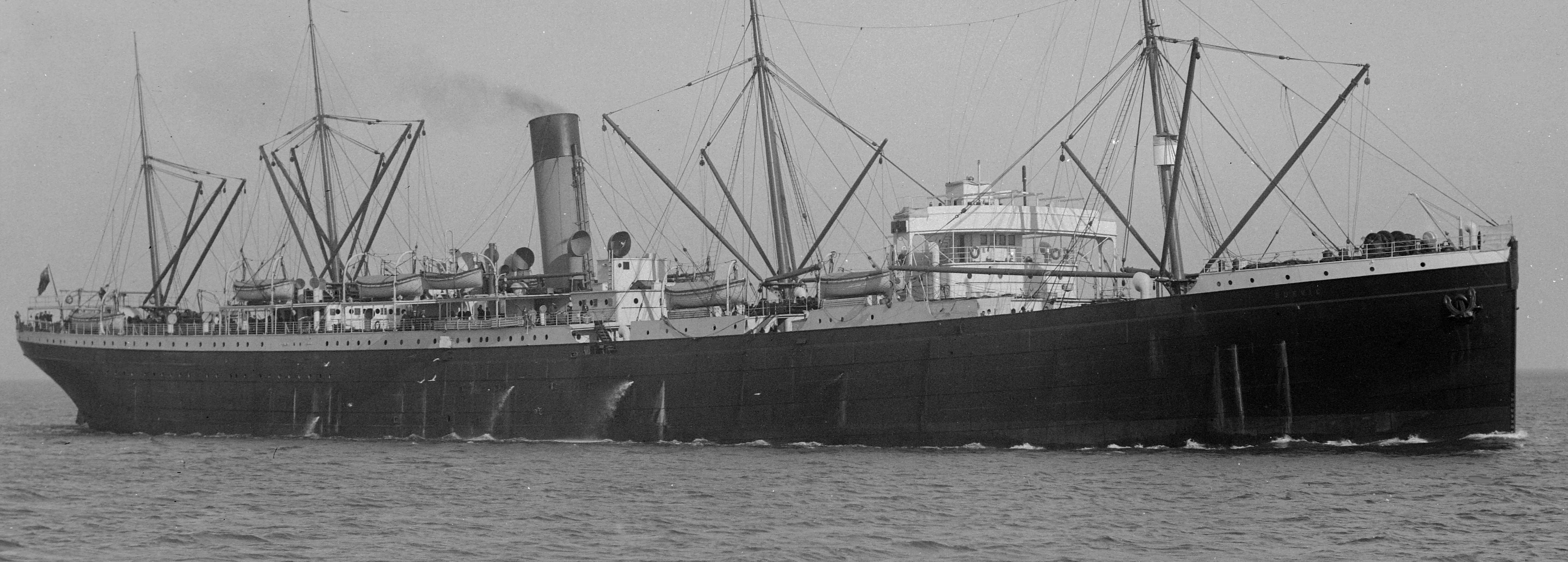
SS Suevic
White Star Line · entered service 1901 · Ship Guide
Overview
SS Suevic was the fifth and final Jubilee-class White Star Australia liner. Harland & Wolff launched her on 8 December 1900 and completed her in March 1901 for the Liverpool–Cape Town–Australia service.
She is remembered above all for the 1907 Lizard grounding, but that event belongs inside a longer history. Suevic was first a working Australia-route cargo-passenger liner, then the subject of an extraordinary rescue and reconstruction, and later a Norwegian factory ship under another name.
Key Facts
Australia-Service Context
Before the wreck, Suevic belonged to the same commercial system as Medic, Persic and Runic: passengers were carried alongside large quantities of refrigerated and general cargo on a long route where reliability and capacity mattered more than express speed. That context should remain visible because the spectacular salvage story can otherwise overwhelm the ship's ordinary working identity.
The 1907 Grounding
Royal Museums Greenwich records that Suevic, returning from Melbourne with 382 passengers and 141 crew, grounded at full speed on 17 March 1907 after a navigational error near the Lizard. Lifeboats from four stations removed passengers and crew over roughly sixteen hours.
The rescue was remarkable not simply because of the number of people involved, but because the ship remained firmly embedded on the reef while a large-scale transfer was carried out in difficult coastal conditions. The absence of passenger loss became one of the defining elements of the incident.
A Ship Cut in Two
When the forward section could not be freed, salvage contractors separated the surviving afterbody from the wrecked bow using small explosive charges on 2 April. The afterbody was then brought to Southampton. Harland & Wolff constructed a replacement bow in Belfast, and the new section was joined to the original surviving hull.
This was not a cosmetic repair. The rebuilt ship literally incorporated a newly constructed forward body attached to the original after section, making the event unusually important for photographic and object provenance.
Return to Service
The most striking part of the story is that the 1907 disaster did not end Suevic's liner career. After reconstruction she returned to the Australia trade and continued working for roughly another two decades. Post-1907 passenger material therefore belongs to a ship that was operationally continuous but structurally altered.
Later Career
Sold in 1928, the vessel became the Norwegian factory ship Skytteren. This industrial conversion created another clear provenance break. In 1942, during the Second World War, she was scuttled to prevent capture.
Interpretive Notes
Pre-1907 and post-reconstruction photographs can document physically different forward sections of the same ship. The wreck, salvage and rebuilt vessel should therefore be treated as a meaningful structural provenance break rather than as a single undifferentiated photographic identity.
Likewise, Australia-service White Star material and later Skytteren material belong to different operational worlds. The hull history is continuous, but the ship's purpose, appearance and documentary context changed substantially.
Collecting & Attribution Context
Suevic is unusually demanding to catalog because the ship's physical fabric changed dramatically while the name and service continued. A pre-grounding photograph and a later White Star photograph may both be correctly labeled Suevic, yet they do not show an identical forward hull. When a photograph can be dated closely enough, the 1907 reconstruction becomes part of the description rather than merely background history.
Ephemera also needs phase-specific handling. Passenger and route material should be read within the Australia service; salvage photographs and engineering material belong to the 1907 wreck-and-reconstruction episode; Norwegian factory-ship records belong to the later Skytteren identity. Keeping those categories distinct prevents the dramatic wreck from swallowing the ship's commercial career.
Why the Reconstruction Matters
The salvage is sometimes summarized as though Suevic were simply repaired after grounding. That language understates what occurred. The afterbody was saved, a new bow was separately constructed, and the two were joined into a vessel that then returned to regular service. For provenance work, this is a rare case in which a single named liner contains a clearly identifiable structural before-and-after boundary.
The return to service is equally important. If the ship had been broken up after the grounding, the episode would be a wreck story. Because she instead resumed the Australia trade for years, the event became part of the operational history of a continuing liner. That is why both the ordinary route context and the spectacular salvage deserve full treatment.
The case also demonstrates why a ship guide should preserve ordinary service history around a famous incident. Without the Australia-route background, the grounding becomes an isolated feat of rescue and engineering. With that background restored, the salvage can be understood for what it really accomplished: the preservation of a commercially useful liner so that she could resume the work for which White Star had built her.
Evidence-first ship guide