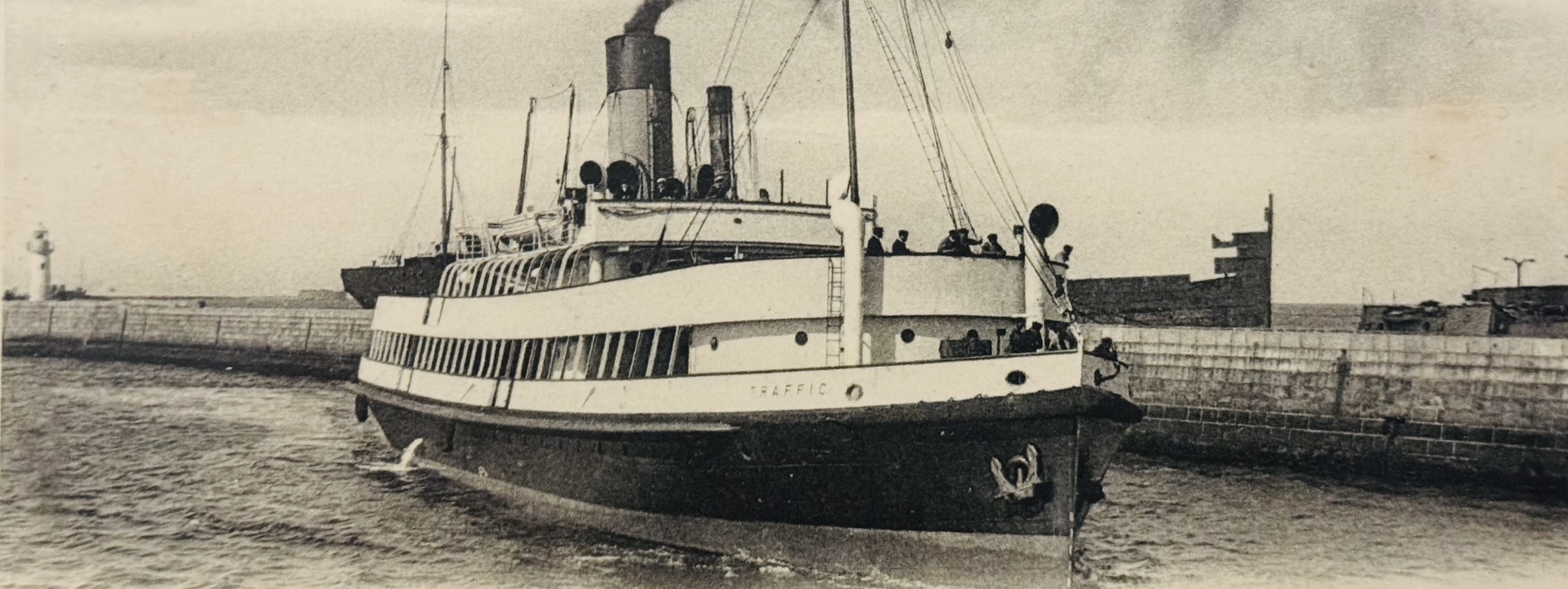
SS Traffic
White Star Line · 1911 · Ship Guide
Overview
SS Traffic was a White Star Line tender built to serve the port of Cherbourg, France. Constructed alongside her larger near-sister Nomadic, she was designed to ferry third-class passengers, baggage, and mail between shore facilities and White Star’s great transatlantic liners—including Olympic and Titanic.
Although small compared with the ocean liners she served, Traffic was an essential operational component of the White Star system—part of the logistical chain that made large liner calls possible at non-berthing ports.
Key Facts
Design & Role
Unlike Nomadic, which handled first- and second-class transfers, Traffic primarily carried third-class passengers and baggage. Her interior arrangements were accordingly simpler, though still structured for efficient transfer in a high-traffic harbor.
The existence of both vessels demonstrates how meticulously White Star engineered the passenger experience—segregating classes even during port transfer.
Service History
In prewar years, Traffic operated routinely at Cherbourg, servicing Olympic-class departures and other White Star calls. During World War I she was requisitioned for auxiliary duties. After returning to civilian work in the interwar period, she continued harbor service under French ownership.
In 1941, during the Second World War, Traffic was reportedly sunk following a collision. As with many auxiliary vessels of the era, precise documentation varies slightly across secondary sources.
Collecting Notes (Evidence-First)
Authentic Traffic-specific material is significantly rarer than Nomadic material, largely because she did not survive. Many items described as “Traffic” are in fact generic White Star or Cherbourg ephemera.
When evaluating attribution, look for:
- Ship-specific naming (not just “White Star Line”).
- Photographic evidence linking the object to Cherbourg tender service.
- Period documentation or institutional provenance.
Interpretive Notes
Together, Nomadic and Traffic illustrate the hidden infrastructure of ocean liner travel. They remind collectors and historians alike that the “liner experience” extended beyond the main ship—into port tenders, dockside systems, and logistical choreography rarely foregrounded in popular narratives.
Evidence-first ship guideSources (Selected)
- Ocean Liner Curator — Master Sources
- Harland & Wolff builder records (cross-reference for exact yard data)
- Nomadic Preservation Trust — contextual reference
- Period White Star Line service records (verify tender assignments)