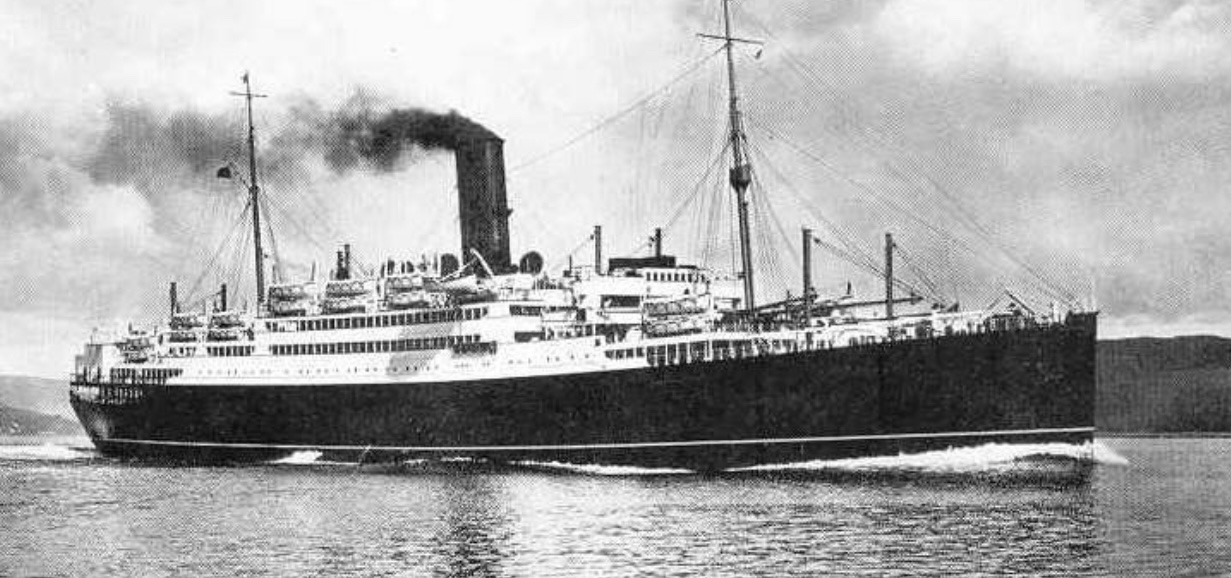
SS Tuscania (1921)
Anchor Line (Cunard subsidiary) · launched 1921 · Ship Guide
Overview
SS Tuscania of 1921 was Anchor Line’s postwar replacement for the earlier Tuscania lost in 1918. Launched at Fairfield’s Govan yard on 4 October 1921 and entering service in September 1922, she became a durable North Atlantic and Mediterranean liner whose identity changed repeatedly over nearly four decades.
Her naming sequence is especially important: Tuscania in Anchor service, Nea Hellas from 1939, a wartime return to Tuscania from 1941 to 1947, restoration of Nea Hellas after the war, and finally New York from 1955.
Key Facts
Postwar Replacement and Migration Traffic
The ship was built after Anchor Line had lost significant tonnage during the First World War. Her large third-class capacity reflects a commercial model still heavily dependent on migration and lower-fare Atlantic traffic even as immigration law and economic conditions were changing.
The ship was originally associated with Mediterranean–New York planning, but her actual early career centered on Glasgow–New York service with route variations and Mediterranean voyages.
Cunard Charter, 1926–1931
In May 1926, Tuscania was chartered to Cunard and repainted in Cunard colors for London–New York service via Southampton and Le Havre. Her accommodation was altered during the charter period as class terminology and passenger demand changed.
This is an important collecting trap: a Cunard-branded document can belong to the same Anchor Line hull without representing a transfer of ownership.
Nea Hellas and Greek Migration
Sold to Greek interests in 1939, the ship arrived at Piraeus in March and became Nea Hellas. She entered Piraeus–New York service that May and became part of a new migration story linking Greece with the United States.
Material from this phase should be cataloged under Nea Hellas, not merely as “later Tuscania,” because the name change reflects a genuinely different operator, route, and passenger community.
War and Postwar Reuse
During the Second World War the ship was taken into Allied troop transport use and again carried the name Tuscania. After wartime service she resumed the Nea Hellas identity in 1947 and returned to civilian passenger work.
In 1955 she was renamed New York and later worked the Bremen–New York route before retirement. That final phase adds yet another identity to a hull already represented in Anchor, Cunard, Greek, and wartime documentation.
Changing Class Structures
The ship’s accommodation changed repeatedly as passenger markets evolved. The large as-built third-class capacity belonged to the early 1920s migration economy, while the Cunard charter years brought cabin/tourist-class reconfigurations better suited to a different commercial market.
That means capacity figures are not timeless specifications. A deck plan or brochure should be tied to a year before using it to describe the ship generally, especially across the 1926–31 Cunard period and the later Greek service.
Collecting Across Four Names
This hull generated one of the more confusing paper trails in the archive because the same ship appears as Tuscania, Nea Hellas, wartime Tuscania again, restored Nea Hellas, and finally New York. Those changes were not decorative renamings; each corresponded to a different operator or service context.
For object attribution, funnel colors, company crest, route, language, and printed name should all be treated as primary evidence. The 1914-built Tuscania lost in 1918 is a separate ship entirely and remains the most common source of marketplace confusion.
Why Tuscania Matters
The 1921 Tuscania matters because continuity, not catastrophe, defines her career. The same ship served migration systems before and after the Second World War under several names and corporate presentations.
For attribution, ship name, operator, route, and year must be used together. A postcard or passenger list marked Tuscania may belong to Anchor Line or wartime troop service, while Nea Hellas and New York document later Greek and transatlantic phases of the same hull.
Interpretive Notes
The naming sequence is essential to provenance: Tuscania, Nea Hellas, the wartime return to Tuscania, restored Nea Hellas, and finally New York should be treated as dated phases of one hull.
This ship must be separated from the earlier Tuscania lost in 1918: the 1921 identifier is important whenever context does not make the vessel unmistakable.
Evidence-first ship guideSources (Selected)
Use these as a starting index and corroborate publish-ready details (dimensions by measurement standard, passenger totals by era, charter specifics, renaming chronology) with institutional records or dated registers where possible.