What passengers likely noticed first
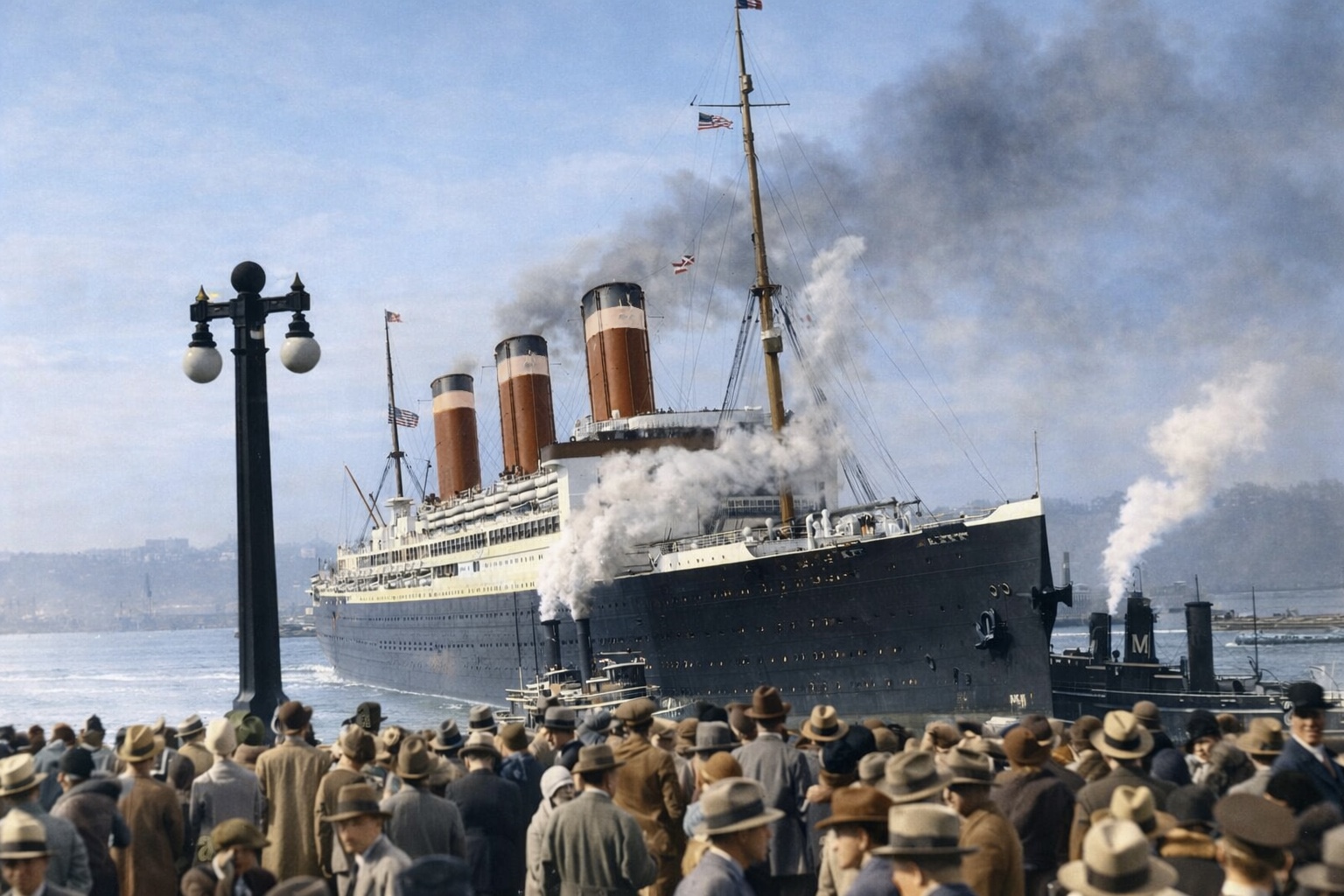
Height above the dock, the density of movement, and the sense that this was not merely transport but a carefully managed operation on a very large scale.
A curator-minded reconstruction of a typical Atlantic crossing aboard SS Leviathan: how passengers likely boarded, settled in, dined, moved through the ship, and experienced the rhythm of life at sea.
This page does not attempt to invent a single passenger’s story. Instead, it reconstructs what a fairly typical crossing aboard Leviathan may have felt like by combining what is generally known about large interwar liner travel with the ship’s scale, public identity, class structure, surviving imagery, and period expectations. Where evidence is stronger, the language is firmer. Where the picture is less precise, the wording remains cautious.
Evidence & interpretation note
Surviving material can show us a great deal about spaces, routines, and passenger hierarchy, but not every moment of a voyage is equally documented. Descriptions here should be read as a careful reconstruction of probable experience rather than an exact transcript of one crossing.
Step one
A voyage aboard Leviathan likely began with scale before it began with comfort. Long before a passenger had settled into a cabin or found the right staircase, the ship would already have announced herself as something massive, crowded, and unmistakably important. At the pier, the experience would probably have felt more logistical than romantic at first: luggage, stewards, queues, shouted directions, farewells, and the practical sorting of passengers into their respective classes. For general background on steward duties, see What Did Ocean Liner Stewards Do?.
For many travelers, the first emotional impression was probably not elegance but magnitude. Leviathan was the kind of ship that could overwhelm orientation. Her size was part of the attraction, but it also meant that movement onto the ship was less like stepping into an intimate hotel and more like entering a self-contained floating system already in motion.
Advertisements might emphasize prestige and modern transatlantic confidence. The actual moment of boarding, however, was likely noisier, busier, and more procedural. A passenger’s experience would have depended heavily on class, luggage, familiarity with travel, and how easily one navigated the ship’s internal geography from the beginning.
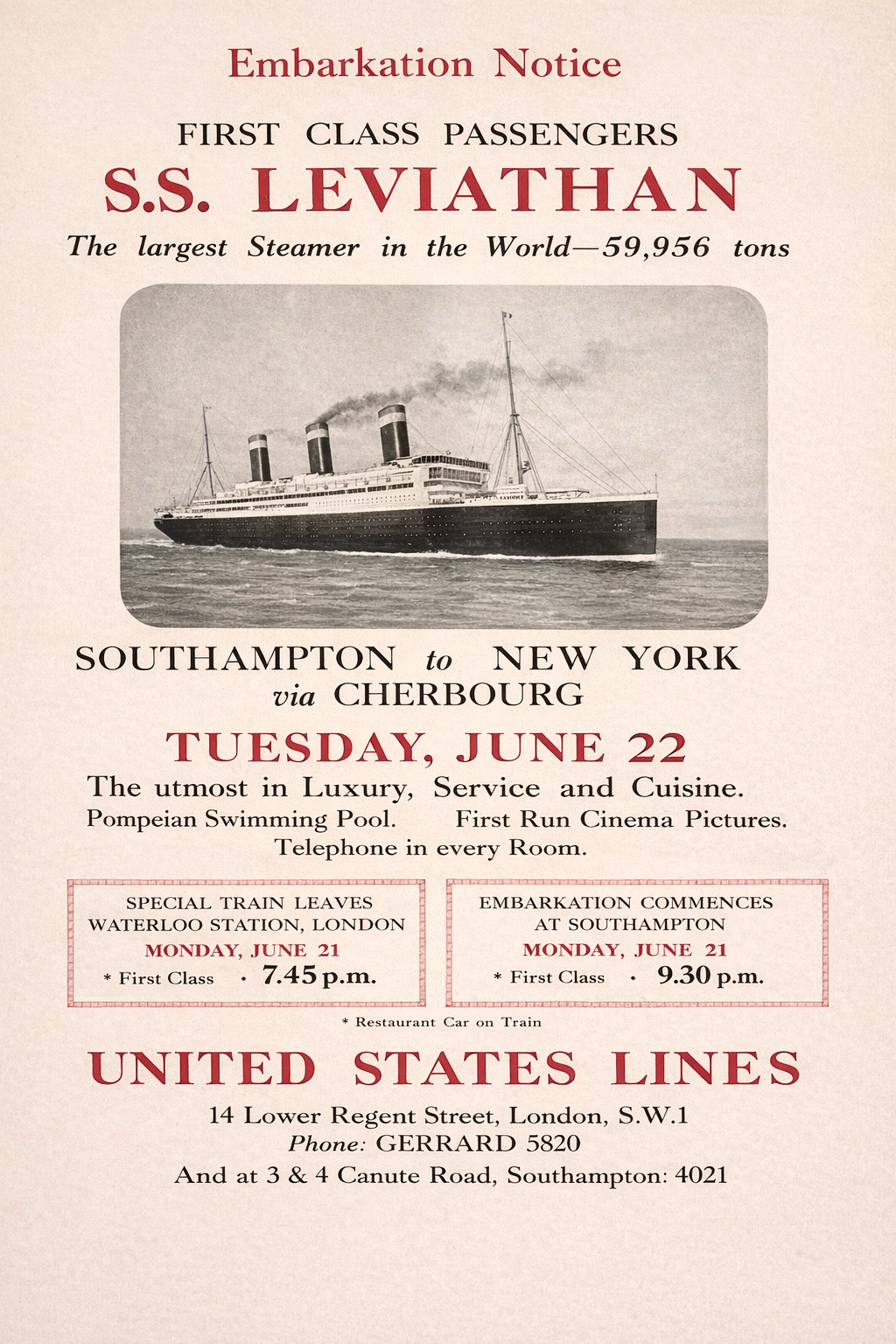
Height above the dock, the density of movement, and the sense that this was not merely transport but a carefully managed operation on a very large scale.
Boarding flow, baggage handling, first routes through the ship, and the quality of first impressions were all shaped by class divisions from the outset.
Crowds, whistles, dockside activity, and last-minute confusion almost certainly competed with any more polished image the company hoped to project.
Step two
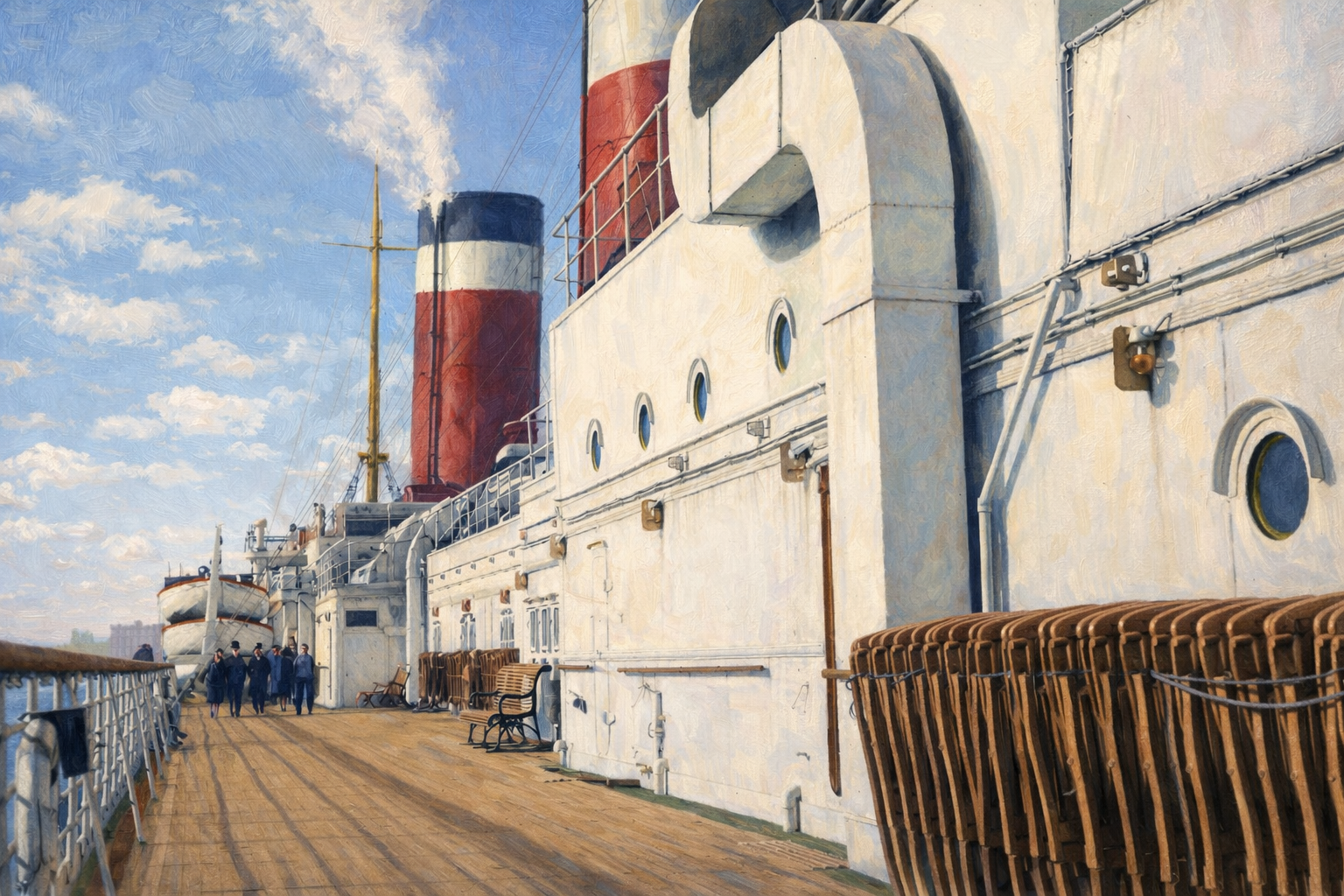
Once aboard, a passenger would begin translating size into experience. On a ship like Leviathan, this probably meant long corridors, multiple stairways, large public rooms, and an early sense that one did not immediately “know” the ship. A first walk through the interiors may have felt impressive precisely because the vessel was so large, yet that same scale could also make the ship feel less intimate than some rivals.
A reconstructed first impression of Leviathan should probably balance grandeur with slight disorientation. She was not simply big in photographs. She was big in the practical sense that a passenger might need time to understand where to eat, where to stroll, where to sit, and how to return to the right accommodation afterward. This is one of the most important distinctions between admiring a famous liner and inhabiting one.
| Feature | Likely impression | Interpretive note |
|---|---|---|
| Scale of public spaces | Impressive, perhaps even overwhelming | The ship’s size was itself part of the attraction, but could reduce intimacy. |
| Orientation | Not immediately intuitive | Very large liners often rewarded familiarity; a first-time passenger may need time to learn the ship. |
| General tone | Busy rather than hushed | A large, heavily used passenger liner could feel active and populous rather than serene at all times. |
| Sense of prestige | Real, but filtered through practicality | Luxury existed, but it was experienced through the realities of a working transatlantic service. |
Step three
Cabin life was where the abstract idea of a crossing became personal. Whatever a brochure promised, this was the point at which a passenger discovered the actual dimensions of privacy, comfort, storage, ventilation, and noise. On a liner, the cabin was both refuge and compromise: a room to sleep, dress, read, and withdraw, but rarely the whole point of the voyage unless one had especially fine accommodations.
A reconstructed account of Leviathan should acknowledge sharp class differences here. The best spaces would have offered real comfort and status. More modest accommodations would likely have been functional rather than memorable, shaped by efficiency, shared routines, and the broader logistics of carrying large numbers of people across the Atlantic.
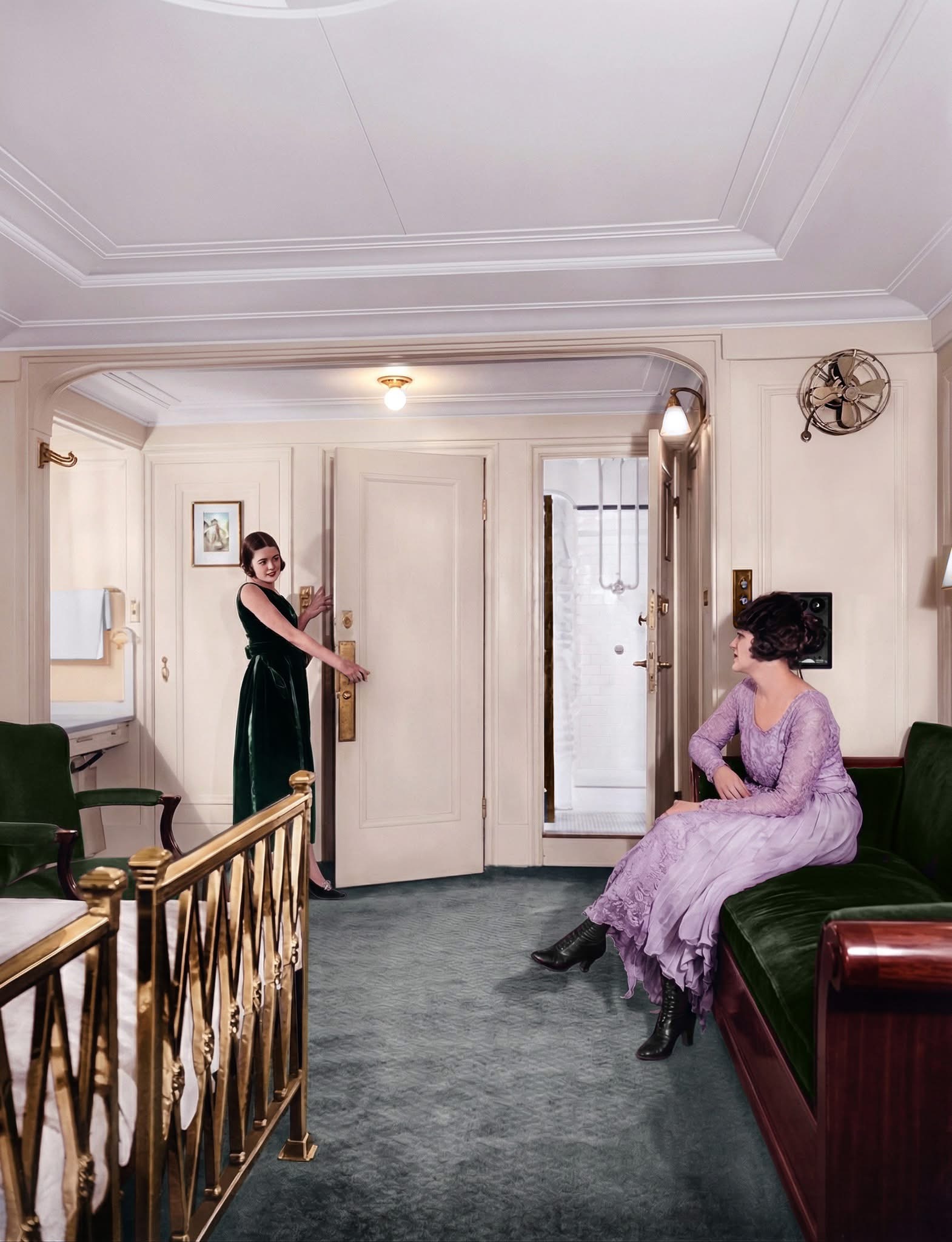
Likely the closest to the idealized image of liner travel: more space, better furnishings, greater privacy, and smoother access to the most prestigious public rooms.
Probably comfortable enough for the crossing, but more practical than sumptuous. The experience was less about grandeur in private rooms and more about access to the voyage itself.
Functional and serviceable rather than luxurious. For many passengers, the importance of the passage outweighed any expectation of refinement.
Curatorial caution
It is easy to let liner nostalgia flatten class distinctions. A reconstructed voyage works better when it preserves the unevenness of real passenger experience instead of imagining a single universal standard of onboard comfort.
Step four
Once the port had fallen away and the first round of settling-in was complete, a crossing aboard Leviathan would begin to take on its own rhythm. Ocean liner travel was rarely a blur of constant novelty. Instead, it was structured by repeated patterns: waking to the motion of the ship, dressing for breakfast, finding a place on deck, moving through meals, pausing for conversation, reading, games, weather, and evening routines.
This repetition was not a flaw. It was part of the experience. The crossing gradually trained passengers into shipboard time, where the horizon changed slowly but the internal life of the vessel remained highly organized. On a large liner, routine could feel reassuring. It could also feel slightly regimented, especially when weather disrupted ordinary habits or when the ship’s sheer population made certain areas busier than expected.
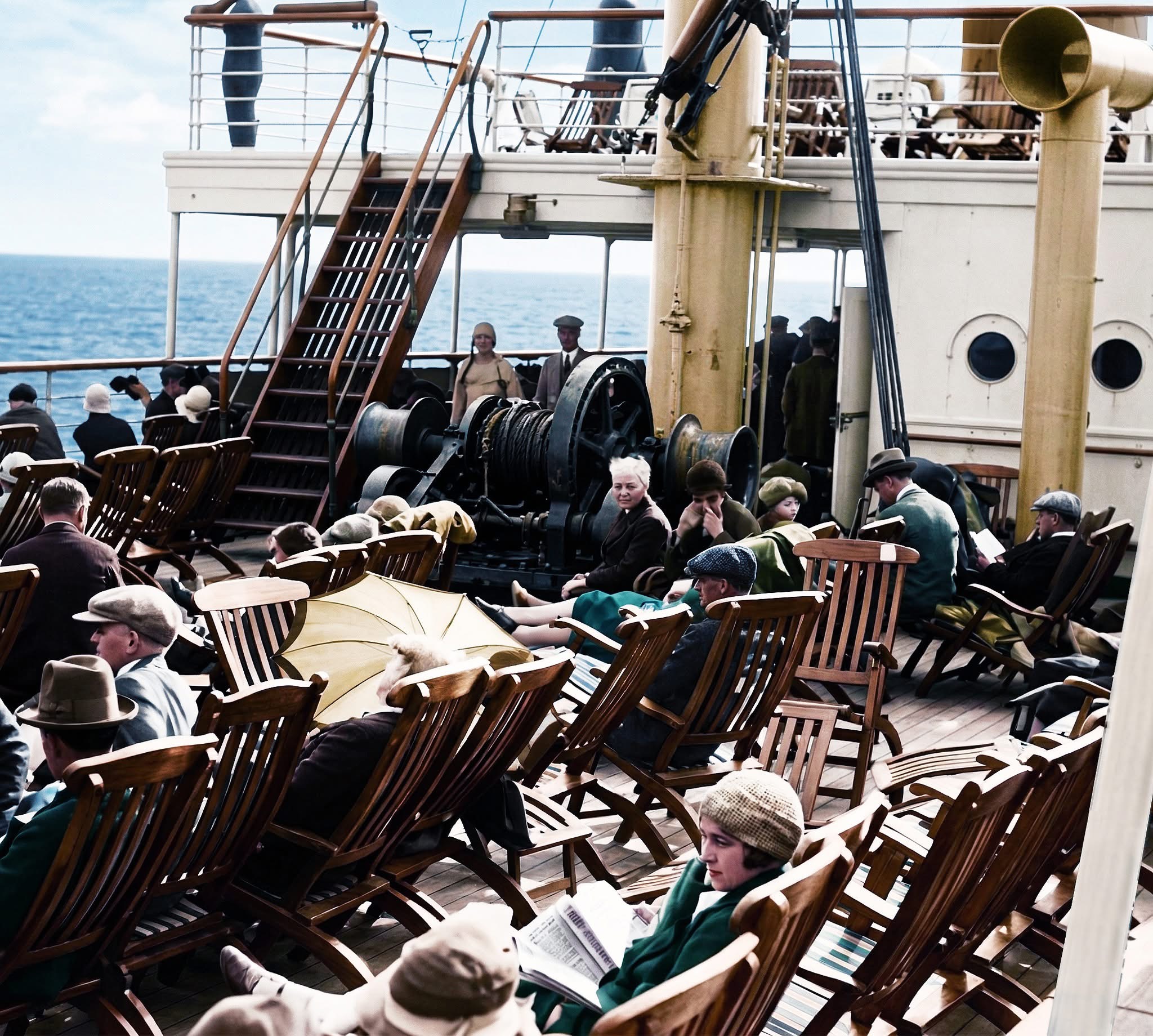
Passengers emerged into the day at different speeds, but breakfast and the first rounds on deck likely established the tone. Weather mattered immediately: a good morning expanded the ship; a rough one narrowed it.
Deck chairs, conversation, shipboard watching, and quiet routines probably formed much of the day’s texture. On a liner, looking outward and looking at other passengers were both part of the entertainment.
The middle of the day often moved between eating, strolling, visiting public rooms, and adapting to the sea itself. A pleasant crossing made the ship feel expansive; a rough one could suddenly compress daily life.
Evenings often carried the strongest sense of form. Lighting, music, dining, and the concentration of passengers into major rooms would have made night the most visibly “liner-like” portion of the day.
Step five
Dining was one of the clearest ways in which a passenger would measure the ship against expectation. Ocean liner advertising encouraged the idea that crossing the Atlantic was not merely transportation but a full social experience, and dining rooms stood near the center of that promise. A large ship like Leviathan could make meals feel impressive simply through scale, staff movement, table arrangements, and the visual choreography of service.
Yet scale could cut both ways. A huge dining room might impress while also feeling less intimate than the most admired spaces on other liners. For some passengers, that size would read as magnificence. For others, it might suggest efficiency first and atmosphere second. A careful reconstruction should leave room for both reactions.
Meals also imposed rhythm. They punctuated the day, gave structure to dress and movement, and acted as repeated social encounters. Even passengers less interested in public display would have felt how strongly shipboard life was organized around collective dining routines.
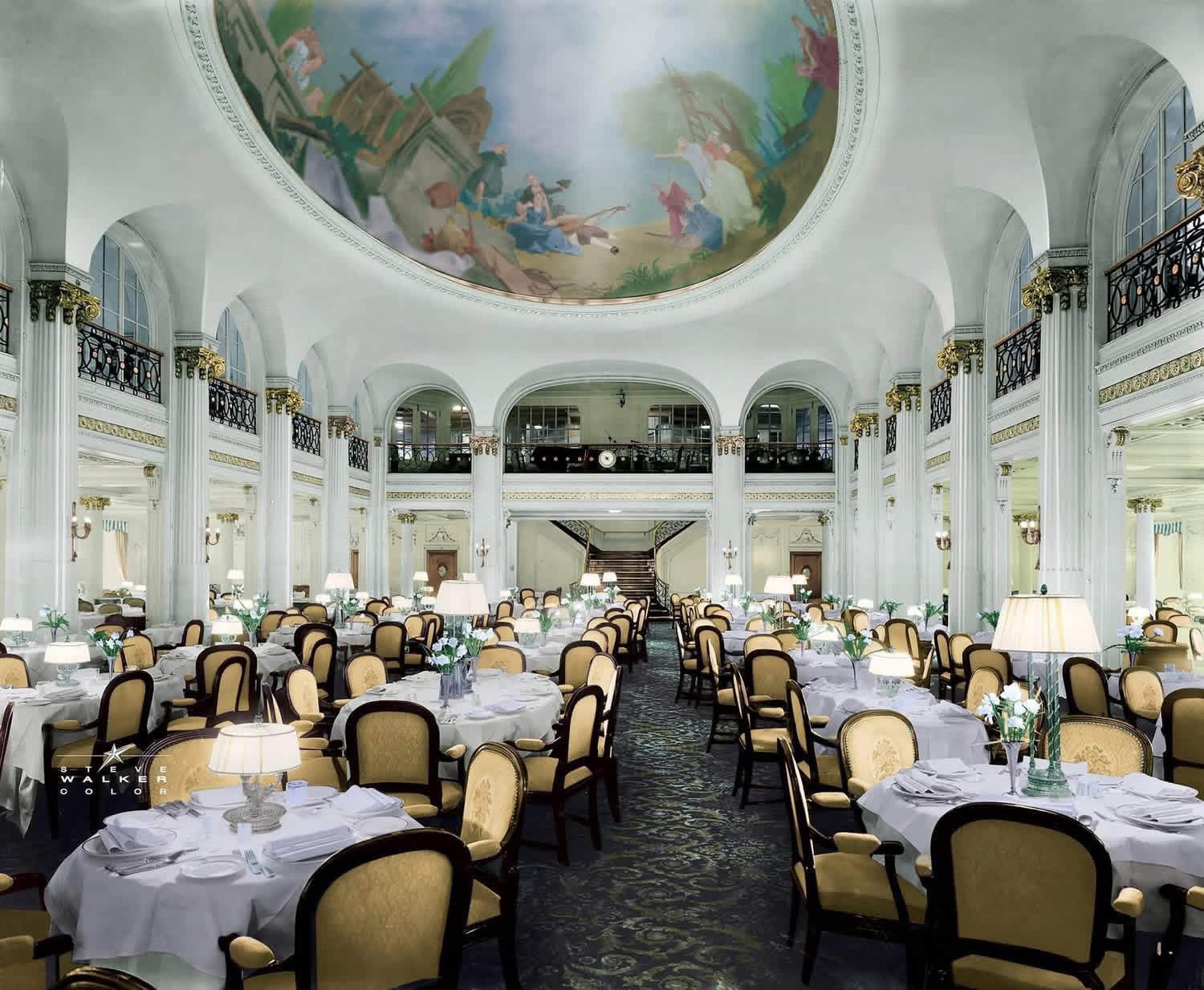
Dining on Leviathan likely emphasized capacity and spectacle as much as intimacy.
Mealtimes helped organize the whole crossing, shaping where passengers moved and when they gathered.
Dining rooms also made class visible, not just through menus and furnishings, but through etiquette, dress, and who occupied which spaces.
Step seven
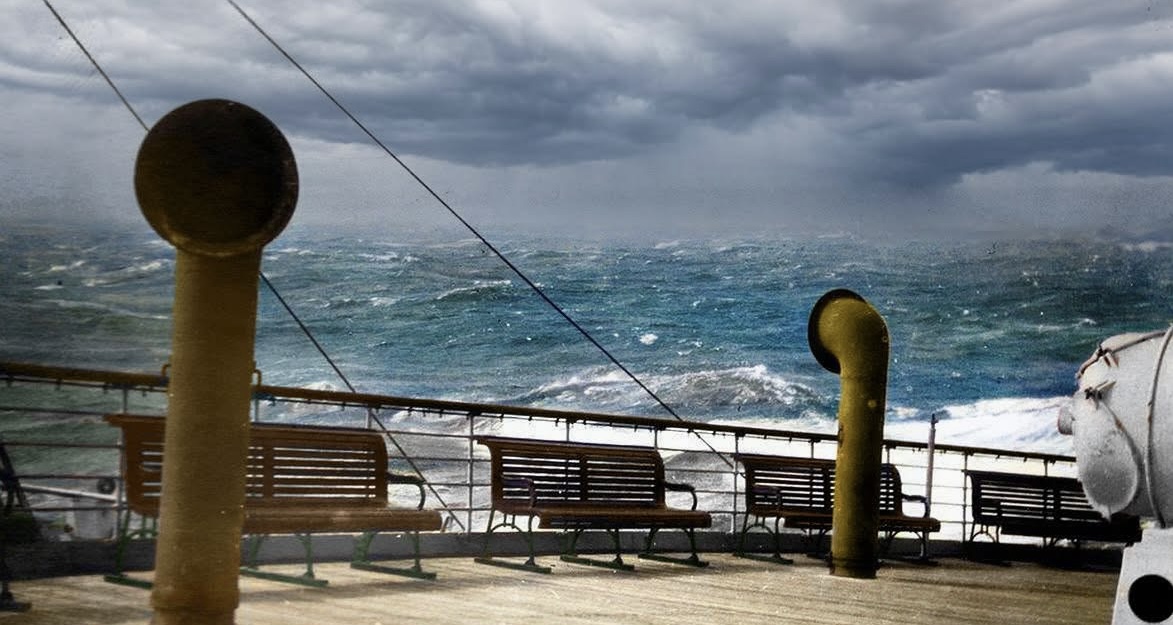
Any reconstructed voyage that remains only elegant is incomplete. The Atlantic imposed itself on all liners, and even a very large ship could not turn the sea into a static backdrop. Some crossings would have been calm enough to preserve the ideal image of deck chairs, measured walks, and expansive observation. Others would have narrowed the passenger world abruptly.
Weather and motion changed everything. They affected appetite, circulation, sociability, confidence, and use of space. A rougher day might reduce deck activity, unsettle passengers, and push more of the voyage inward. Even those not fully incapacitated by the sea might feel the ship differently: more as a working machine, less as a floating drawing room.
This was part of the truth of liner travel. Sound, vibration, smoke, drafts, shifting temperatures, and seasickness all belonged to the real experience. A ship as famous as Leviathan did not escape those realities by virtue of size alone.
Why this section matters
Nostalgic reconstructions often flatten the crossing into a sequence of polished images. In reality, weather and motion may have been among the most memorable parts of the voyage, especially for less experienced travelers.
Step eight
As landfall neared, the crossing would change character again. The ship that had seemed self-contained in mid-ocean now pointed toward disembarkation, schedules, baggage, customs, onward travel, and the practical business of arrival. Even so, final hours aboard a liner often carried a distinct mood: anticipation mixed with fatigue, curiosity mixed with logistical thought.
Passengers who had spent several days adapting to shipboard rhythm would now begin leaving it behind. Cabins were reinterpreted as temporary. Public rooms became places of final observation. Decks drew passengers outward again as coasts, traffic, and harbor approaches restored a sense of geographic context after the abstraction of open sea.
The last impression of Leviathan likely depended on the whole voyage that preceded it. A smooth and impressive crossing might confirm the ship’s reputation. A crowded, rough, or less graceful one might leave a more mixed memory. That tension is part of what makes reconstructing the passenger experience worthwhile.
Method
Broad routines of ocean liner travel, the importance of class, the role of public rooms, the influence of weather, and the way size shaped movement and perception aboard the ship.
The exact emotional tenor of any single voyage, how every room felt in practice on every crossing, and the degree to which all passengers experienced the ship in the same way.
Because it helps translate Leviathan from a famous image or specification into a lived environment shaped by hierarchy, motion, logistics, and routine.
Short answers
No. It is intended as a broad reconstruction of probable experience rather than the retelling of one specific crossing from one surviving source.
Because a stronger page is one that distinguishes between what is well supported and what is interpretive. That keeps the atmosphere immersive without sacrificing credibility.
Almost certainly not. Class, weather, familiarity with travel, personal expectations, and the specific crossing all would have influenced how the ship was remembered.
Closing thought
To reconstruct a voyage aboard SS Leviathan is to move beyond dimensions, tonnage, and publicity images and ask a more human question: what did it actually feel like to inhabit this ship for days at sea? The answer is necessarily partial, but that partialness is part of the work. It reminds us that ocean liners were not just symbols. They were environments people had to learn, endure, enjoy, and remember.
End of the crossing
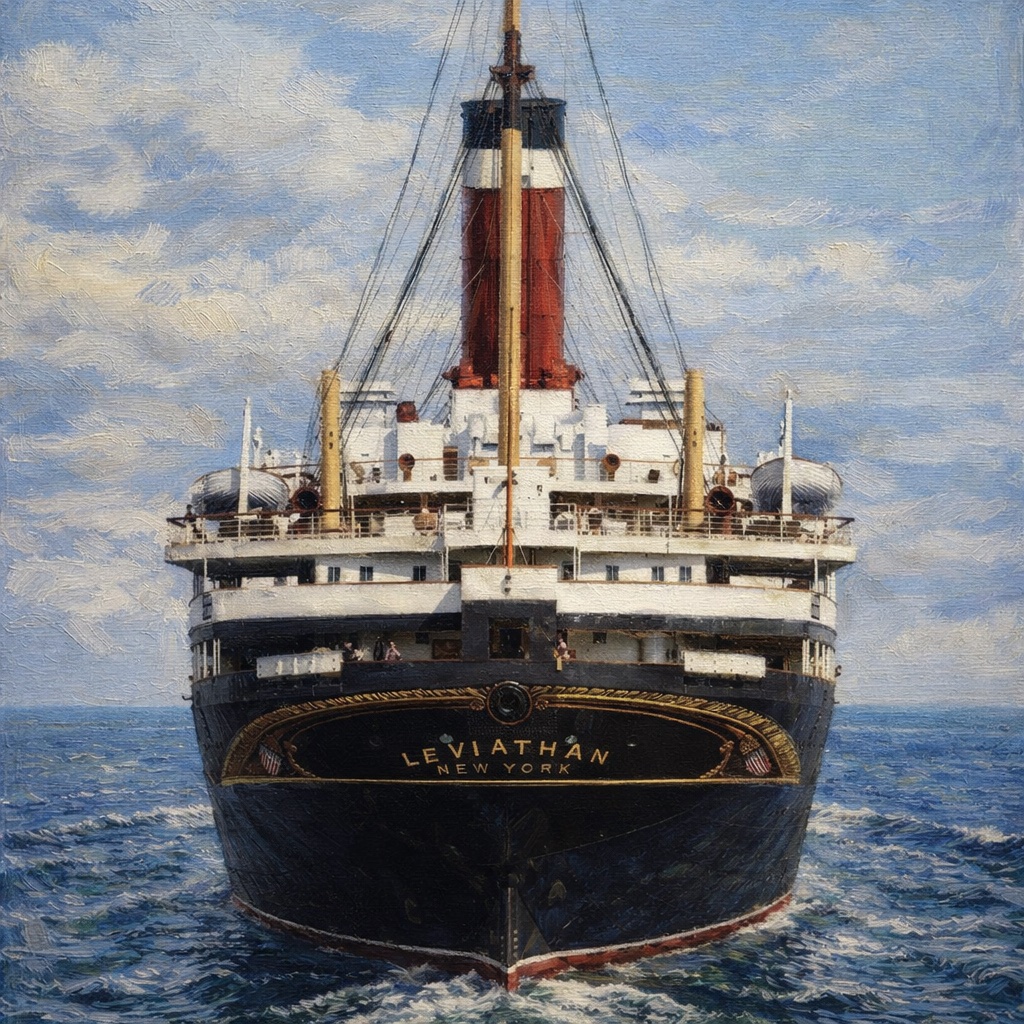
For a few days, Leviathan was not just a famous liner but a complete environment: a system of rooms, routines, weather, movement, and observation. When the voyage ended, passengers stepped back into ordinary geography—but not quite unchanged.
Step six
Social life, observation, and shipboard atmosphere
The social life of a crossing aboard Leviathan would likely have emerged less from a single dramatic event than from accumulation: repeated meetings, overheard conversations, recognized faces, familiar stewards, the same deck circuit at the same hour, and the subtle shipboard awareness of who seemed self-assured and who did not. Ocean liners created temporary societies, and large liners did so at scale.
On such a voyage, passengers were not only traveling across the Atlantic. They were also reading one another. Dress, manners, confidence in public rooms, willingness to circulate, and ease with shipboard routine all shaped the atmosphere. Some passengers would seek visibility. Others would seek corners, quiet, and routine. Both belonged to the experience.
Evening especially likely intensified this social awareness. Public rooms, music, conversation, and the ship’s lighting could momentarily compress a huge vessel into a legible social stage. That did not erase class divisions. It made them easier to see.