Part of the SS United States topic collection
SS United States is often remembered through engineering superlatives: speed, power, aluminum, fire safety, and the Blue Riband. Yet passengers encountered those ambitions through rooms. Her public interiors translated a postwar American flagship into daily experience: meals, concerts, films, dances, cards, conversation, promenade pauses, and the repeated rituals of a transatlantic crossing. The result was not old-world palace decoration, but a controlled modern environment shaped by safety requirements, light materials, clean lines, and an art program that repeatedly returned to American landscape, industry, identity, and movement.
America’s postwar express liner, designed for speed, safety, national prestige, and high-capacity Atlantic service.
Her rooms favored lightness, fire-resistant materials, murals, metalwork, textiles, and clean American modernism over heavy traditional grandeur.
The ship’s interior story is strongest when first class, cabin class, and tourist class are read together rather than separately.
SS United States — Structural Cutaway Views
These cutaway illustrations help visualize the ship as a complete system rather than isolated rooms.
Selection of Passenger Cabins
SS United States’ passenger accommodations reflected the same three-class structure as her public rooms. First class cabins offered the greatest space, finish, and privacy; cabin class provided comfortable mid-tier rooms; and tourist class emphasized efficient, practical Atlantic passage. Seen together, these layouts show the ship as a complete passenger system rather than a first-class showpiece alone.
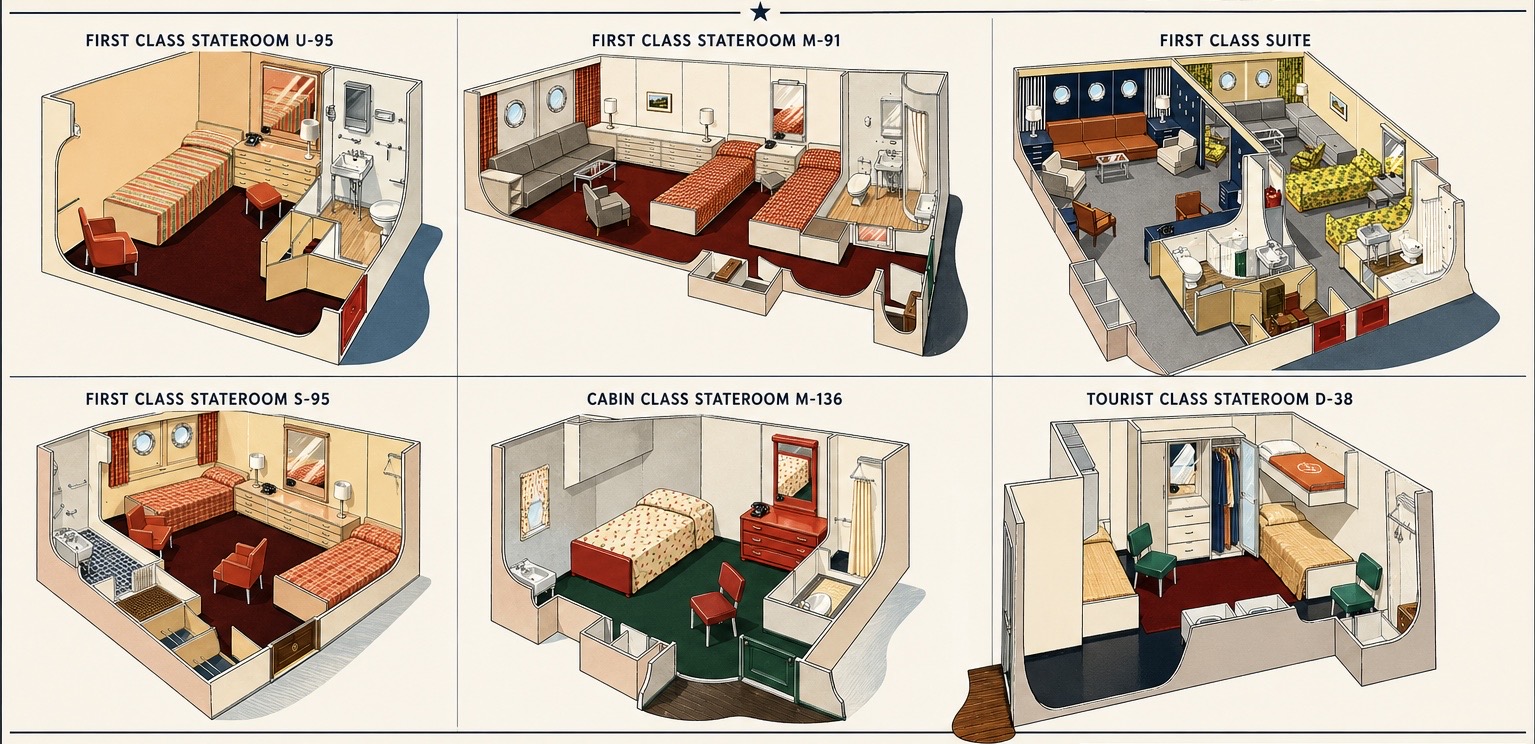
First class accommodations ranged from compact private staterooms to larger suites, often with more generous seating, dressing space, private facilities, and a stronger sense of decorative finish.
Cabin class rooms balanced comfort and economy. They were less expansive than first class spaces, but still offered a respectable, carefully organized setting for middle-tier transatlantic travel.
Tourist class cabins were more compact and practical, designed around efficient sleeping arrangements, storage, and shared voyage routines rather than luxury display.
At a glance: featured public rooms
How to read the interiors of SS United States
The public rooms of SS United States should not be read as attempts to imitate the Edwardian or interwar palace liner. They belong to a different moment. The ship’s interior world was shaped by postwar American confidence, strict fireproofing demands, and the practical discipline of a vessel designed by William Francis Gibbs. This helped produce rooms that could feel polished and elegant while also seeming spare when compared with older European liners.
Luxury through discipline
On SS United States, prestige was often expressed through order, safety, speed, service, and modern finish rather than decorative excess.
America as atmosphere
The ship’s art and decorative themes helped turn national identity into passenger surroundings, giving the vessel a deliberately American interior voice.
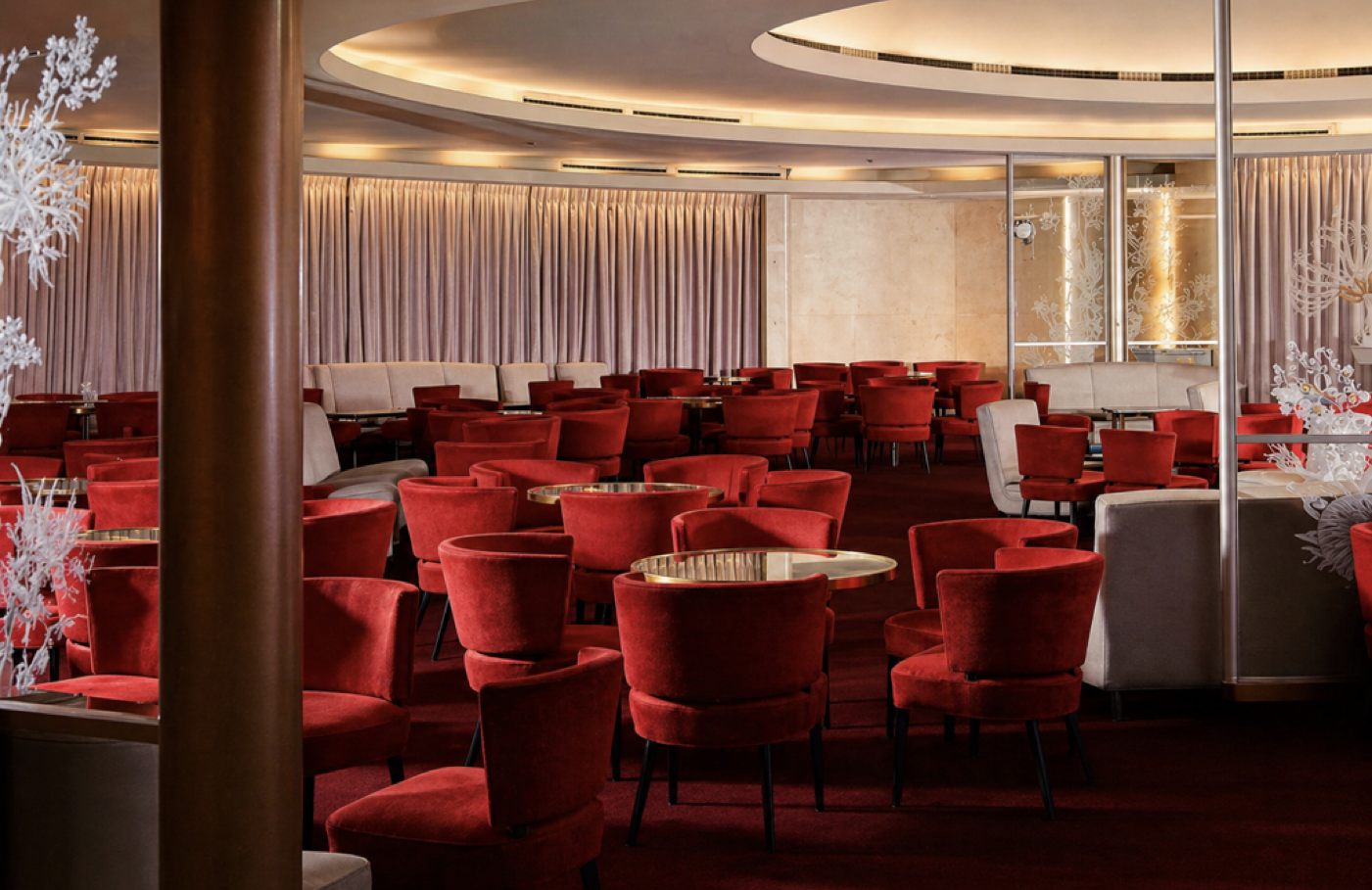
First Class Ballroom
Evening prestigeThe First Class Ballroom was one of the clearest places where SS United States translated prestige into performance. Dancing, orchestral music, formal evenings, receptions, and shipboard ceremonies all depended on spaces that could gather passengers and make the voyage feel socially meaningful. A ballroom did not simply entertain. It announced that the liner was a world with its own calendar, etiquette, and sense of occasion.
On a ship so strongly associated with engineering discipline, this room is especially useful because it reminds us that SS United States was also a hospitality product. The passenger did not only buy speed. The passenger bought entry into a carefully managed social environment.
- Shows first-class luxury as participation rather than display alone.
- Connects the ship to mid-century hotel, dance, and event culture ashore.
- Balances the ship’s technical reputation with a more human social reading.
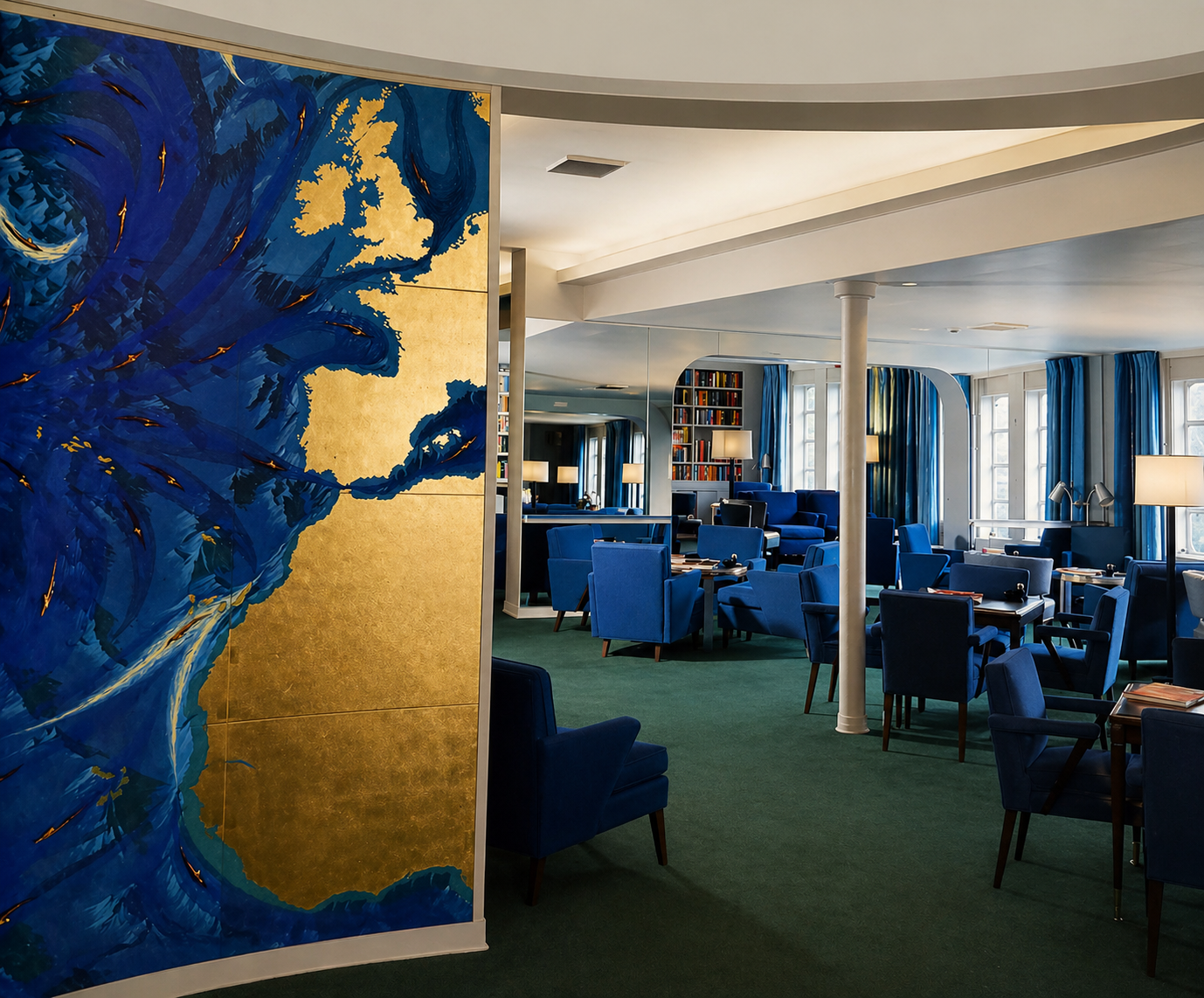
First Class Observation Lounge
View and velocityThe First Class Observation Lounge gave passengers a room in which the ship’s outward motion could be experienced from within. Observation lounges mattered because they made the sea part of the interior program. They turned weather, horizon, landfall, departure, and approach into social experiences.
For SS United States, this was particularly apt. The ship’s identity rested heavily on speed and forward movement. A room organized around view and anticipation helped make that identity visible to passengers in daily use.
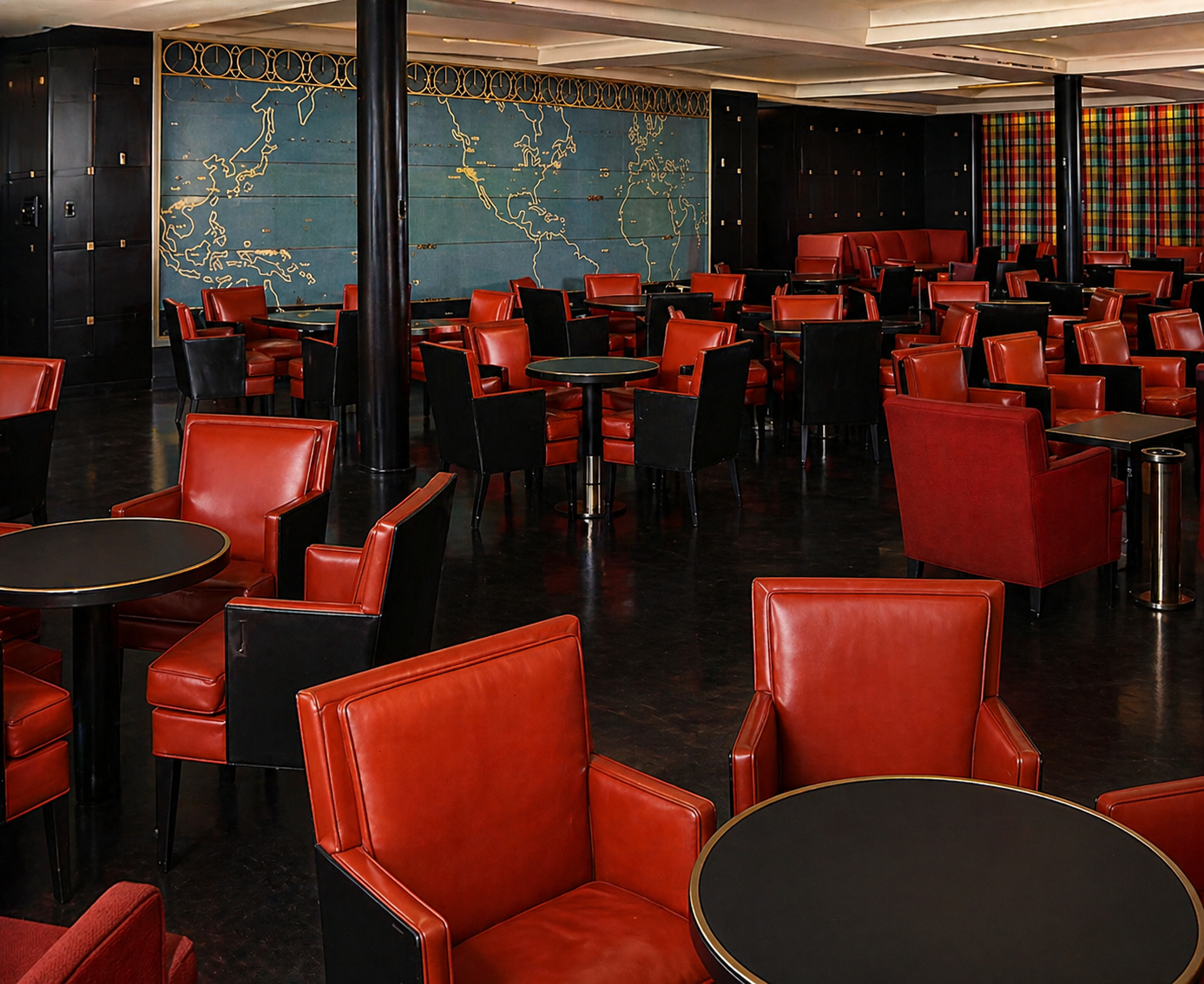
First Class Smoking Room
Club atmosphereThe First Class Smoking Room carried forward one of the most recognizable social types in ocean liner design. Even as SS United States rejected much old-world decoration, the need for a room of lingering, talk, cards, and after-dinner ritual remained. Such spaces were often less about spectacle than atmosphere.
The smoking room also helps explain how tradition survived inside a modern ship. The materials, finishes, and visual language might be updated, but the social function still belonged to a long lineage of liner interiors.
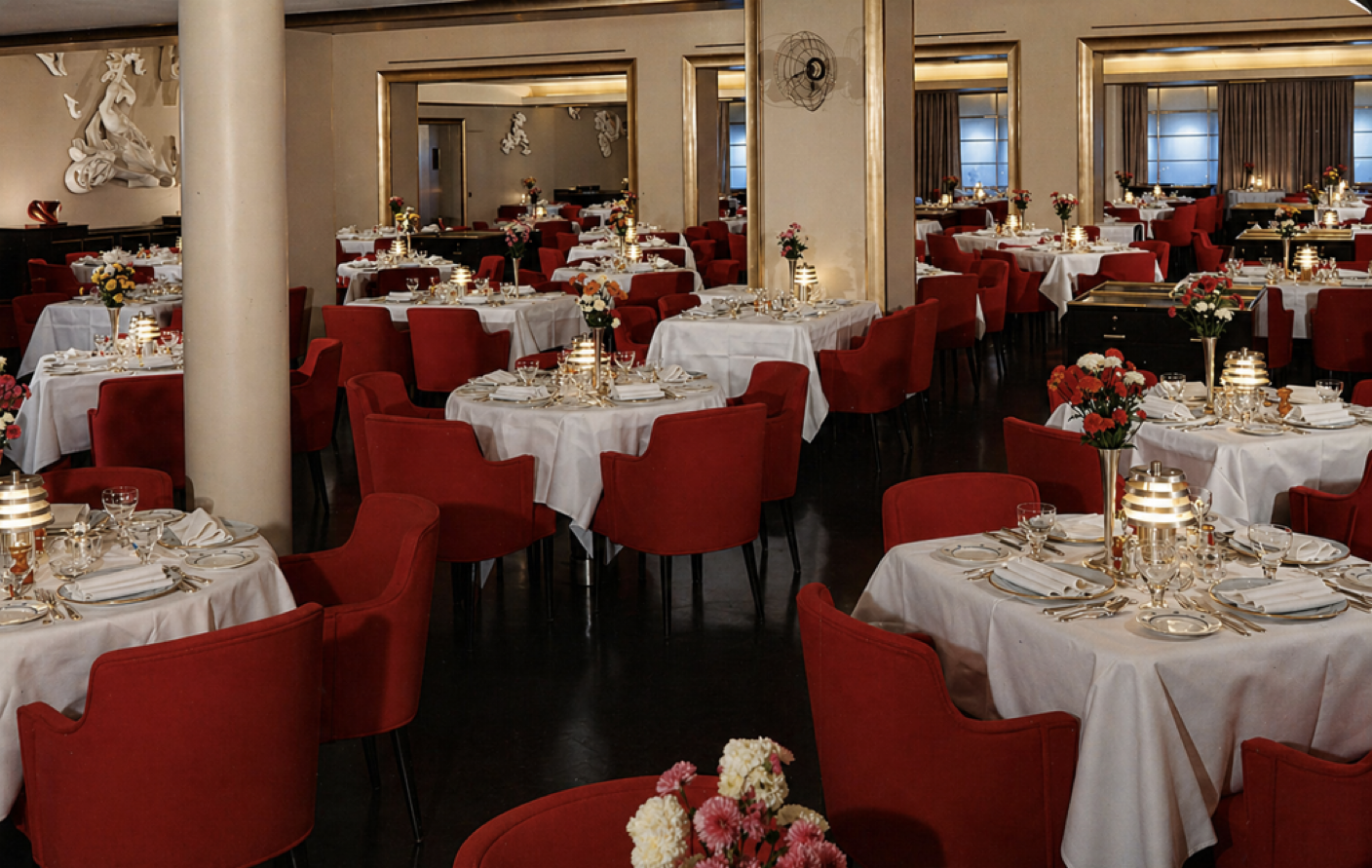
First Class Dining Room
Formal serviceThe First Class Dining Room is essential because dining was one of the voyage’s central rituals. On a fast Atlantic liner, meals gave structure to time at sea. They also gave the company repeated opportunities to perform service, status, and reliability. The room therefore had to do more than look impressive. It had to work, meal after meal, within the constraints of a moving ship.
Read this room as an operating theatre of luxury. It joined design, staff movement, menu culture, passenger expectation, and class hierarchy into one recurring daily event.
- Explains first-class travel as a repeated pattern of service and ceremony.
- Shows how American modern elegance could be organized at large scale.
- Connects public-room design directly to the business of passenger satisfaction.
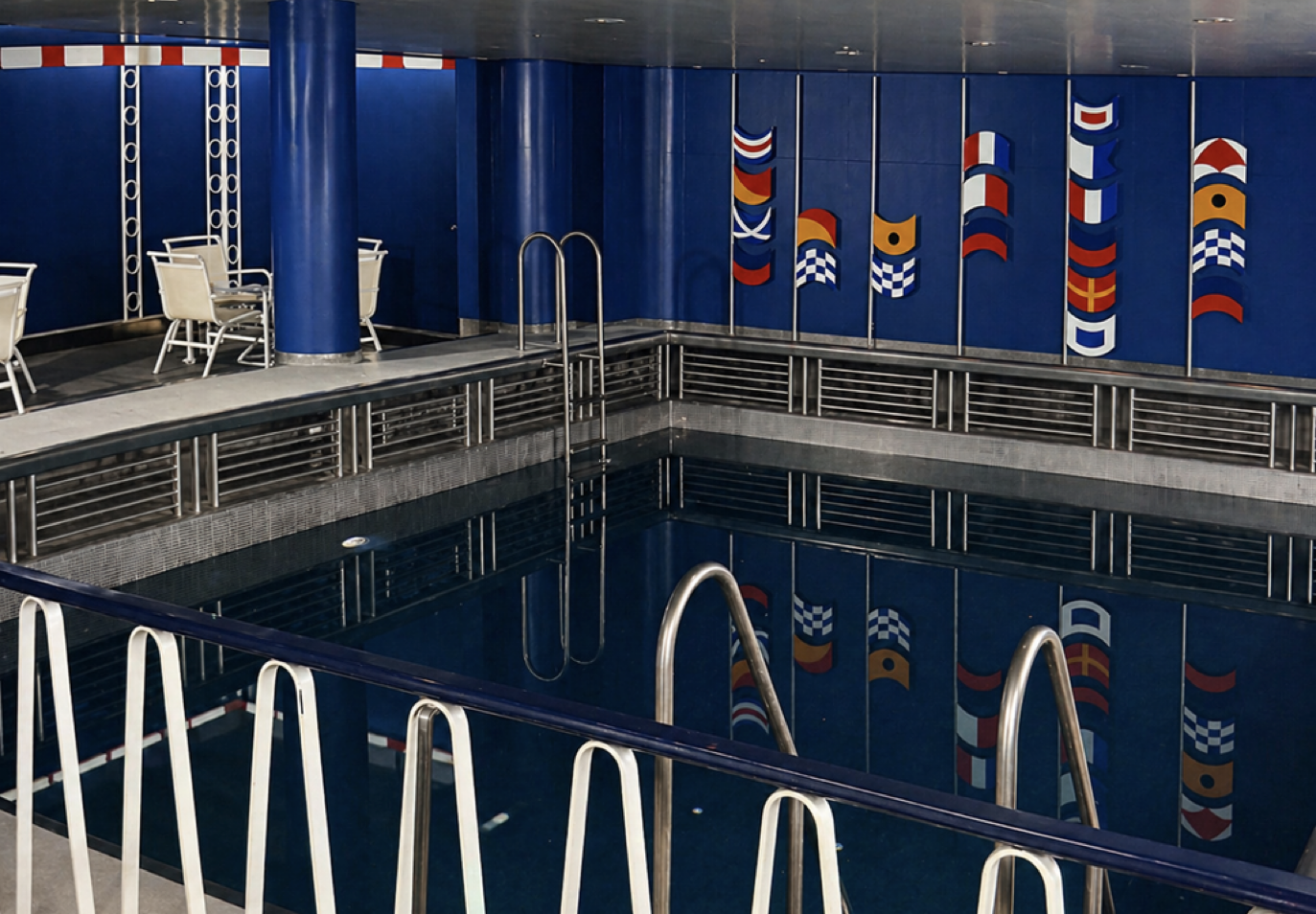
Swimming Pool
Modern amenityThe swimming pool matters because it moves the story beyond dining and formal rooms. By the mid-twentieth century, a great liner was expected to offer recreation, bodily comfort, and a sense of resort-like completeness. A pool helped signal that passengers were not merely being transported: they were living within a managed leisure environment.
For SS United States, the pool also fits the ship’s modernity. It belongs to a world of fitness, recreation, and hotel amenities, helping connect ocean travel to postwar expectations of convenience and comfort.
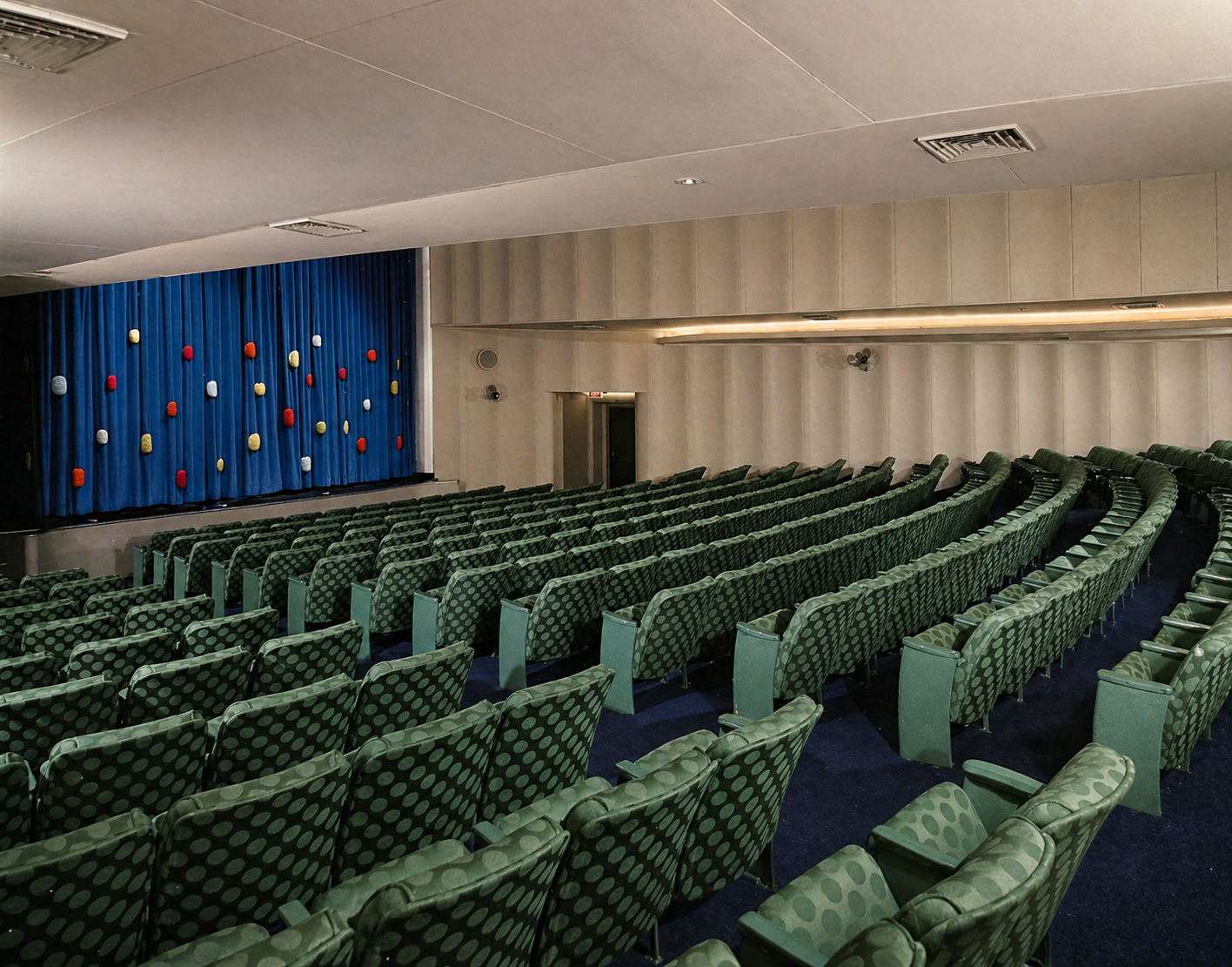
First Class and Cabin Class Theatre
Shared entertainmentThe theatre space connected SS United States to the entertainment habits of the modern passenger. Films, performances, talks, and scheduled amusements turned days at sea into programmed time. This was especially important on a fast liner, where the crossing was shorter than on many older ships but still long enough to require a full social and recreational schedule.
The first-class and cabin-class theatre also helps complicate a simple class narrative. Not every public space should be understood as isolated glamour. Some rooms existed because the liner had to manage passenger time efficiently across more than one tier of accommodation.
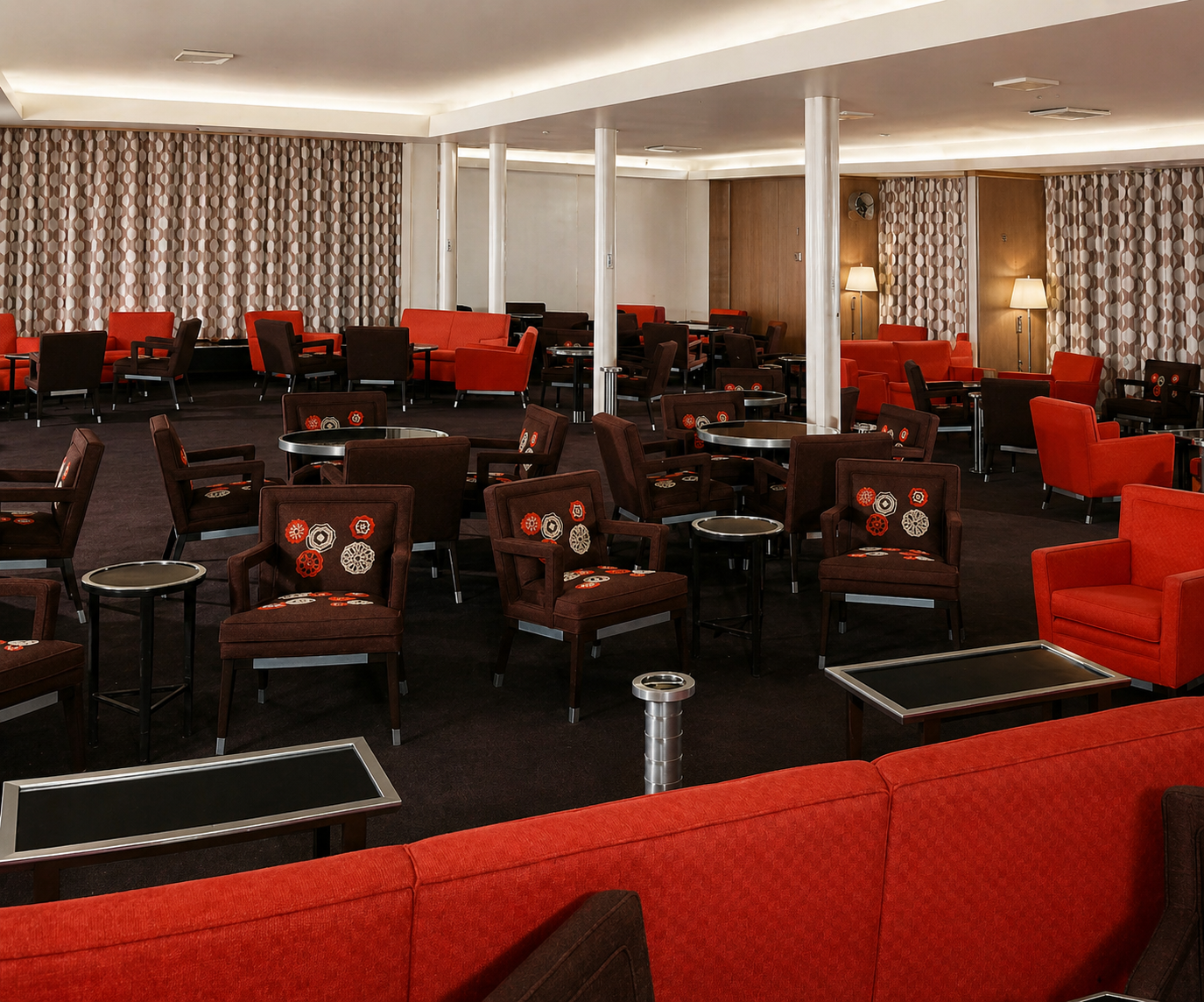
Cabin Class Lounge
Middle-tier dignityThe Cabin Class Lounge is one of the most important rooms for reading SS United States fairly. Cabin class was not simply a lesser version of first class; it was a commercially vital middle tier. Its lounge had to give passengers a sense of comfort, public presence, and dignity while remaining distinct from the ship’s top-tier spaces.
This room helps show how the ship balanced aspiration and affordability. It belonged to passengers who wanted a refined Atlantic crossing without entering the most expensive social world aboard.
- Prevents the interior story from becoming first-class publicity alone.
- Shows the American middle-class dimension of postwar transatlantic travel.
- Reveals how class separation could still include substantial comfort and design care.
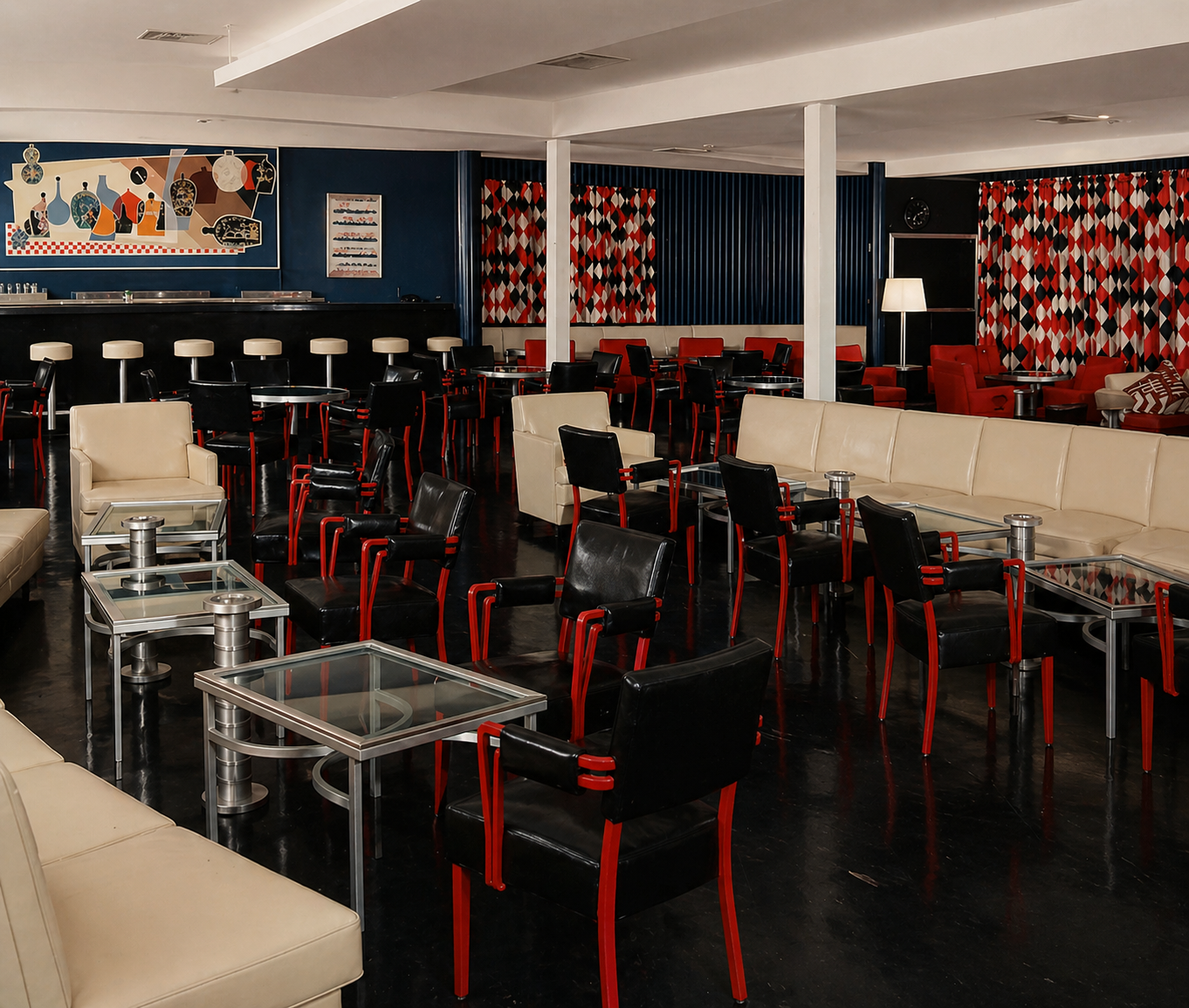
Cabin Class Smoking Room
Informal sociabilityThe Cabin Class Smoking Room shows how the ship repeated certain social functions in different registers. First class might have received the most polished version of the smoking-room tradition, but cabin-class passengers also needed a place for cards, talk, and after-dinner lingering.
That repetition matters. It shows that class separation did not simply divide luxury from absence. Instead, it produced parallel worlds, each with its own version of familiar shipboard routines.
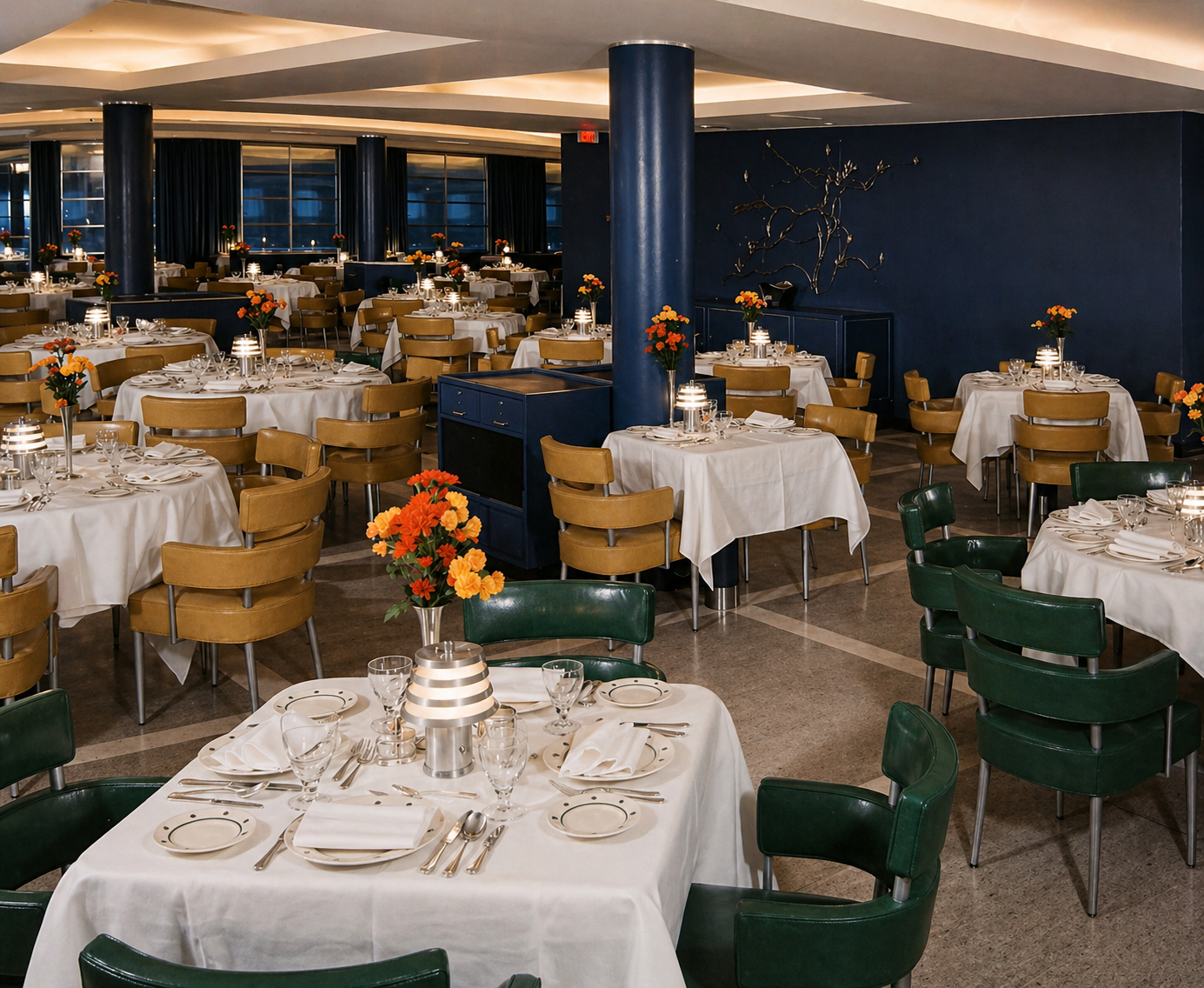
Cabin Class Dining Room
Respectable serviceThe Cabin Class Dining Room is historically useful because it makes the middle tier visible as a complete passenger experience. Dining rooms were among the most important class markers aboard a liner, but they were also everyday rooms. They had to provide rhythm, service, and a sense of propriety throughout the voyage.
In cabin class, the dining room balanced economy with respectability. It did not need to equal first class in scale or ceremony to be meaningful. Its significance lies in how it made the crossing feel ordered and complete for a broad passenger group.
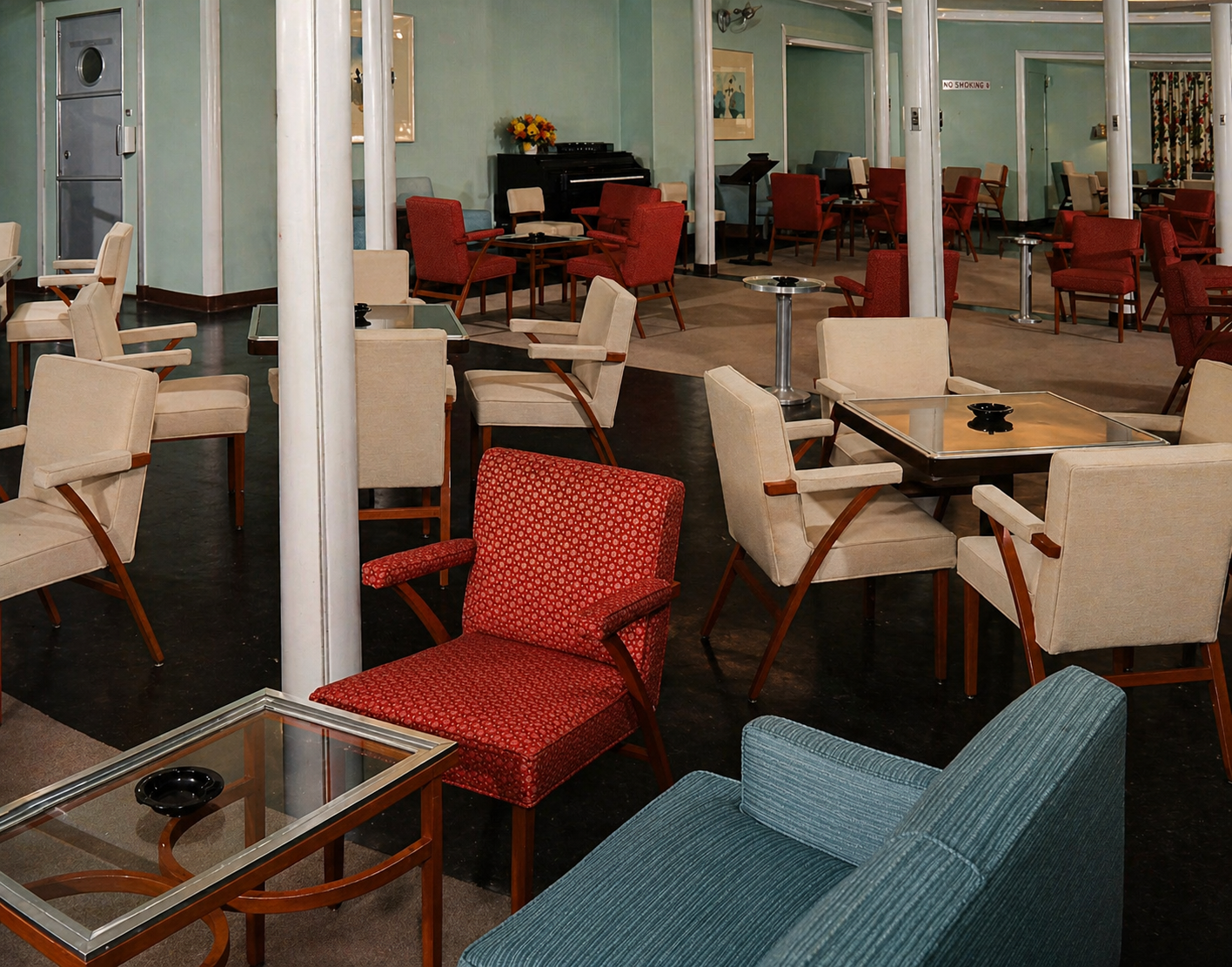
Tourist Class Lounge
Wider passenger worldThe Tourist Class Lounge is one of the rooms that most directly broadens the meaning of SS United States. It reminds us that the liner’s public world included students, families, migrants, budget-conscious travelers, and passengers for whom the ship was less a luxury stage than a practical Atlantic connection.
A tourist-class lounge did important cultural work. It gave the most economical passengers a public room of their own, allowing the voyage to feel social and organized rather than merely crowded or utilitarian.
- Helps move the story beyond celebrity passengers and first-class glamour.
- Shows how even economy travel aboard a major liner retained recognizable public-room structure.
- Connects SS United States to migration, education, family travel, and practical mobility.
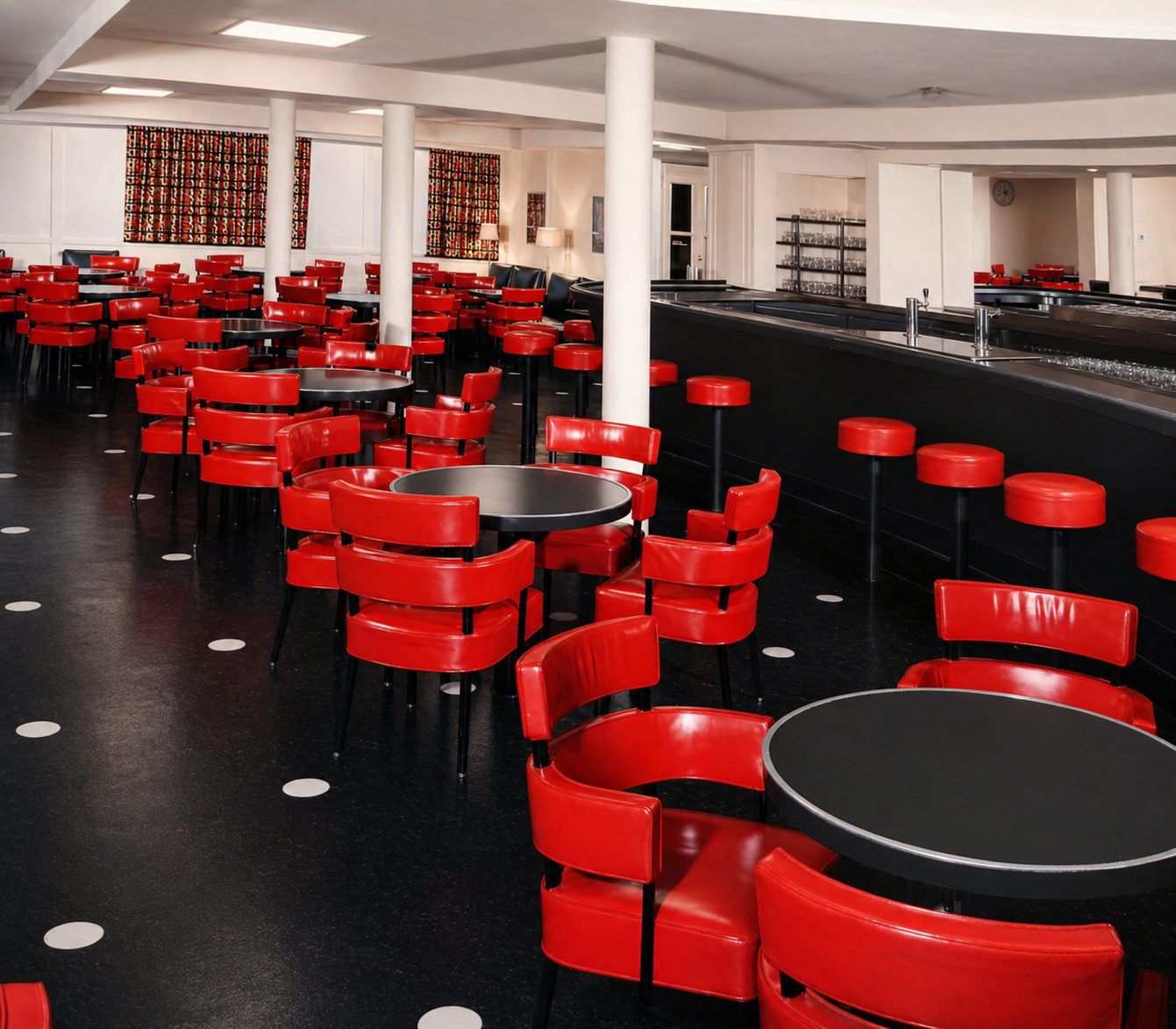
Tourist Class Smoking Room
Everyday gatheringThe Tourist Class Smoking Room is important precisely because it is easy to overlook. It was not the room most likely to appear in glamorous advertising, but it carried a familiar liner function into the ship’s most economical tier. Passengers needed places to linger, play cards, talk, and pass time away from cabins.
This kind of room helps restore scale to the ship’s social history. The liner was not only a collection of showpieces. It was a full passenger machine with practical rooms for many kinds of travelers.
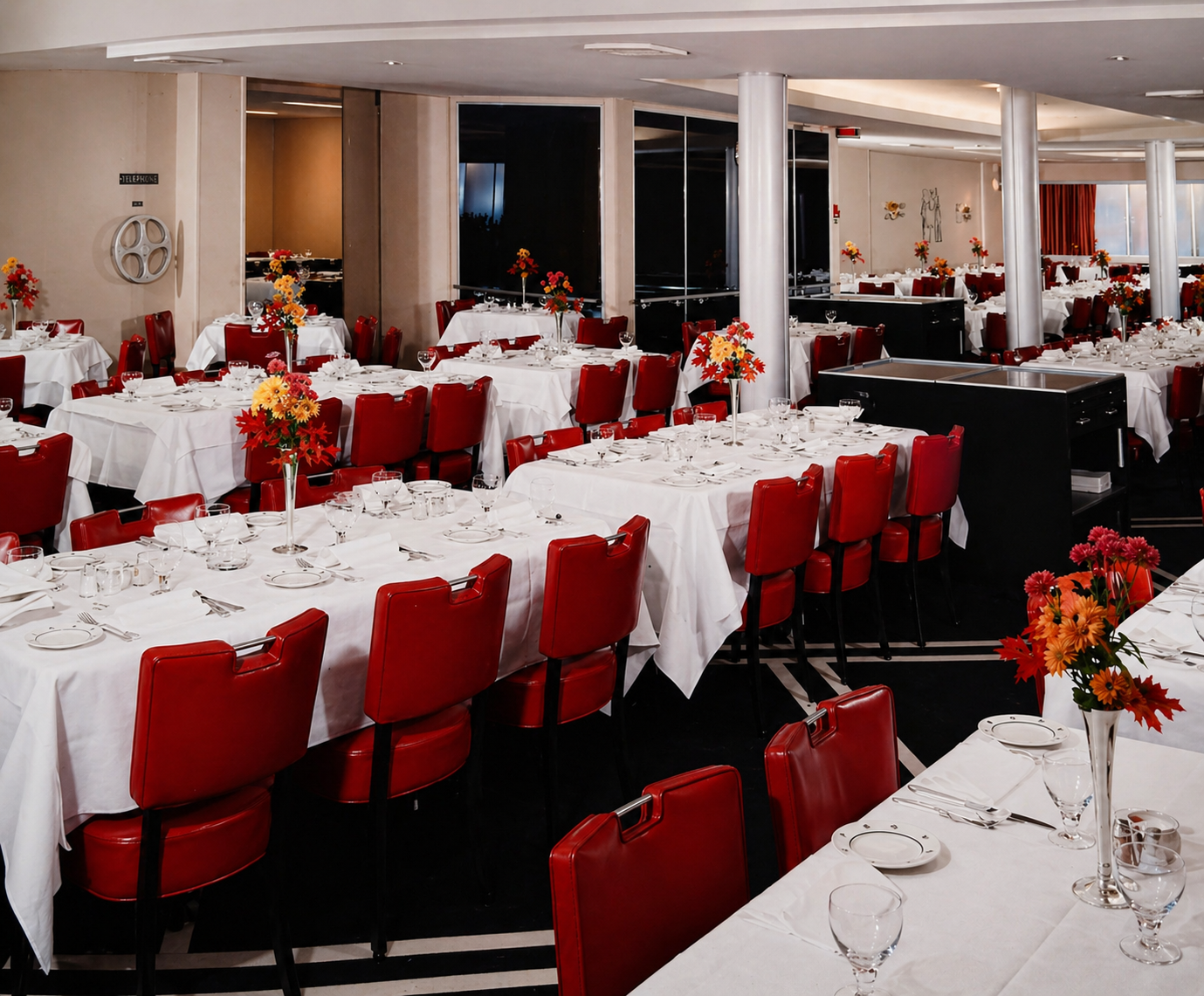
Tourist Class Dining Room
Orderly passageThe Tourist Class Dining Room turned the lowest passenger tier into a structured community at sea. Its significance lies less in luxury than in order. Meals gave passengers a schedule, a social setting, and a repeated sense that they were part of a functioning Atlantic ship rather than simply occupying spare space.
Reading this room carefully helps prevent a common distortion in liner history: the tendency to mistake publicity images for the whole ship. Tourist-class dining was part of the actual business and human reality of SS United States.
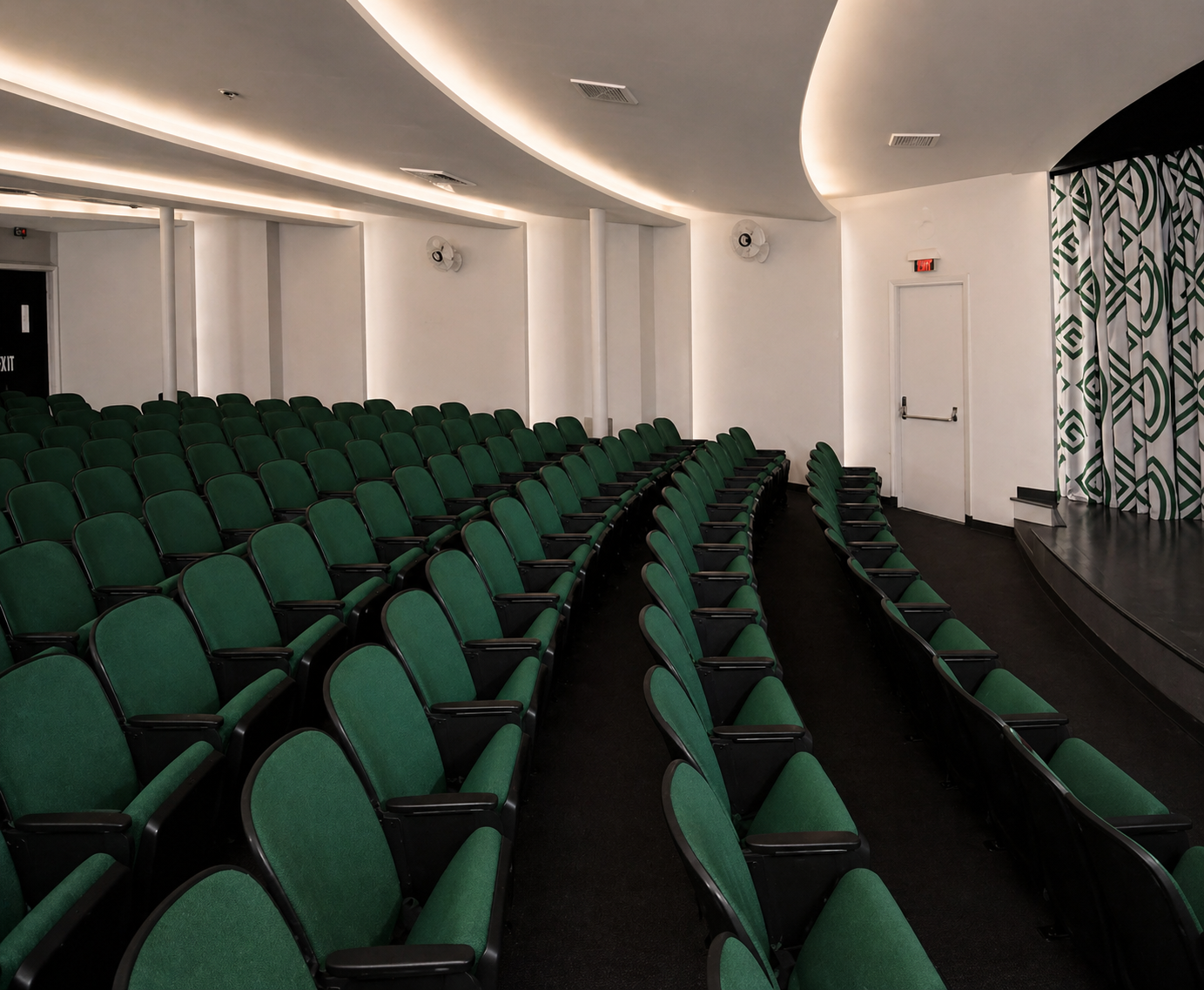
Tourist Class Theatre
Programmed leisureThe Tourist Class Theatre is a reminder that entertainment aboard SS United States was not only a first-class matter. A transatlantic crossing required ways to structure time for every passenger group. Films, performances, and other organized entertainments helped make the voyage feel shorter, more sociable, and more manageable.
In tourist class, a theatre carried special interpretive weight. It shows that the ship’s design acknowledged passengers who traveled economically while still giving them access to a recognizable public culture of the sea.
Comparison table: why these rooms matter
| Room | Best remembered for | Type of significance | Why it endures |
|---|---|---|---|
| First Class Ballroom | Dancing, evening life, formal social display | Entertainment and prestige | It shows that America’s fastest liner was also a stage for ceremony and shipboard identity. |
| First Class Observation Lounge | View, horizon, speed, arrival, and departure | Emotional and experiential | It connected modern interior comfort to the drama of motion across the Atlantic. |
| First Class Smoking Room | Club-like after-dinner sociability | Social type and tradition | It preserved a classic liner room function inside a very modern American ship. |
| First Class Dining Room | Formal meal service and repeated luxury ritual | Operational and ceremonial | It made high-status travel visible through daily routine, service, and order. |
| Swimming Pool | Modern recreation and shipboard amenity culture | Lifestyle and hospitality | It helped make the liner feel like a complete environment rather than transport alone. |
| First / Cabin Class Theatre | Films, performances, talks, organized leisure | Programmed entertainment | It shows how passenger time was actively managed during the crossing. |
| Cabin Class Lounge | Middle-tier comfort and public identity | Class structure and social balance | It reveals cabin class as a meaningful passenger world, not merely reduced first class. |
| Cabin Class Smoking Room | Cards, talk, smoking, informal gathering | Parallel class experience | It shows familiar liner rituals repeated in a more modest register. |
| Cabin Class Dining Room | Respectable middle-tier dining | Service and routine | It made cabin-class travel feel orderly, complete, and socially legible. |
| Tourist Class Lounge | Everyday public life for economical travelers | Social breadth | It keeps the ship connected to ordinary passengers as well as celebrities and elites. |
| Tourist Class Smoking Room | Low-key sociability and passing time | Functional public life | It shows that even the lowest passenger tier had dedicated social rooms. |
| Tourist Class Dining Room | Communal economy-class meal service | Operational and human | It restores the practical passenger reality behind the ship’s glamorous reputation. |
| Tourist Class Theatre | Entertainment for the broadest passenger group | Democratic leisure, within class limits | It extended programmed shipboard culture beyond the prestige decks. |
Why these interiors still matter
The public rooms of SS United States matter because they complicate the ship’s familiar reputation. She was not only a fast hull, a machinery achievement, or a national symbol. She was also a passenger environment built around class, comfort, art, safety, and time at sea. Her interiors reveal a postwar American answer to the question every great liner had to solve: how should a ship make several days of ocean travel feel orderly, desirable, and meaningful?
Frequently asked questions
⟡ Were SS United States’ public rooms as ornate as earlier liners?
⟡ Generally, no. Their importance lies in a different design language: modern, lighter, safer, more restrained, and more explicitly American in theme.
⟡ Why include cabin class and tourist class rooms?
⟡ Because SS United States was a three-class ship. A first-class-only reading turns the liner into publicity rather than history.
⟡ Did the ship’s safety requirements affect her interiors?
⟡ Yes. Fire safety and material discipline were central to the ship’s interior identity, helping explain the prominent use of nonflammable or fire-resistant approaches and the relative absence of heavy traditional woodwork.
⟡ What is the best way to understand the First Class Ballroom?
⟡ As a social stage. It made the crossing feel ceremonial and event-like, balancing the ship’s engineering reputation with an experience of music, dance, and public display.
⟡ Why do the tourist-class rooms deserve attention?
⟡ They show the ship’s broader human reality. Tourist-class passengers were part of the liner’s actual Atlantic story, and their rooms reveal how economy travel was still given public structure aboard a major vessel.
Continue Exploring SS United States
SS United States topic hub
Start from a central overview of pages, themes, and research paths tied to America’s flagship.
Ship guideSS United States ship guide
Read a broader curator-minded overview of the ship’s career, design, service, and legacy.
ExploreMore ocean liner interiors
Continue into other ship guides, collections, and interior-history pages across the site.
CollectionsResearch collections
Browse wider thematic collections on design, prestige, migration, and life aboard major liners.
Sources & standards
This page emphasizes the interpretive role of public rooms aboard SS United States rather than treating every space as a fixed decorative inventory. Room names, access patterns, and surviving visual evidence should be checked against deck plans, period brochures, conservation records, and contemporary photographs when making precise claims about layout or decoration.